When, how and where to fly fish in Slovenia
Slovenia offers some of the most technically demanding and visually spectacular fly fishing in Europe: turquoise rivers carved through limestone gorges, grayling cruising in crystalline shallows, and marble trout — the largest and most sought-after native trout on the continent — holding in deep pools beneath alpine cliffs. For any serious fly fisherman, the Soča Valley belongs on a short list alongside Patagonia and New Zealand.
Why Slovenia Is Europe's Premier Fly Fishing Destination
Few countries have done more to protect their freshwater ecosystems than Slovenia. Since the 1990s, strict conservation policies have reshaped the river systems of western Slovenia: catch-and-release is mandatory on the most important marble trout waters, stocking has been eliminated entirely to preserve the genetic purity of native species, and decades of scientific monitoring have tracked population health across entire river systems.
The result is extraordinary. A thriving, genetically pure population of marble trout — found in fishable numbers nowhere else on earth — alongside dense populations of wild grayling in waters of such clarity that sight-fishing is the default approach, not the exception.
The karst limestone geology that defines western Slovenia acts as both filter and sculptor: it produces the iconic turquoise-to-emerald color of the rivers, the pale riverbed that makes fish visible from remarkable distances, and the cold, highly oxygenated conditions that allow these fish to grow to exceptional sizes. Fishing in Slovenia is a visual discipline above all else. Shadows move across gravel. Fins cut current. Every cast begins with observation.
"Slovenia is not simply a destination for marble trout. It is the benchmark. No other river system in the world offers the same combination of fish size, population density, and conservation integrity."
The Rivers: Soča, Idrija, Unec, and the Alpine Lake
The Soča River
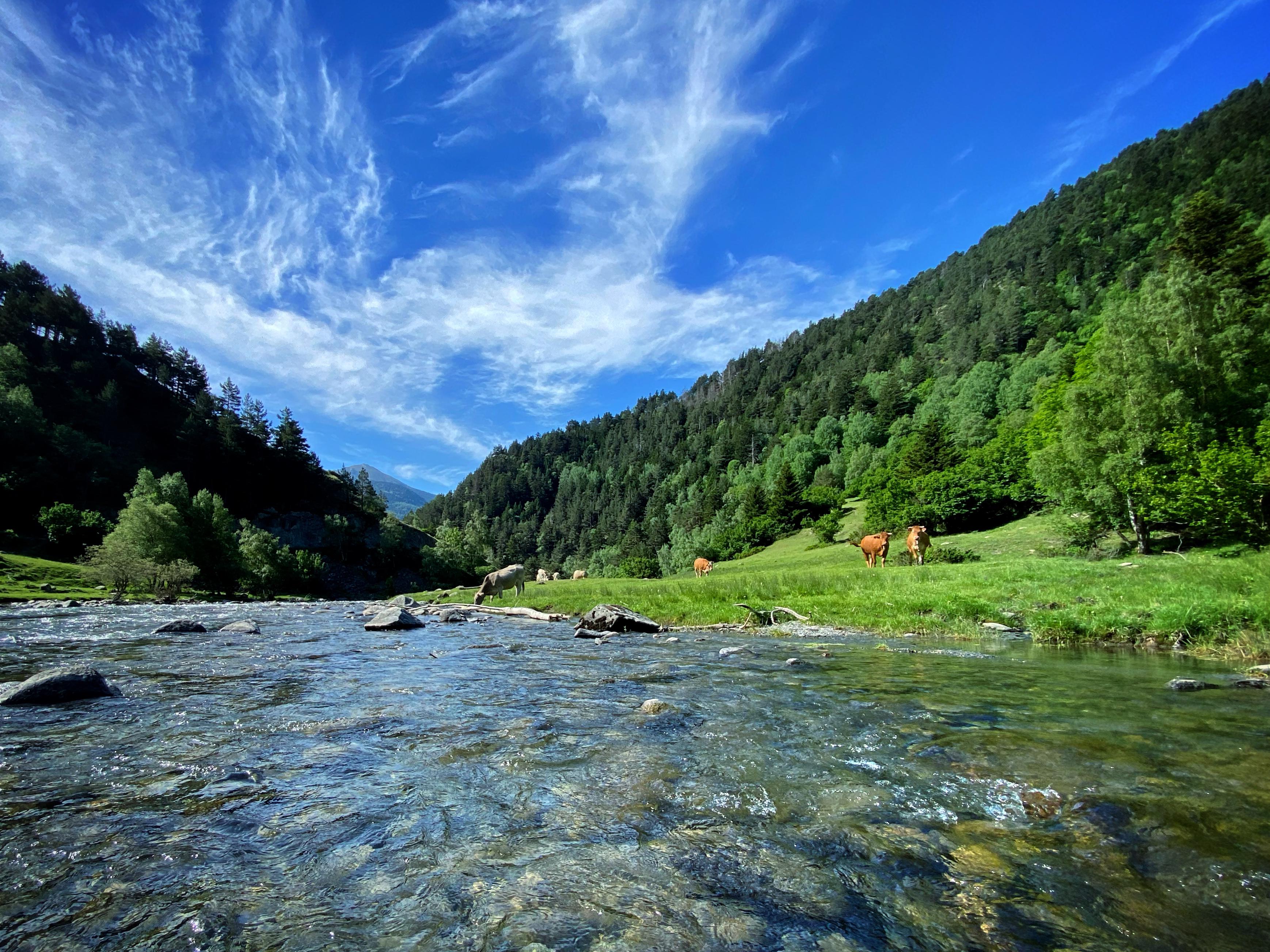
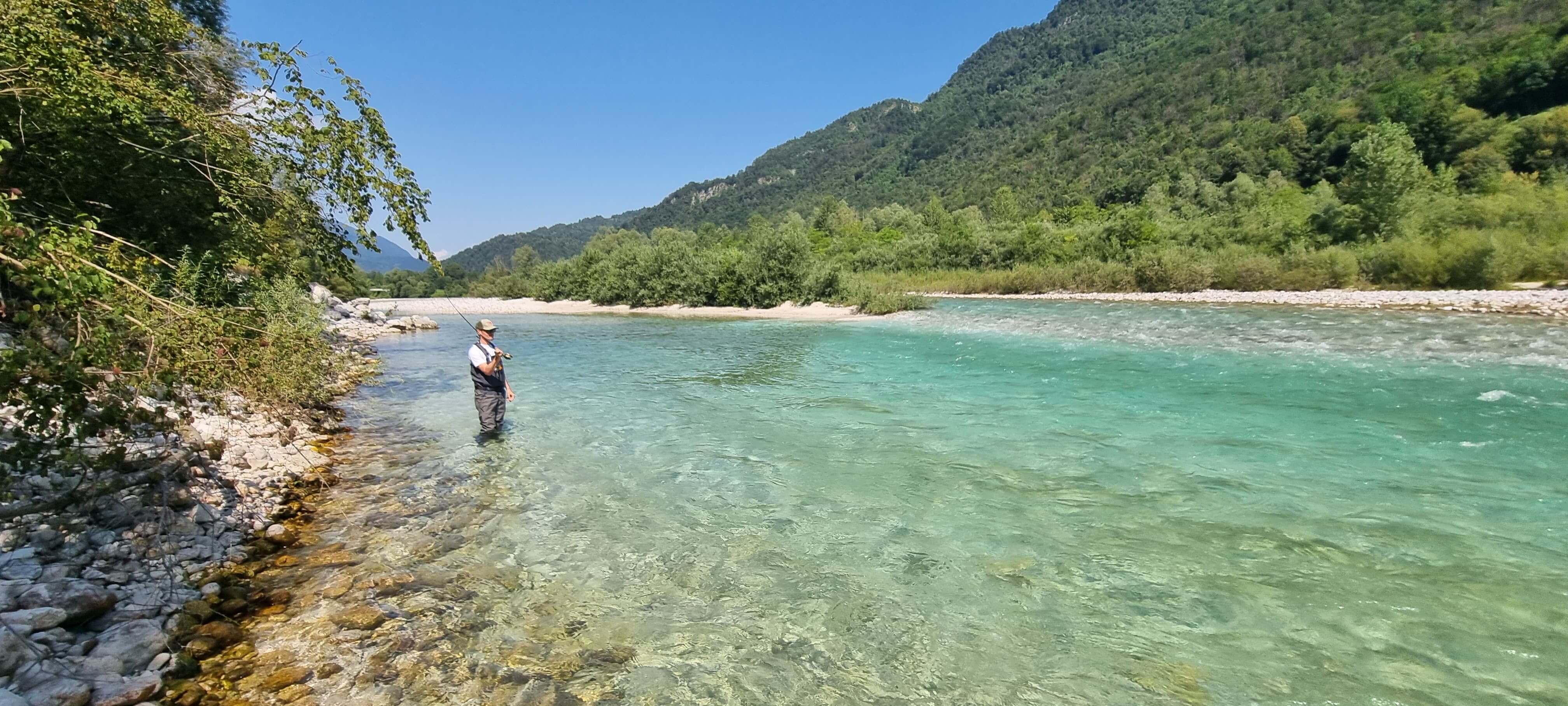
The Soča is the defining river of Slovenian fly fishing — and one of the most photographed rivers in the world for good reason. Its color is genuinely unusual: not the blue-gray of a glacial river, not the green-brown of a lowland stream, but a deep, saturated turquoise that shifts to emerald in the slower pools and electric blue in the fast riffles. The limestone karst geology and cold spring-fed sources produce this color, and it never becomes ordinary no matter how many days you spend standing in it.
The river flows through the Triglav National Park in its upper reaches before entering the broader valleys around Tolmin and Most na Soči. The upper sections are narrower and technically demanding — tight casting lanes, selective fish, strong currents. The lower sections open into broader flats and deeper pools better suited to longer presentations and streamer work.
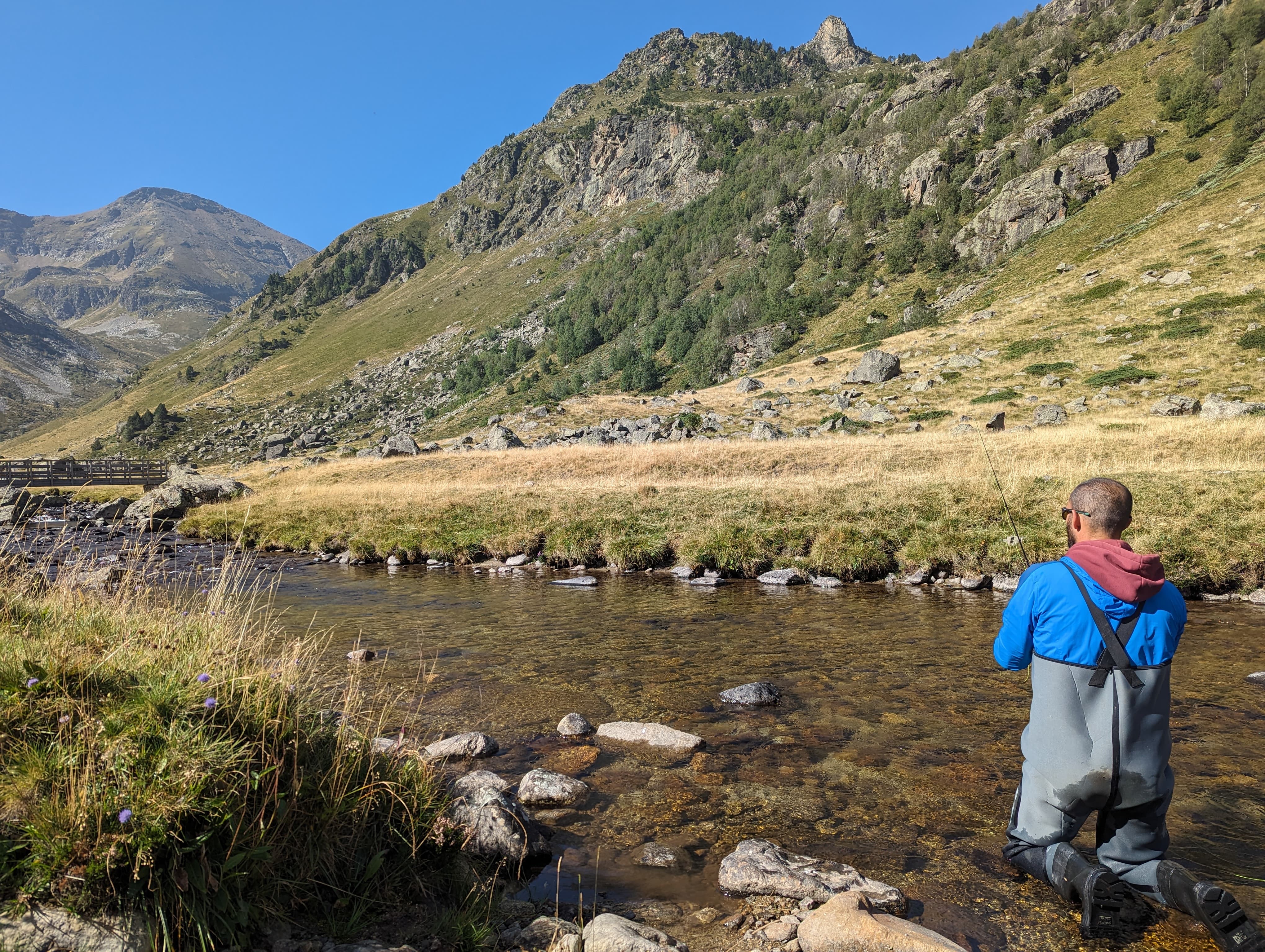
The water clarity is extraordinary. In low conditions, individual fish are visible from ten meters or more, and the fishing is almost entirely sight-based — locating the fish before casting is half the challenge. Polarized lenses are not optional equipment here; they are the tool that makes the whole exercise possible.
The Idrija River
The Idrija is the Soča's primary tributary in the Most na Soči area, joining the main river at the valley floor. It offers a slightly different character: narrower, with more intimate pools and riffles, and a particularly strong grayling population in the middle sections. The Idrija is where many visiting anglers have their first encounter with Slovenian grayling — fish that blend perfectly with the pale gravel, often invisible until a shadow moves across the bottom, and that respond beautifully to well-presented dry flies and light nymphs.
The Unec River
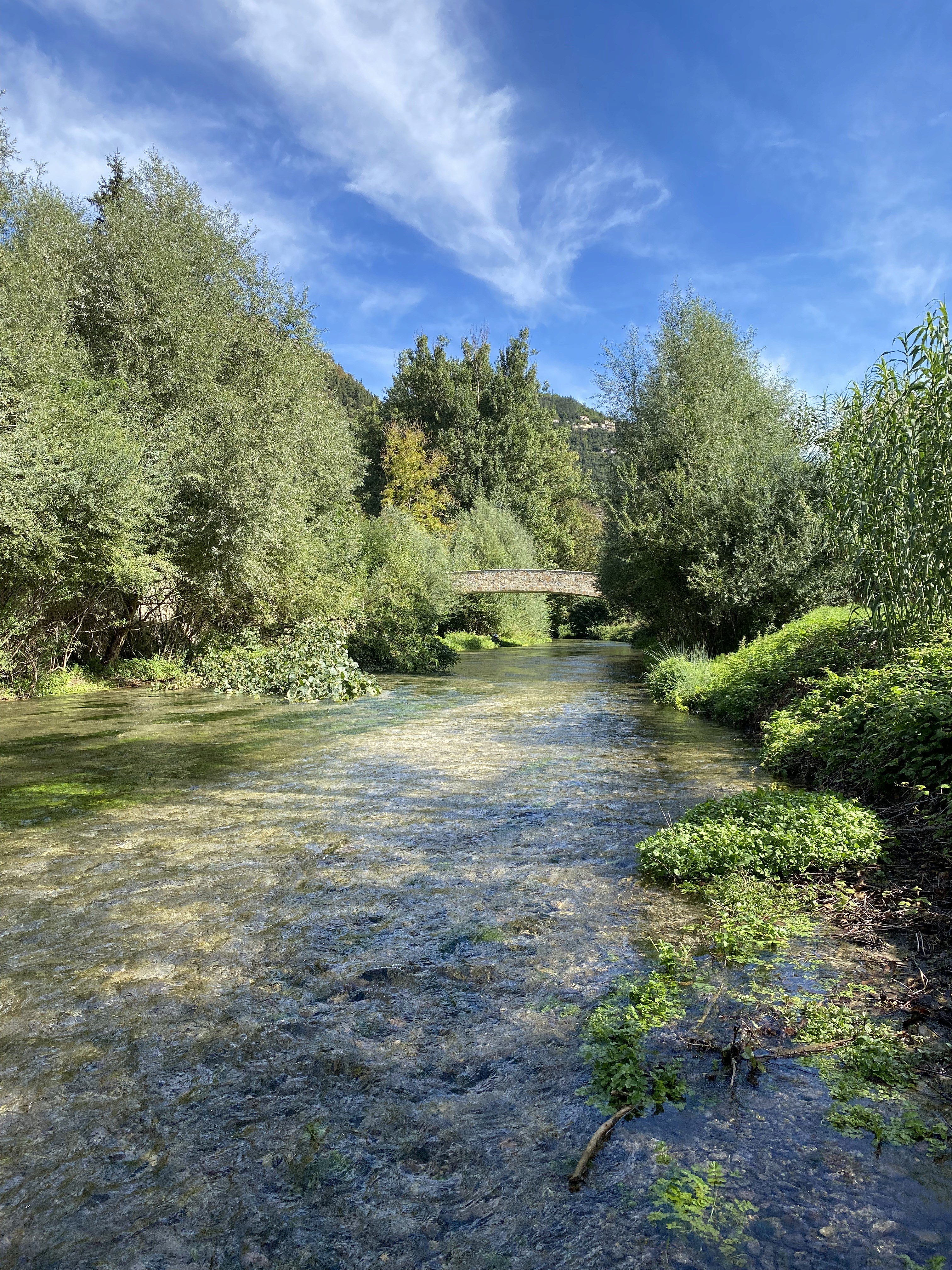
The Unec is one of Slovenia's most celebrated — and most unusual — fly fishing rivers. A classic karst stream in the Notranjska region, it disappears underground for long stretches before re-emerging with the extraordinary clarity and cold temperature that characterize the best Slovenian waters. Its character is intimate and demanding: a narrow, spring-fed river with a rich chalk stream quality to it, flowing through open meadows and limestone terraces that make approach and presentation far more challenging than a wider river would.
The Unec holds exceptional grayling populations and is considered by many local guides to be among the finest dry fly rivers in the country. The fish here are notably selective — the combination of flat, clear water and minimal current disruption means they have ample time to inspect a fly before refusing it. Long, fine leaders and exact imitation matter more on the Unec than almost anywhere else in Slovenia. It rewards the technically disciplined angler and tests the patience of everyone.
The Alpine Lake
At the confluence of the Soča, Idrija, and Tolminka rivers lies a deep alpine lake — the crown jewel of trophy marble trout fishing in Slovenia. This is boat water: steep, forested banks plunging into depths reaching twenty meters, with marble trout holding along structure and shadow lines that are only accessible from a drifting boat. Dedicated marble trout fishing in Slovenia takes place here almost exclusively, using heavy sinking lines and large streamers fished tight to the rocky shoreline.
The Species
Marble Trout (Salmo marmoratus)
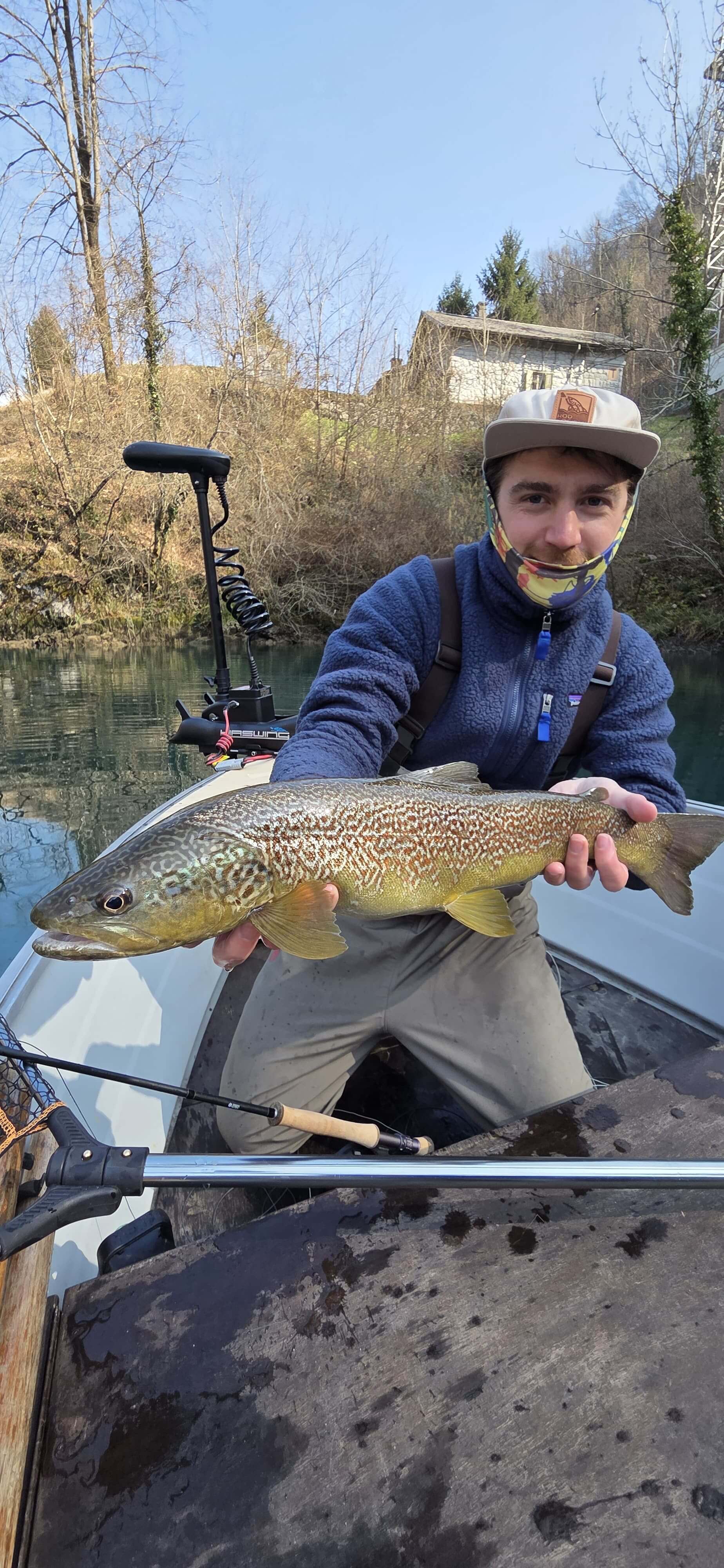
The marble trout is the undisputed icon of Slovenian fly fishing — and one of the most remarkable freshwater fish in the world. Endemic to the upper Adriatic basin, it is found in fishable numbers only in a handful of Slovenian rivers. Nowhere else has it been protected and studied as rigorously, and the results speak for themselves: fish approaching one meter are recorded every year, and the world record exceeds 25 kg.
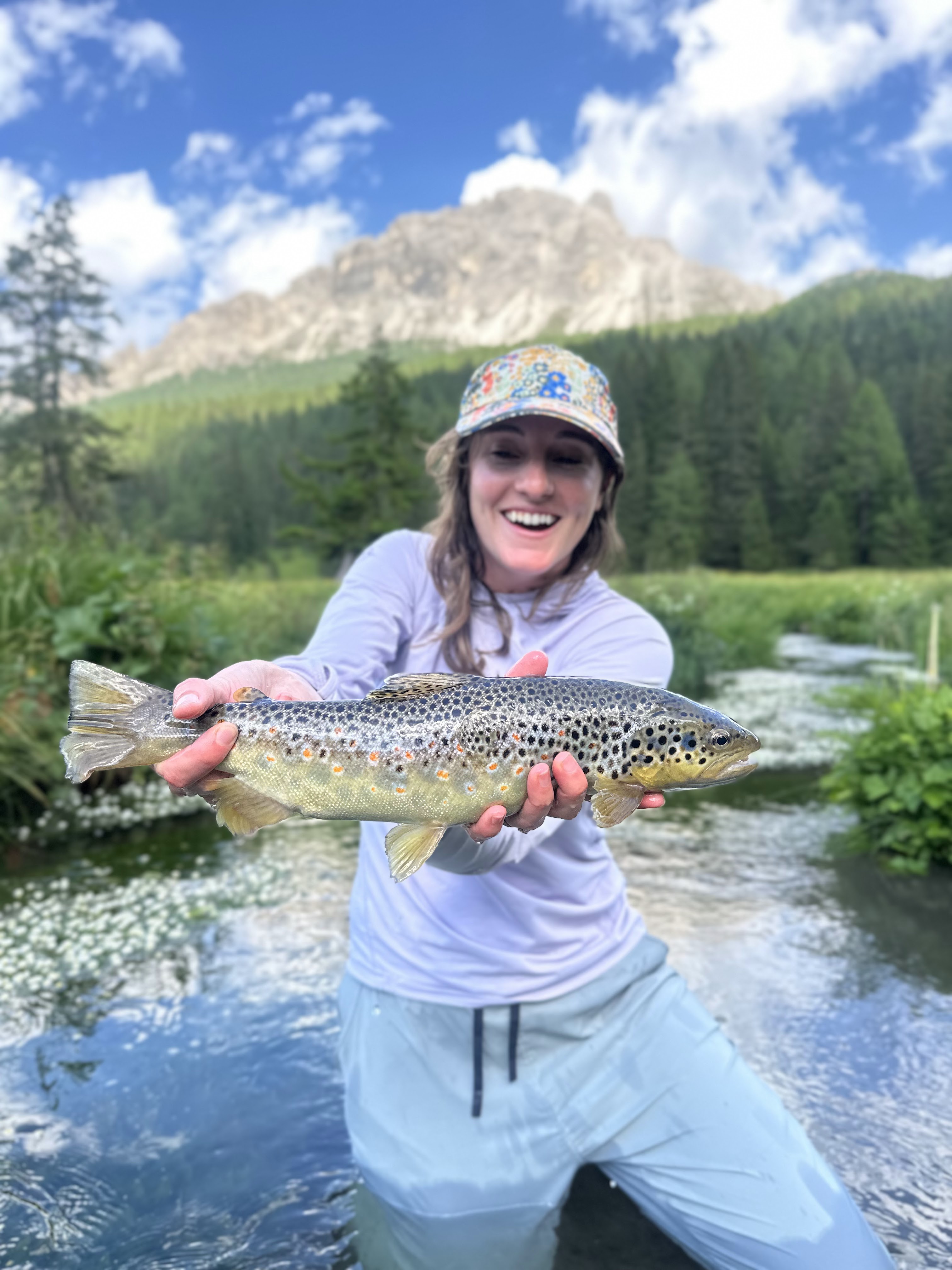
Adult marble trout are apex predators. Once they reach around 50 cm, their diet shifts almost entirely to fish, crayfish, and large invertebrates. The marble pattern itself — a complex, irregular network of dark lines over a silver-gold base — is unlike anything else in freshwater. It is cryptic camouflage of the highest order, and spotting a large marble trout motionless over a pale limestone riverbed is one of the most electrifying experiences in European fly fishing.
Grayling (Thymallus thymallus — Adriatic subspecies)
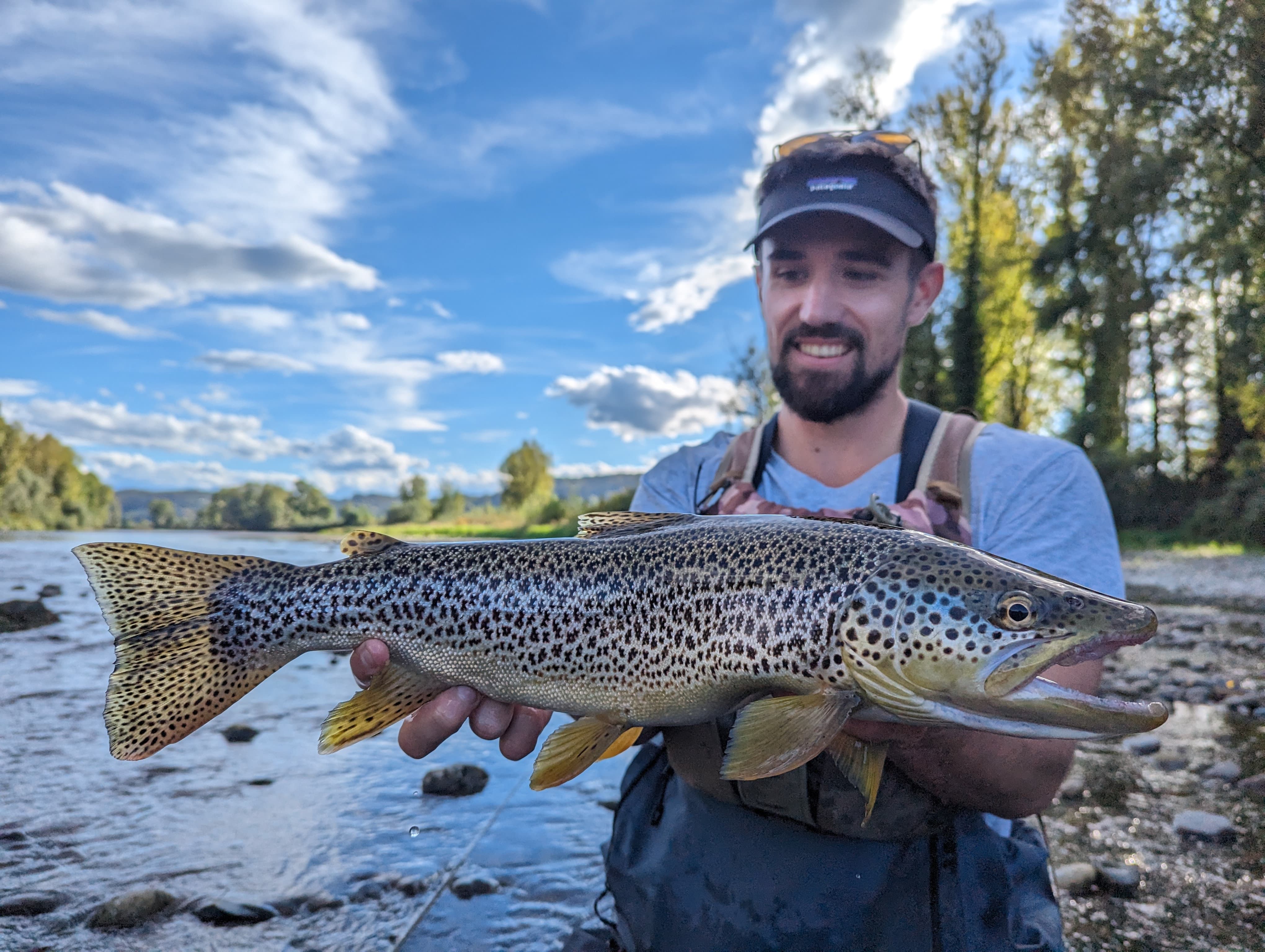
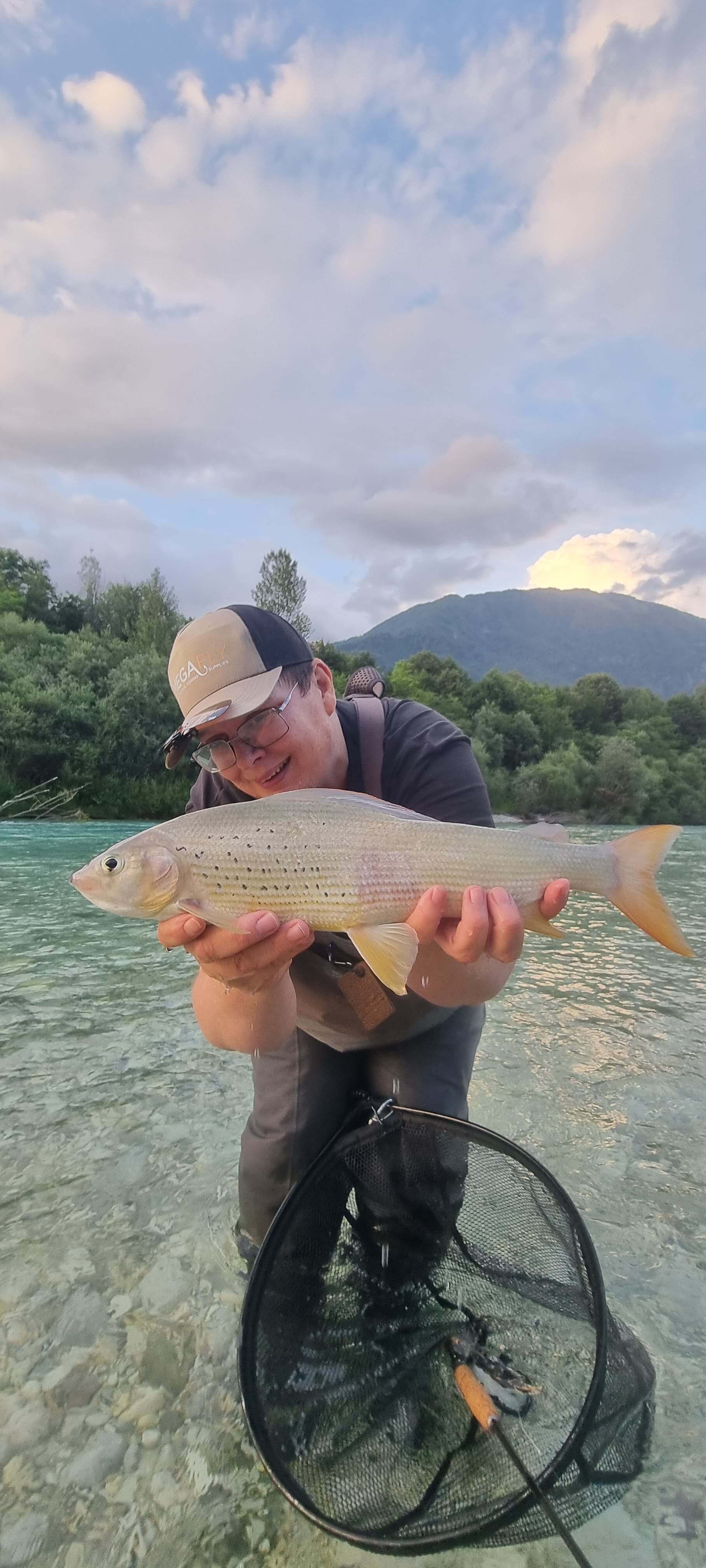
The grayling of western Slovenia belong to the Adriatic subspecies — genetically distinct from the more widely distributed European grayling — and they are the most consistently rewarding target for visiting anglers. They cruise the shallow riffles and glides in small groups, feeding selectively on surface insects and emerging nymphs, and they respond with particular enthusiasm to small dry flies on long, fine leaders.
Finding them requires learning to read the pale riverbed. Their coloration blends perfectly with the gravel, and they are often invisible until a fin cuts the surface or a shadow drifts across the bottom. Once you locate one fish, there are almost always others nearby. Landing a grayling on a dry fly in a Slovenian river is one of those experiences that stays with an angler for years.
Rainbow Trout (Oncorhynchus mykiss)
Rainbow trout are an interesting presence in the Soča system. Introduced during the 1990s as a conservation measure — to occupy the ecological niche of non-native species and prevent hybridization pressure on marble trout — they have since adapted completely to the environment. Wild, powerful, and explosive in fast water, they are a genuine bonus catch in the turquoise riffles alongside grayling.
Techniques for Fly Fishing Slovenia
Dry Fly and Nymphing: The Language of the Riffles
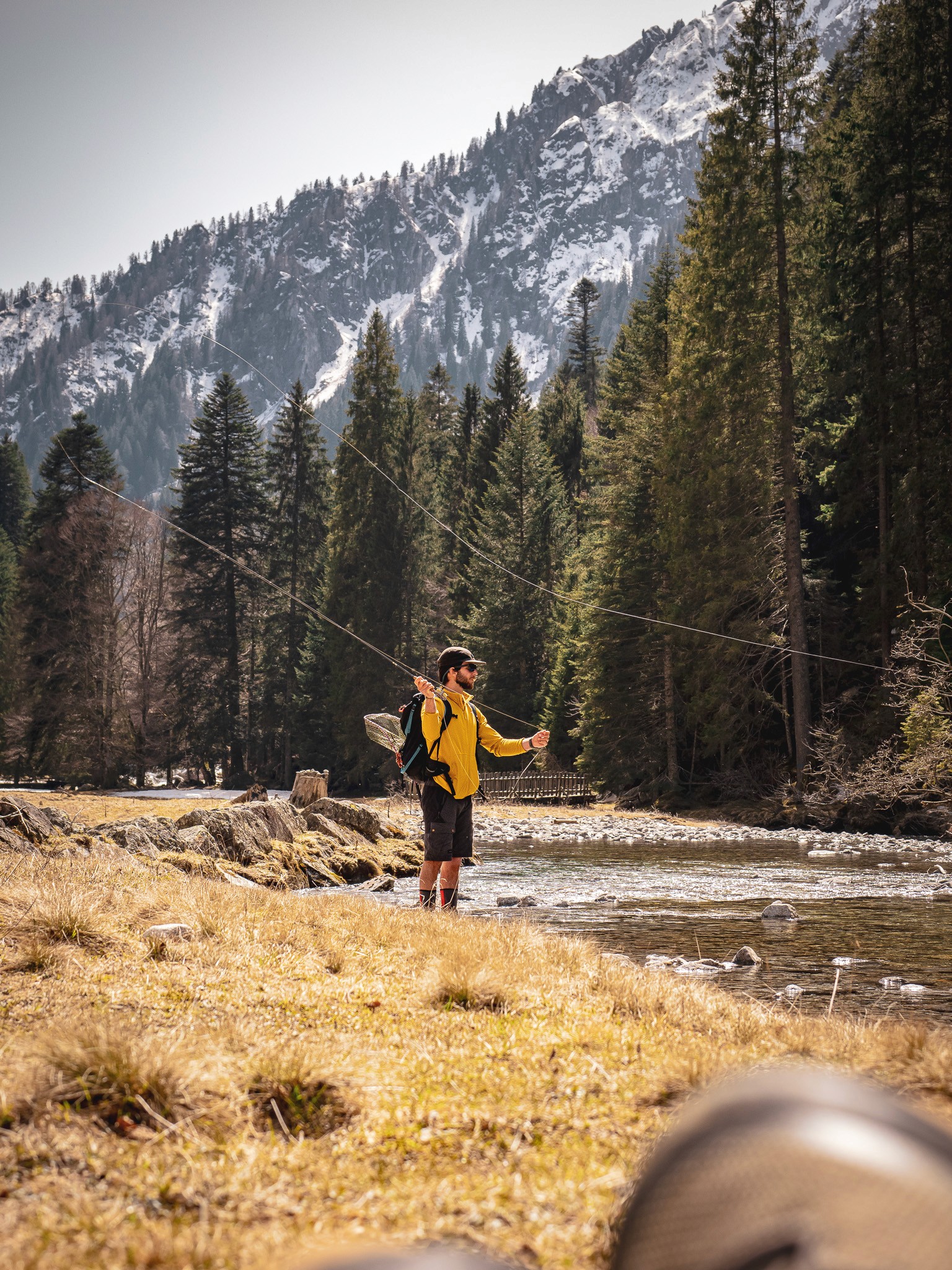
For grayling and rainbow trout in the open sections of the Soča and Idrija, the primary approach is a combination of dry fly and light nymphing adapted to conditions. The extraordinary water clarity demands technical precision: long leaders — often reaching 16 to 18 feet — with very fine tippet (6X or 7X) are standard, and natural drifts in complex currents require constant mending and positioning.
The fishing is dynamic. Some sessions revolve entirely around dry fly presentations to rising grayling in the shallows. Others demand careful nymphing through the deeper seams when surface activity is absent. Reading the water and adapting to what the river is doing on any given day is more important than pattern selection.
Key dry fly patterns include small CDC-winged emergers, Parachute Adams in sizes 14–18, and traditional Slovenian wet flies during the larger hatches. For nymphing, tungsten-beaded patterns in sizes 12–16 cover most situations.
Streamer Fishing: Hunting Marble Trout
Trophy marble trout — particularly fish above 60 cm — require a fundamentally different approach. These are ambush predators operating in deep water, targeting large prey along undercut banks, submerged structure, and the shadow lines where fast current meets still depths.
The technique is closer to musky fishing than to trout fishing in any conventional sense. From the boat on the alpine lake, heavy full-sinking lines (S5 to S7) combined with large weighted streamers in the five to ten centimeter range are cast tight to the rocky shoreline and stripped with an aggressive, intermittent retrieve designed to trigger an instinctive attack rather than a feeding response. A 9-foot #8 rod is the appropriate tool for this style of fishing — the heavy sinking lines and large flies require the backbone to cast efficiently through a full day on the water.
You cover water continuously. You cast. You strip. You repeat. It can be physically demanding and mentally intense. Hours can pass without contact. Then everything changes in a fraction of a second.
"When a marble trout commits, the strike is deep and explosive. It is not a gentle take. It is the feeling of something very large deciding that your fly is prey."
For river-based marble trout work in the deeper pools and along undercut banks, a 9-foot #6 with a sink-tip or poly leader is appropriate.
Seasonal Guide: When to Fish Slovenia
Season | Conditions | Best For |
|---|---|---|
March – April | Cold water, first hatches, grayling active | Nymph fishing, early grayling dry fly; prime lake window for trophy marble trout |
May – June | Rising temperatures, excellent hatches | Dry fly peak for grayling; river streamer fishing |
July – August | Warm, lower flows, very clear water | Technical sight fishing, evening hatches on the riffles |
September – October | Cooling water, marble trout aggressive | Trophy marble trout on river and lake |
October – November | Cold water, low and clear, predators feeding hard | Prime lake window for the largest marble trout of the year |
The season runs from March through October for river fishing. The lake follows a different rhythm: the best windows for trophy marble trout are March–April and October–November, when cold temperatures push the largest predators into shallower zones and trigger aggressive feeding behaviour. Spring and late autumn are the times when a fish over 80 cm is a genuine possibility.
The Soča Valley in late autumn — gold forests, limestone peaks, near-empty valleys — may be the most atmospheric time of year to be here. Plan accordingly.
Two Ways to Fish Slovenia
The Soča Valley offers two distinct fishing experiences, both based around the village of Most na Soči at the confluence of the main rivers.
For grayling, dry fly, and the full river experience: The turquoise riffles of the Soča and Idrija represent Slovenia at its most accessible and visually spectacular — wading clear water, sight-fishing to grayling in shallow runs, presenting dry flies to selectively feeding fish in the evening light. This is the experience that defines Slovenian fly fishing for most visiting anglers: technical, beautiful, and deeply satisfying regardless of skill level.
For trophy marble trout on the lake: The dedicated marble trout hunt on the alpine lake is for anglers with a specific goal — pursuing the largest freshwater predator in the Alpine region in the single best environment in the world to do so. Boat-based streamer fishing, heavy tackle, and the patience to wait for a fish that may only commit once in a full day on the water. Not casual fishing. Predator fishing.
Both options are available as guided single-day experiences or as part of a multi-day package based in the valley.
Practical Guide: Planning a Slovenia Fly Fishing Trip
Getting There
The most practical gateway airport is Ljubljana (LJU), approximately 90 minutes from Most na Soči by rental car. Venice Marco Polo (VCE) and Trieste (TRS) are alternative entry points, both roughly 2 hours from the Soča Valley. For American travelers, the most common routing is through Frankfurt, Vienna, Amsterdam, or London.
Accommodation
The standard base for a multi-day trip is a boutique lodge or guesthouse in the Soča Valley, centered around Most na Soči — a quiet alpine community surrounded by mountains, rivers, and forests. Accommodation here is simple and excellent, calibrated entirely around the outdoor lifestyle: home-cooked dinners, local wine from the nearby Brda region (one of Slovenia's finest), and a pace of life that encourages early mornings on the water and long evenings at the table.
For those looking to extend the experience, the Soča Valley is also home to Hiša Franko — the Michelin three-starred restaurant led by chef Ana Roš, consistently ranked among the finest restaurants in the world. A dinner at Hiša Franko, built around hyperlocal alpine ingredients and one of Europe's most distinctive culinary visions, is an extraordinary complement to a week spent fishing the same landscape that supplies the kitchen.
What to Pack
Item | Specification |
|---|---|
Primary rod | 10' #3-4 (grayling and riffles) |
Lake marble trout rod | 9' #8 with full sinking line S5–S7 |
River streamer rod | 9' #6 with sink-tip or poly leader |
Tippet | 6X–7X fluorocarbon (the clarity demands fine) |
Leader | 14–18 feet for dry fly presentations |
Key dry fly patterns | CDC emergers, Parachute Adams size 14–18, elk hair caddis |
Key nymph patterns | Tungsten bead nymphs size 12–16, PTN variations |
Key streamer patterns | Articulated patterns 5–10 cm, dark and natural tones |
Polarized glasses | Essential — seeing fish before casting is the whole game |
Waders | Breathable, with felt or rubber studded soles |
Permits and Regulations
Fishing in Slovenia requires a valid national license plus a day permit for the specific water. On the most important marble trout sections, catch-and-release is mandatory and barbless hooks are required. All permitting is handled by local guides on guided itineraries, significantly simplifying logistics for visiting anglers unfamiliar with the Slovenian system.
Beyond Fishing: The Soča Valley for Non-Anglers
The Soča Valley offers one of the strongest non-fishing programs of any fly fishing destination in Europe. Hiking in Triglav National Park, white-water rafting and kayaking on the Soča, wine tasting in the Brda and Vipava regions, day trips to the medieval town of Kobarid — all within easy reach of the valley. For couples or groups where not everyone fishes, Slovenia may be the most well-rounded multi-day destination available: the non-angler has a full program of their own, and the valley itself provides the kind of unhurried, authentically European experience that is increasingly rare.
Conclusion
Slovenia occupies a rare position in world fly fishing: a small country that has built, through decades of genuine conservation commitment, an ecosystem where the rarest native trout of the Alpine region thrives at the highest level. The Soča and its tributaries are not simply scenic — they are among the most carefully managed and biologically rich river systems in Europe, and fishing them feels like fishing something irreplaceable.
Whether you come for the technical pleasure of presenting a dry fly to selective grayling in crystalline water, or for the raw ambition of hunting a trophy marble trout from a boat in a deep alpine lake, Slovenia delivers an experience that cannot be replicated anywhere else on the continent. Work with local expert guides who know the permits, the seasonal rhythms, and the specific water — and leave with the kind of fishing memory that doesn't fade.