Seasons in Patagonia: When to Book Your Trip
Introduction: Timing Your Trout Quest
Patagonia—the legendary, windswept frontier of South America—represents the ultimate destination for any fly angler seeking trophy trout and unparalleled wilderness. But given its vastness, knowing when to book your fly fishing Patagonia trip is the single most critical factor for success. The fishing season here, running roughly from November to April, is divided into distinct phases, each offering unique challenges, opportunities, and rewarding experiences.
The best time for fly fishing in Patagonia depends entirely on your target species, preferred technique, and tolerance for crowds. From the early season's aggressive streamers to the peak summer dry fly action and the late season's massive migrating fish, Patagonia's calendar is a dynamic equation waiting to be solved by the informed angler.
1. The Patagonian Fishing Calendar: An Overview
Patagonia's fly fishing season generally aligns with the Southern Hemisphere's summer, commencing in November and concluding in April. Understanding the regional differences—from the dry steppes of the Argentine side to the rainforests of Chilean Patagonia—is crucial, but the seasonal changes follow a predictable progression across the best trout rivers.
Pre-Season and Early Summer (November to Mid-December)
The season kicks off with the warming water temperatures that stimulate the first major insect activity and awaken the brown and rainbow trout from their winter lethargy.
Conditions: Rivers are typically higher and slightly murkier due to snowmelt run-off, especially in November. Temperatures are mild to cool, with variable winds.
Fishing Focus: This is the prime time for streamer fishing. Large, aggressive patterns stripped through the high water near riverbanks and deep structure are highly effective.
The Advantage: Fewer crowds. Many anglers wait until after Christmas, leaving prime water unpressured.
Target: Large, hungry Brown Trout.
Peak Summer Season (Mid-December to End of February)
This is the classic Patagonian summer, characterized by long, hot days and the year's most prolific dry fly activity. This period often sees the most consistent, exciting fishing, making it the most popular time to visit.
Conditions: Water levels drop and clear significantly, reaching optimal clarity and temperature.
Fishing Focus: Dry fly fishing dominates. Major hatches, including the gigantic Avispas (Patagonian wasps) and especially the Dragonfly migrations, pull large trout to the surface.
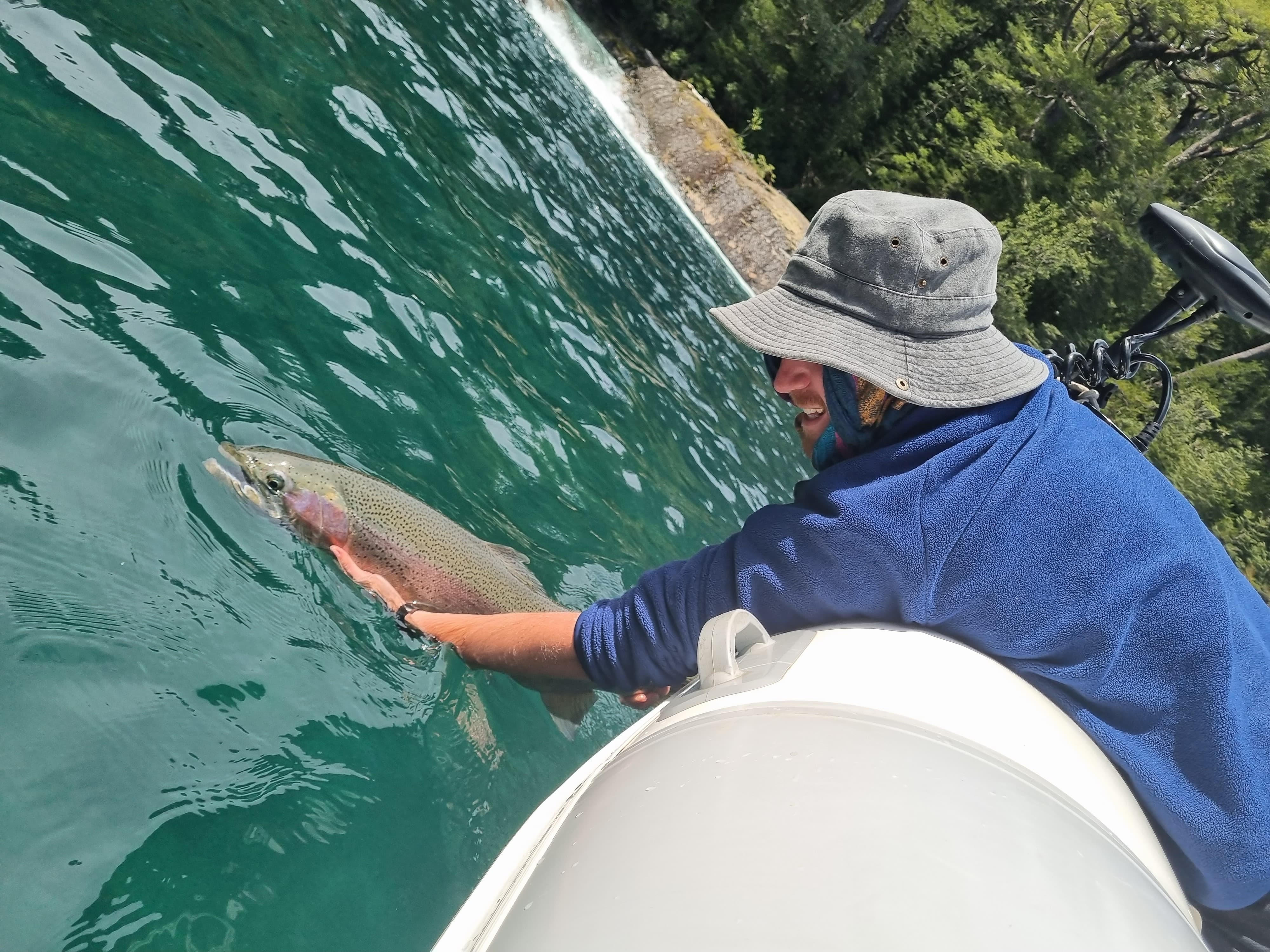
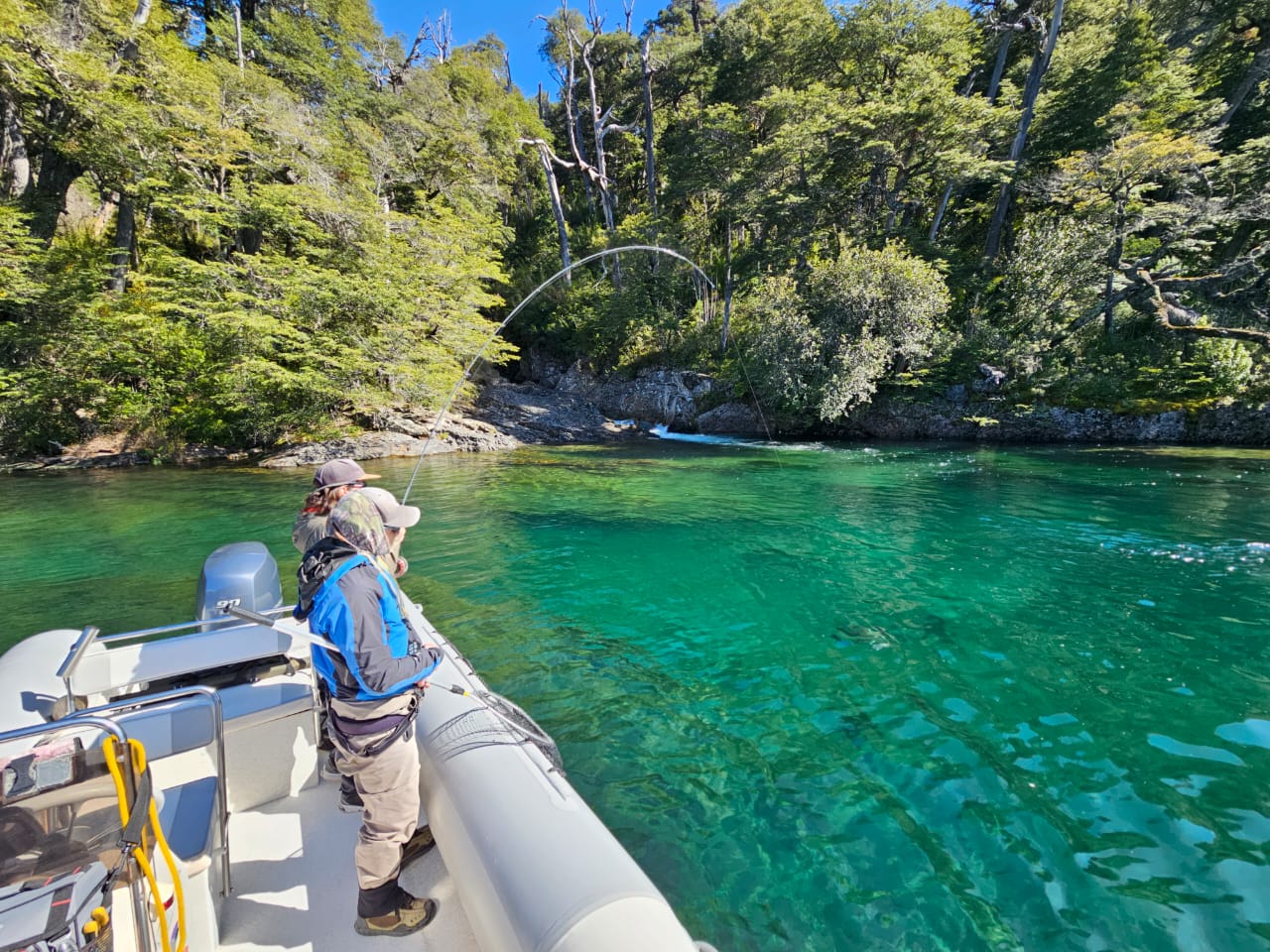
The Challenge: The strong winds can make casting challenging, demanding technical proficiency. During these bright summer months, the deep, crystal-clear waters of Nahuel Huapi Lake offer a spectacular alternative, where trophy trout can often be found cruising the drop-offs.
Target: Opportunistic Brown Trout and hyper-active Rainbow Trout.
Late Season and Fall Run (March to End of April)
As the Southern Hemisphere tilts towards autumn, the air temperatures drop, water levels become stable and cool, and the trout begin their pre-spawning migrations and feeding frenzy.
Conditions: Stable, clear, and cool water. The harsh winds of mid-summer often subside, creating calm, crisp mornings.
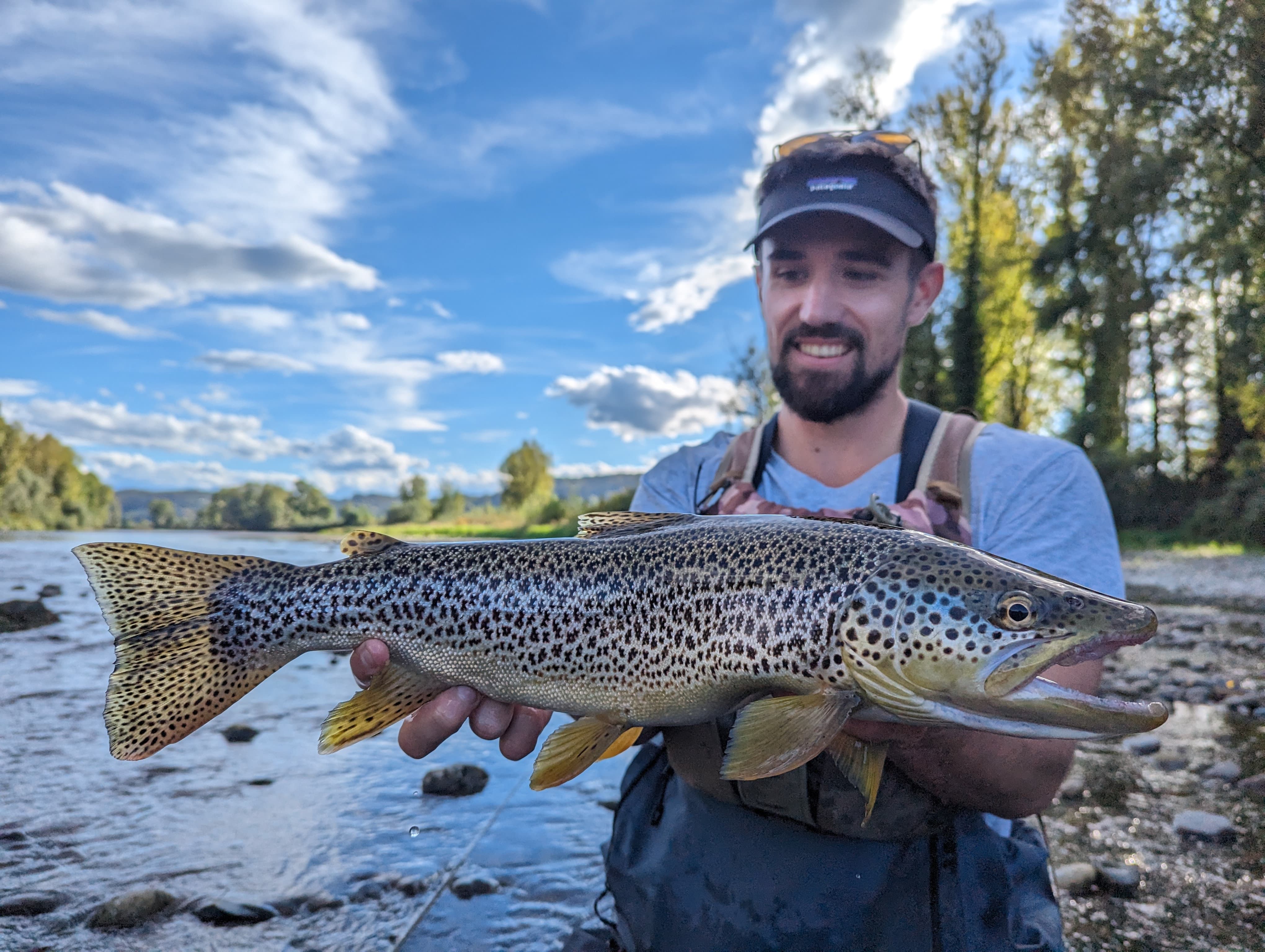
Fishing Focus: This is the time for truly massive fish. The spawning runs commence, and large Brown Trout aggressively chase baitfish and streamers.
The Advantage: Often considered the best all-around fishing due to mild weather and the presence of trophy-sized migrating fish. The legendary "Fall Run" on the Limay River is world-famous for its size potential, attracting those in search of the fish of a lifetime.
Target: The largest resident Brown and Rainbow Trout of the season.
2. Matching the Season to Your Style: The Angler's Choice
Choosing the ideal time to fish in Patagonia requires self-assessment. Are you seeking solitude, trophy size, or the adrenaline rush of a dry fly take?
Angler Goal | Best Time to Book | Recommended Gear/Focus |
Trophy Size & Solitude | Mid-Nov to Mid-Dec | Fast-sinking lines and large, articulated streamers. |
Consistent Dry Fly Action | Mid-Jan to Late Feb | High-floating terrestrial patterns (foam hoppers). |
All-Around Best Conditions | March to Early April | Versatile approach: Nymphs, streamers, and dry flies. |
Unique Experience | February | Large dragonfly imitation patterns. |
The Challenge of High Winds vs. High Hatches
Patagonia is synonymous with wind. While the prevailing westerlies are often stronger in mid-summer, this coincides with the best terrestrial hatches. Expert Insight: "Don't fight the wind, use it. A stiff upstream wind can actually help lay a dry fly line straight and true."
3. Essential Gear for the Patagonian Season
Regardless of the month, Patagonian fishing demands versatile gear.
Early Season (Nov/Dec): $6\text{wt}$ or $7\text{wt}$ rods for heavy streamers and sink tips.
Peak Season (Jan/Feb): $5\text{wt}$ or $6\text{wt}$ rods for dries; weight-forward floating lines are essential.
Late Season (Mar/Apr): A balance of power and finesse to handle both large streamers and delicate fall nymphs.
Fly Selection by Water Type
The sheer size of Patagonia means you will fish everything from vast lakes to high-mountain creeks.
Lakes (Lochs): Massive bodies of water like Nahuel Huapi Lake are best fished with sinking lines and large attractors, offering a unique technical challenge compared to river systems.
Large Rivers: Rivers such as the Limay often require heavy streamer fishing in the early and late seasons, switching to dry-dropper rigs when hatches are on.
Small Creeks: Ideal for $3\text{wt}$ or $4\text{wt}$ rods, offering an intimate experience away from the strong winds.
4. Navigating the Logistics: Argentina vs. Chile
Patagonia is split between Argentina and Chile, and this choice affects the fishing experience.
Argentine Patagonia (e.g., Bariloche, San Martín): Known for its open pampas and world-famous rivers like the Chimehuín and Limay. Access to the best water is often through private land, making local expertise essential.
Chilean Patagonia (e.g., Coyhaique): Characterized by dense rainforests and glacier-fed rivers. The fishing is often more remote, catering to those seeking wilderness exploration.
5. Deep Dive: The Famous Limay River Fall Run
For many, the late season (March-April) fishing on the Limay River justifies the trip alone. The Limay, which drains the Nahuel Huapi Lake, sees a massive migration of large Brown Trout moving upstream to spawn.
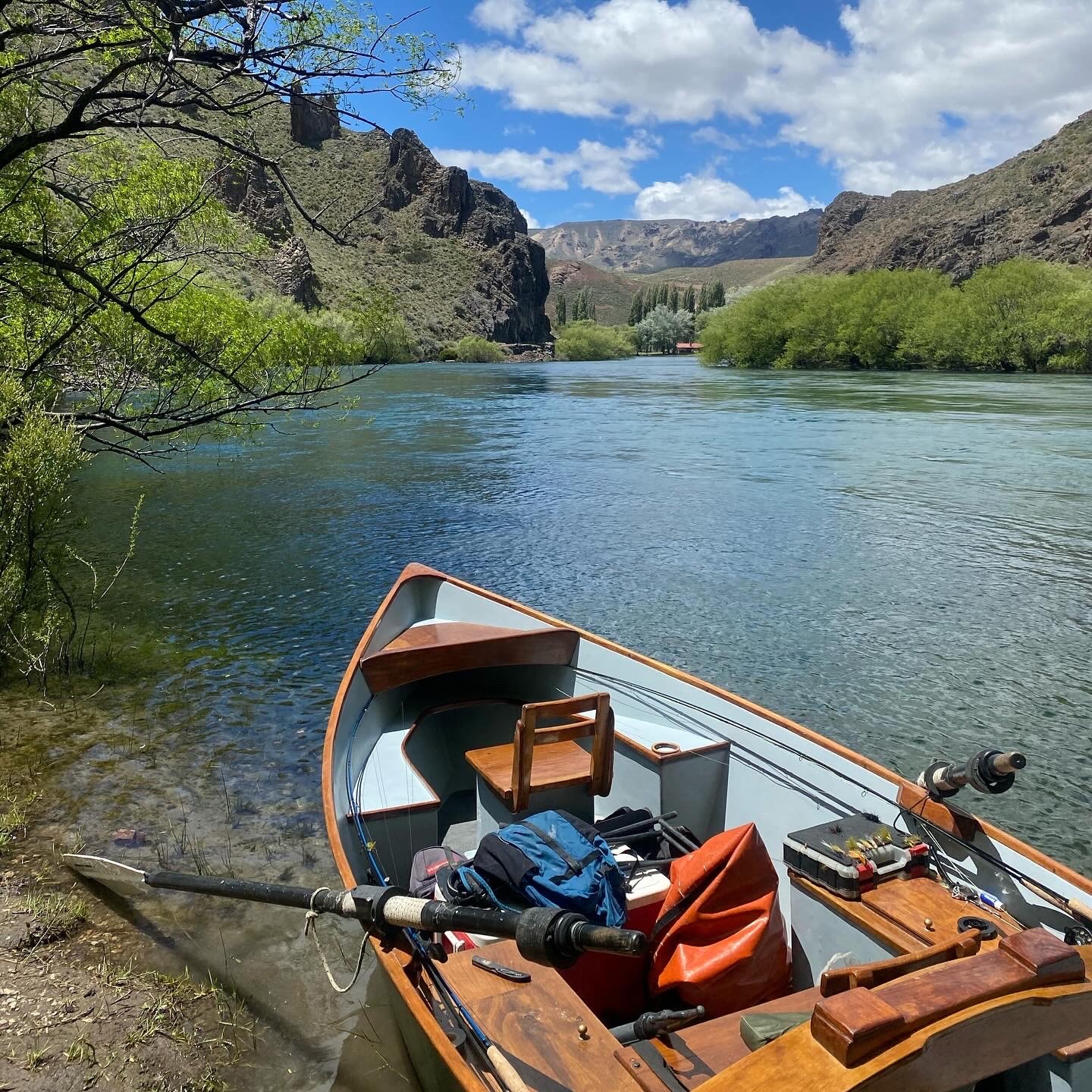
The Technique: Typically done from a drift boat, targeting the river's deep edges with large streamers.
The Reward: Trout exceeding 25 inches are common, with many approaching or surpassing the 10 lb mark. This is physically demanding fishing but offers the highest potential for true trophy trout in the region.
Conclusion: Planning for Success
The question of when to go fly fishing in Patagonia has no single answer, but rather a seasonal response tailored to the individual angler. Whether you chase the solitude of the early season, the thrilling hatches of mid-summer, or the chance at a migrating monster in the fall, Patagonia delivers.
Success in this vast territory hinges on expert planning and access to the best water. For an all-inclusive experience that guarantees seamless logistics and puts you with the most knowledgeable local guides—the true masters of Patagonian waters—relying on specialized services is the most assured path to an unforgettable adventure. Book wisely, cast hard, and prepare for the fishing trip of a lifetime.