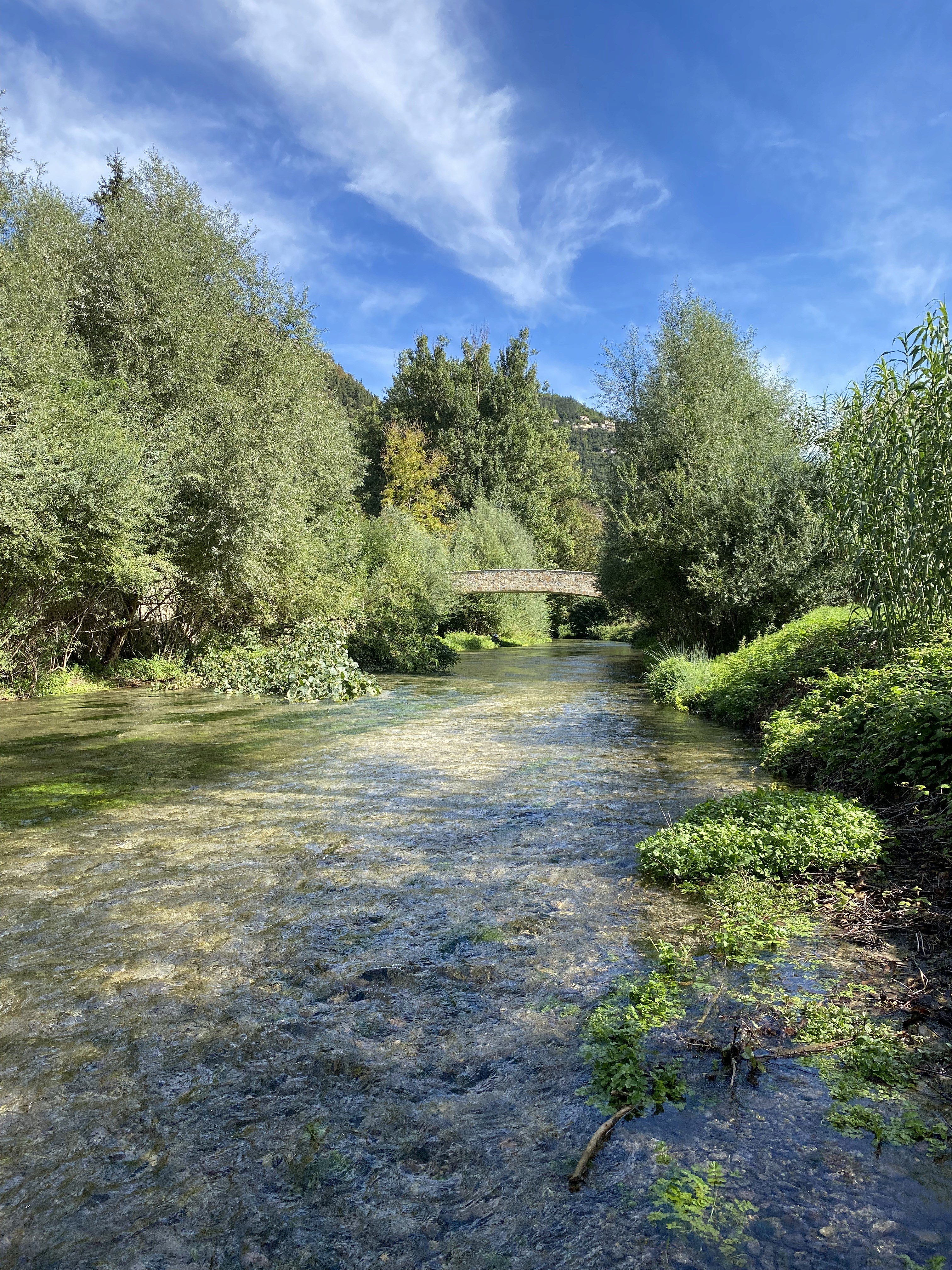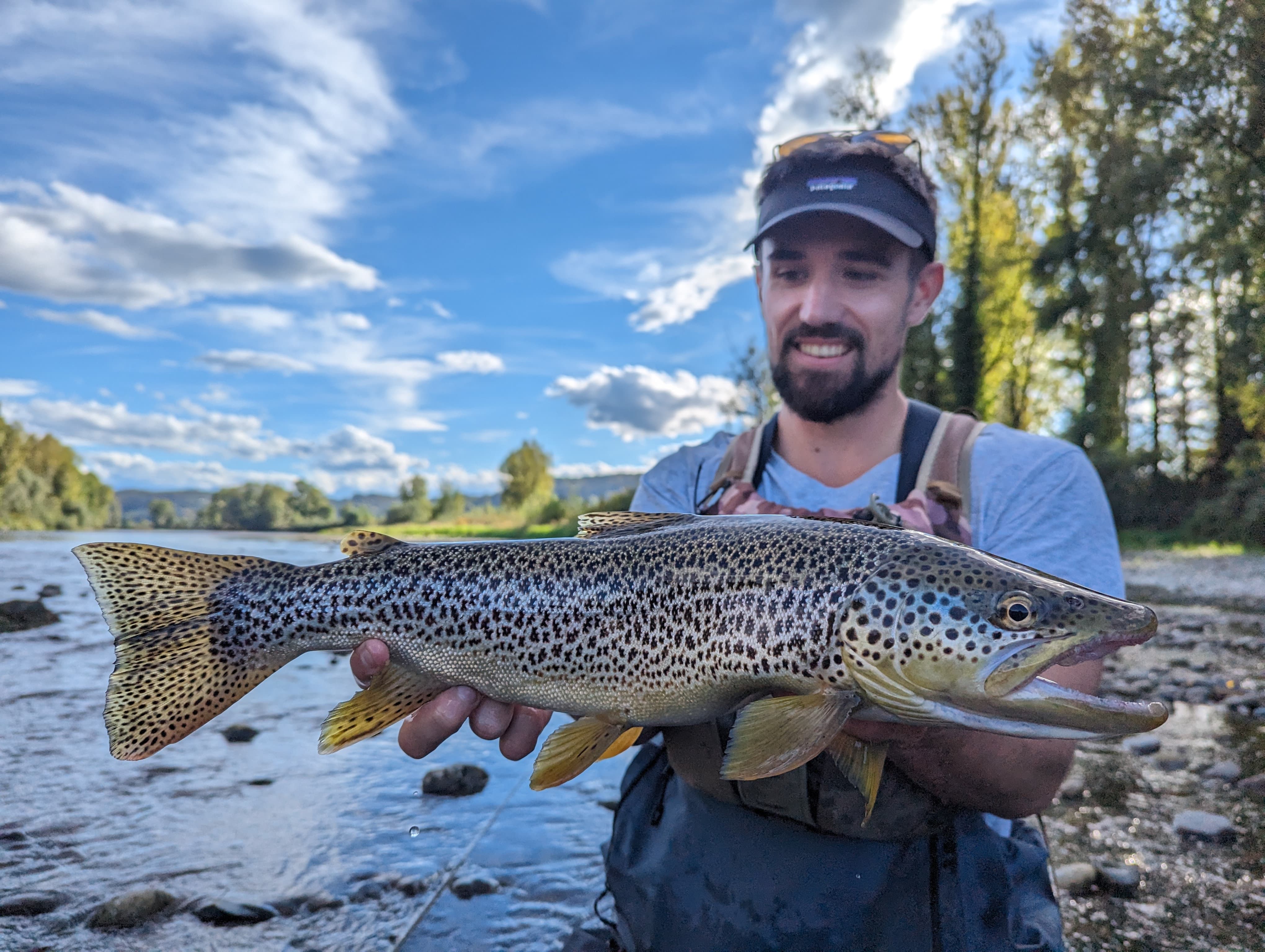
Fly Fishing Near Barcelona: A Complete Guide
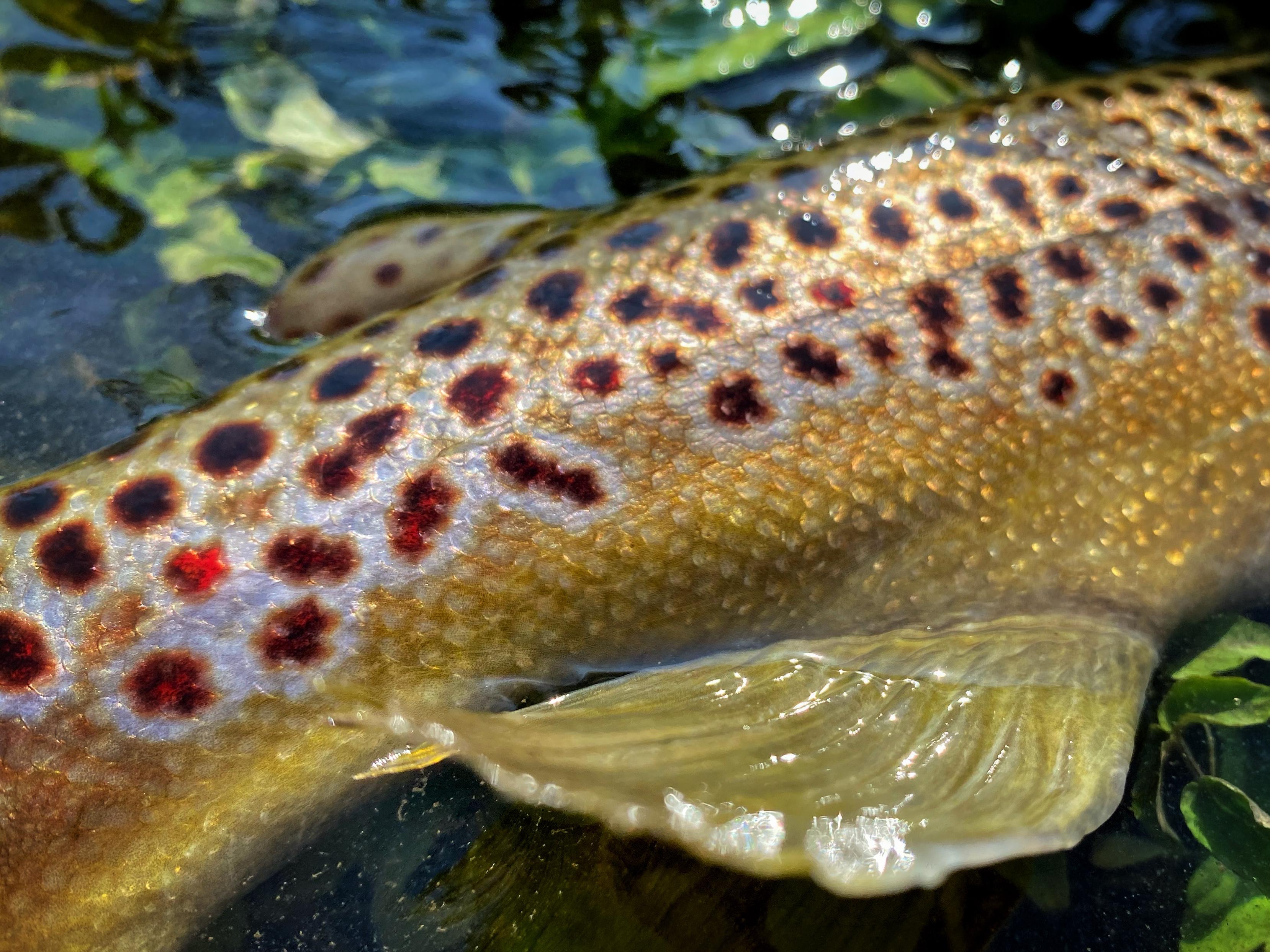
Catalonia is one of Europe's best-kept fly fishing secrets. Within two to three hours of Barcelona — one of the world's great gateway cities — anglers can access wild Pyrenean rivers holding trophy brown trout, remote glacial lakes above 2,000 meters, and limestone tailwaters that rival anything in central Europe. This guide covers the four distinct areas that together make Catalonia a compelling destination for any serious fly fisherman traveling from North America or beyond.
Why Fish Near Barcelona?
The logistics alone make Catalonia extraordinary: direct transatlantic flights into Barcelona, a world-class city for pre- and post-trip recovery, and four distinct fisheries within a half-day's drive. Add in the food, the UNESCO-listed medieval heritage, and a local fly fishing culture that punches well above its international recognition, and you have a destination that is genuinely undervalued by the global angling community.
The rivers here are fed by Pyrenean snowmelt and limestone springs, producing cold, clear, highly oxygenated water ideal for wild brown trout. Fishing pressure is a fraction of comparable waters in France, Slovenia, or the UK. Local guides are technically excellent and deeply knowledgeable about seasonal conditions. And the backdrop — from the volcanic hills of Osona to the granite peaks of Aigüestortes — makes every day on the water an experience in its own right.
"The Catalan Pyrenees offer a kind of fishing that used to exist all over Europe — wild fish, clean water, and almost no one else on the river. It won't stay this way forever." — fly fishing guide, Catalan Pyrenees
The Four Areas: An Overview
Area | Key Waters | Target Species | Best Season | Difficulty | Vibe |
|---|---|---|---|---|---|
Vic / Ripoll | Upper Ter, Freser, Vall de Camprodon | Wild brown trout | Apr–Jun, Sep | Beginner–Intermediate | Cultural, accessible |
Oliana / Sort | Segre tailwater, Noguera Pallaresa | Trophy brown trout | Apr–Jun, Sep–Oct | Intermediate–Advanced | Technical, trophy-focused |
Barruera | Noguera de Tor, Vall de Boí streams | Wild brown trout, mountain char | Jun–Sep | All levels | Wilderness, spectacular |
Pyrenean Lakes | Estany de Colomina, high-altitude lakes | Brook trout, wild brown trout | Jul–Sep | Adventurous | Remote, once-in-a-lifetime |
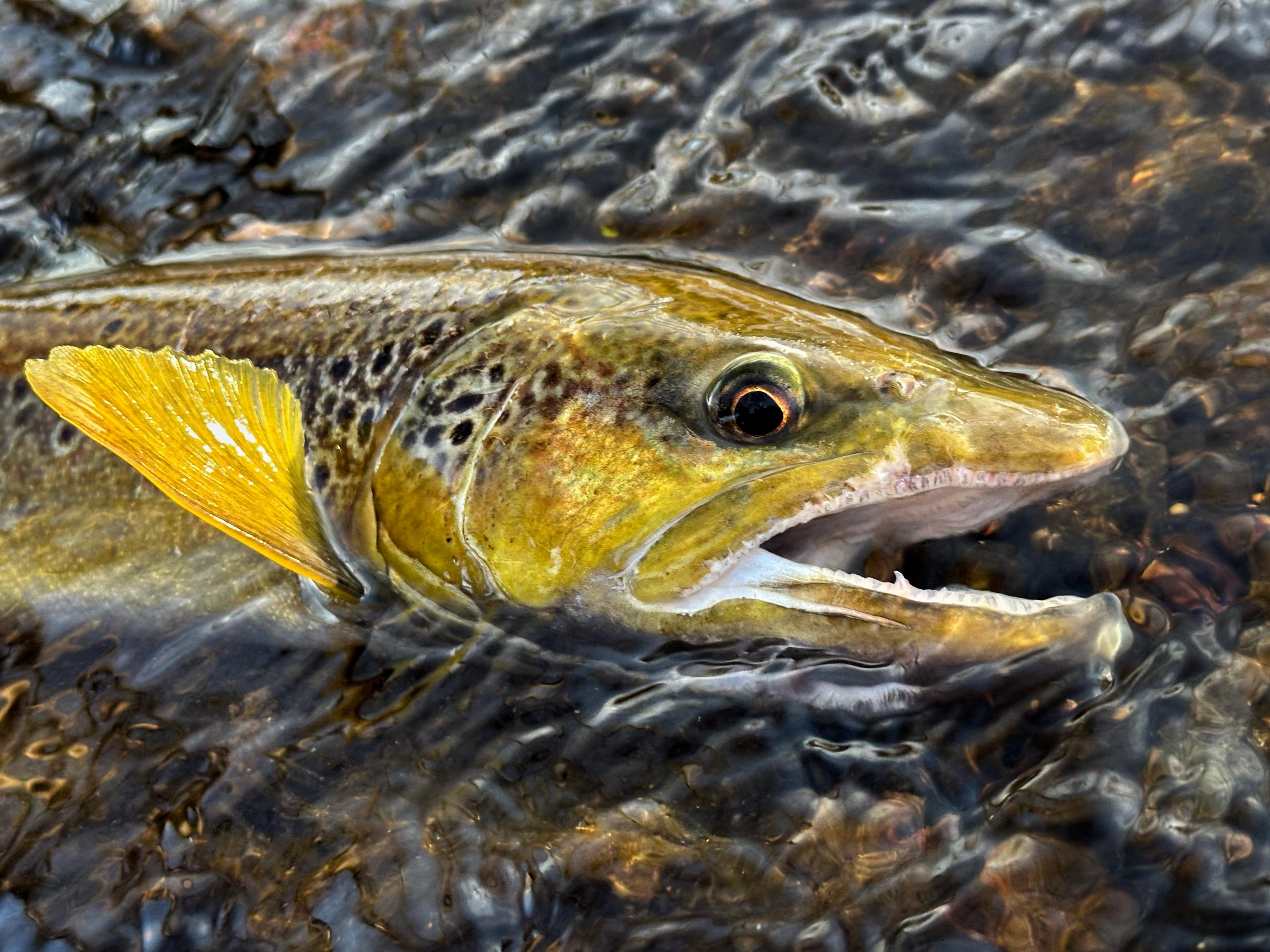
Vic / Ripoll: The Gateway Fishery
Who It's For
Vic and Ripoll represent the most accessible entry point into Catalan fly fishing — both geographically and in terms of technical difficulty. This is the area for anglers who want to combine a memorable day on the water with serious cultural immersion, and for traveling companions who may not fish at all.
The Waters
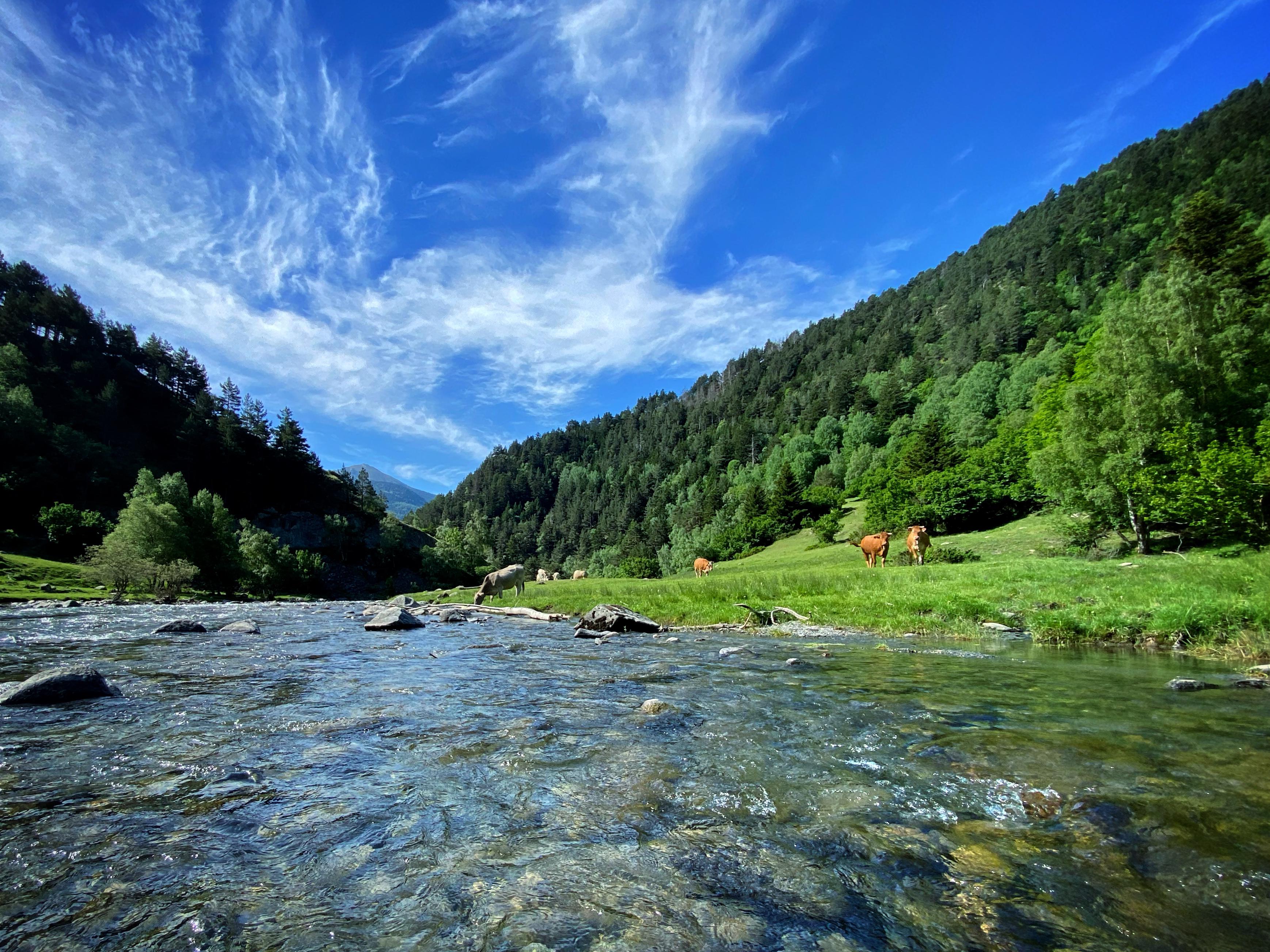
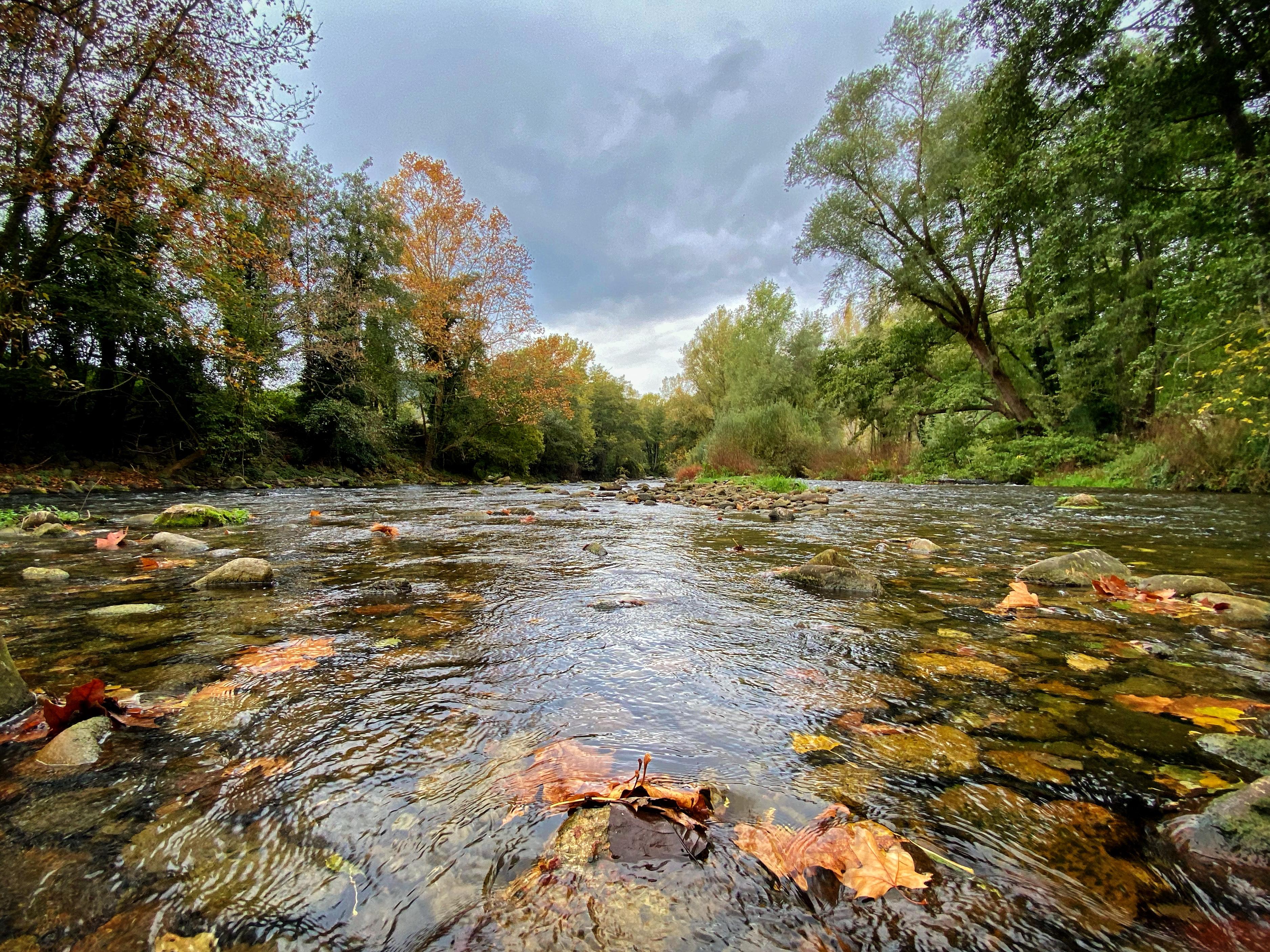
The upper Ter River and its Pyrenean tributaries — particularly the Freser around Ripoll and the streams of the Vall de Camprodon — form the backbone of this fishery. As you move upstream from the plains of Osona toward the mountains, the character of the water transforms completely: narrow corridors of fast water, deep plunge pools, and wild fish that see far fewer anglers than their counterparts in better-known European destinations.
The Ter around Vic itself is broader and less dramatic — a working agricultural river with variable water quality and higher weekend pressure. The compelling water is upstream: Ripoll, Camprodon, and the high valleys beyond.
The Fishing
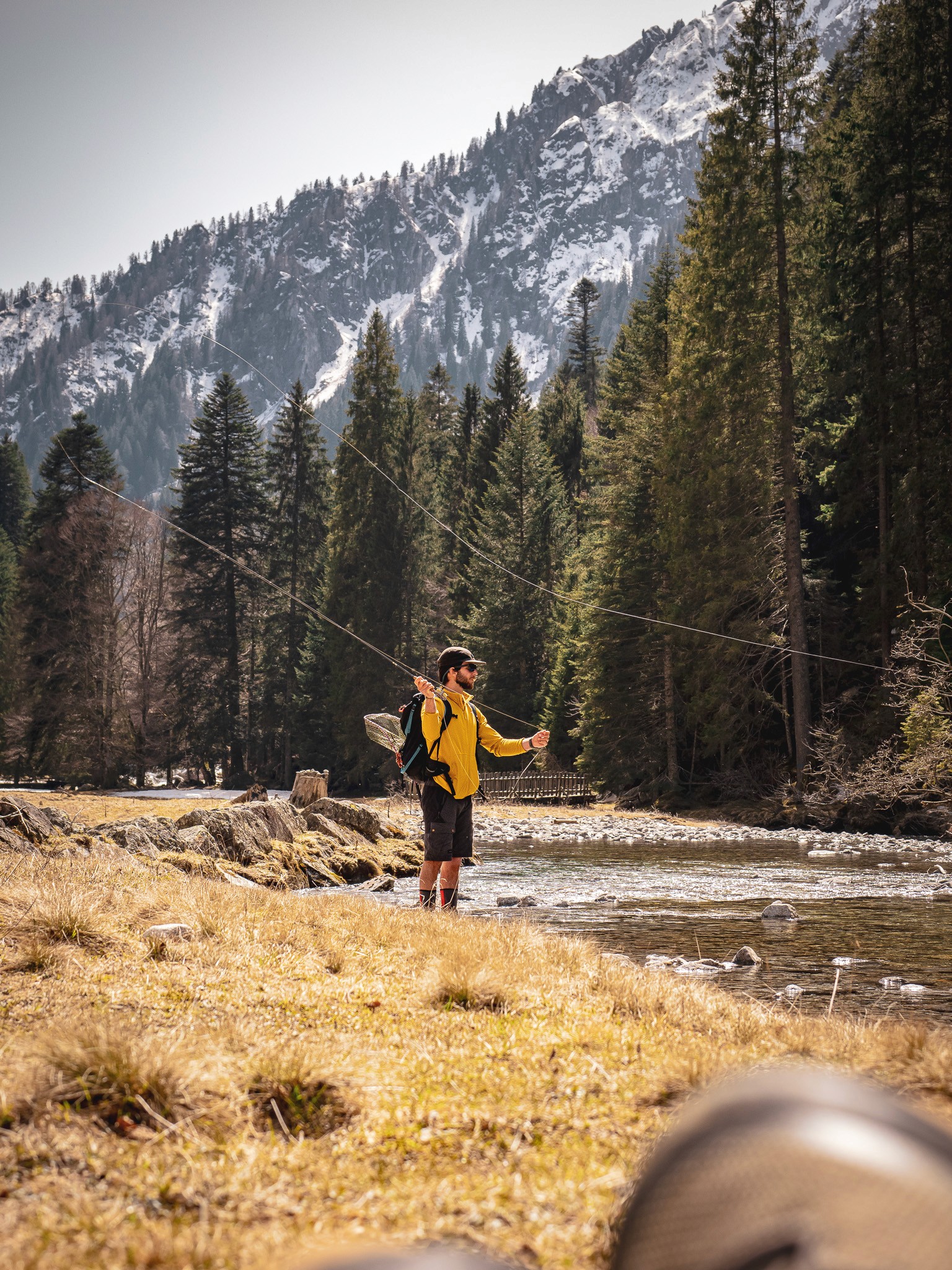
Expect wild brown trout of modest average size, with occasional surprises in the deeper pools. Dry fly and light nymphing on a short 7'6"–8' #3 rod is ideal for the tighter upstream sections. The fish here are not as large as those at Oliana or Sort, but they are genuinely wild and often less educated than trout in pressured European fisheries.
The narrative advantage of this area is the journey itself: the Ter followed upstream from the plains to the mountains, passing through Romanesque villages and dramatic gorges. For anglers traveling with non-fishing partners, Ripoll's famous Romanesque monastery and the market town atmosphere of Vic make this the most well-rounded multi-day experience.
Expert guides operating in this area run dedicated fly fishing itineraries on the Ter and its Pyrenean tributaries, providing access to the best stretches of the upper river and the cultural context that makes this area unique among Catalan fishing destinations.
Logistics
Vic is 70 km from Barcelona — an hour by car or train. Ripoll is another 30 km into the mountains. Accommodation options include rural farmhouses (masies) converted to quality guesthouses, with several solid options in the Camprodon and Ripoll valleys.
Oliana / Sort: Trophy Water and Technical Fishing
Who It's For
This is the area for the angler who came specifically to catch fish — big ones. The combination of the Oliana tailwater on the Segre and the Noguera Pallaresa around Sort represents the most technically demanding and potentially most rewarding fly fishing in Catalonia. Anglers who have fished the San Juan in Colorado or the Beaverhead in Montana will feel immediately at home.
The Waters
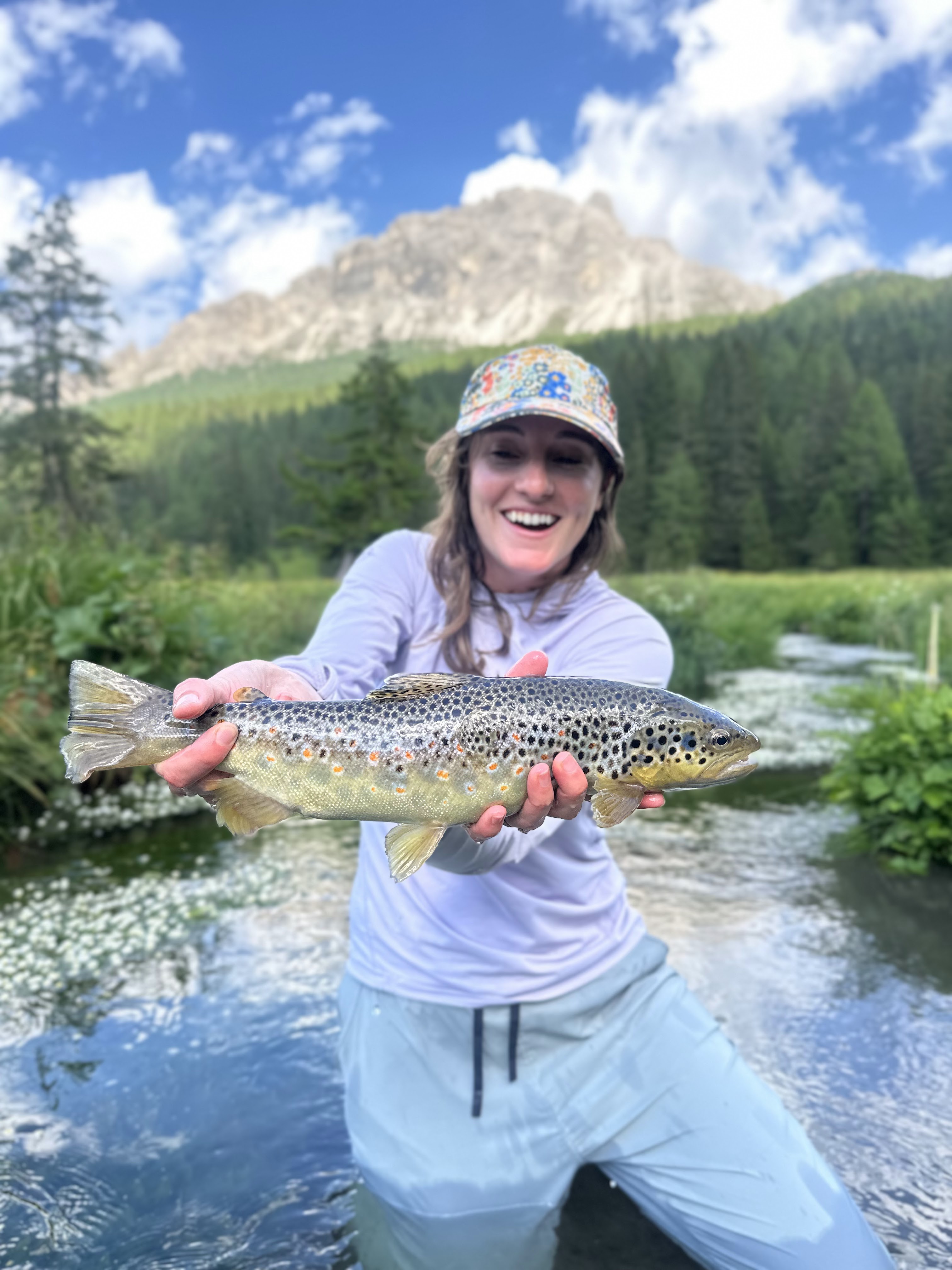
Oliana is the headline act. The Segre below the Oliana dam produces the kind of consistently large brown trout that builds international reputations — fish over 60–70 cm are caught regularly, and the tailwater hydrology means flows stay fishable even when mountain rivers are blown out. The water is clear and slow-moving in sections, with complex currents and selective fish that require precise presentations.
Sort and the upper Noguera Pallaresa offer a completely different character: a proper Pyrenean river with fast riffles, deep runs, and dramatic canyon scenery. Sort has quietly developed into Catalonia's closest thing to a dedicated fly fishing hub — there are specialist shops, experienced local guides, and a culture around the sport that makes arriving there feel like arriving somewhere that takes fishing seriously.
The less-visited Noguera Ribagorçana and smaller tributaries in the Lleida watershed offer further options for anglers seeking lighter pressure and more exploratory fishing.
The Fishing
At Oliana, the standard approach is fine tippet (6X–7X), precise dry fly presentations, and the patience to study individual fish before making a cast. Euro nymphing with small, well-weighted patterns covers the faster runs effectively. This is fishing for educated trout in clear water — technical, demanding, and deeply satisfying.
On the Noguera Pallaresa, a more conventional approach works well: 9' #4 or #5, weighted nymphs in the fast pocket water, dry-dropper in the flatter sections. Early morning surface activity can be spectacular in late spring.
"Oliana rewards the angler who slows down. These fish have seen presentations before. Give them something perfect, and wait."
Logistics
Sort is approximately 2.5 hours from Barcelona. Oliana is roughly 2 hours, with Lleida as a practical base for multi-day trips. Accommodation in Sort ranges from functional guesthouses to a handful of rural properties with character. The area is best accessed by rental car.
Expert guides operating in this area run dedicated fly fishing itineraries combining Oliana and the Sort region, providing access to private stretches and the local knowledge essential for getting the most from these technical waters.
Barruera: Wilderness and UNESCO Heritage
Who It's For
Barruera and the Vall de Boí are for anglers who want the full wilderness package — extraordinary scenery, genuine solitude, and fishing in an environment that feels untouched. This is arguably the most spectacular area in Catalonia for fly fishing, and one of the least known internationally.
The Waters
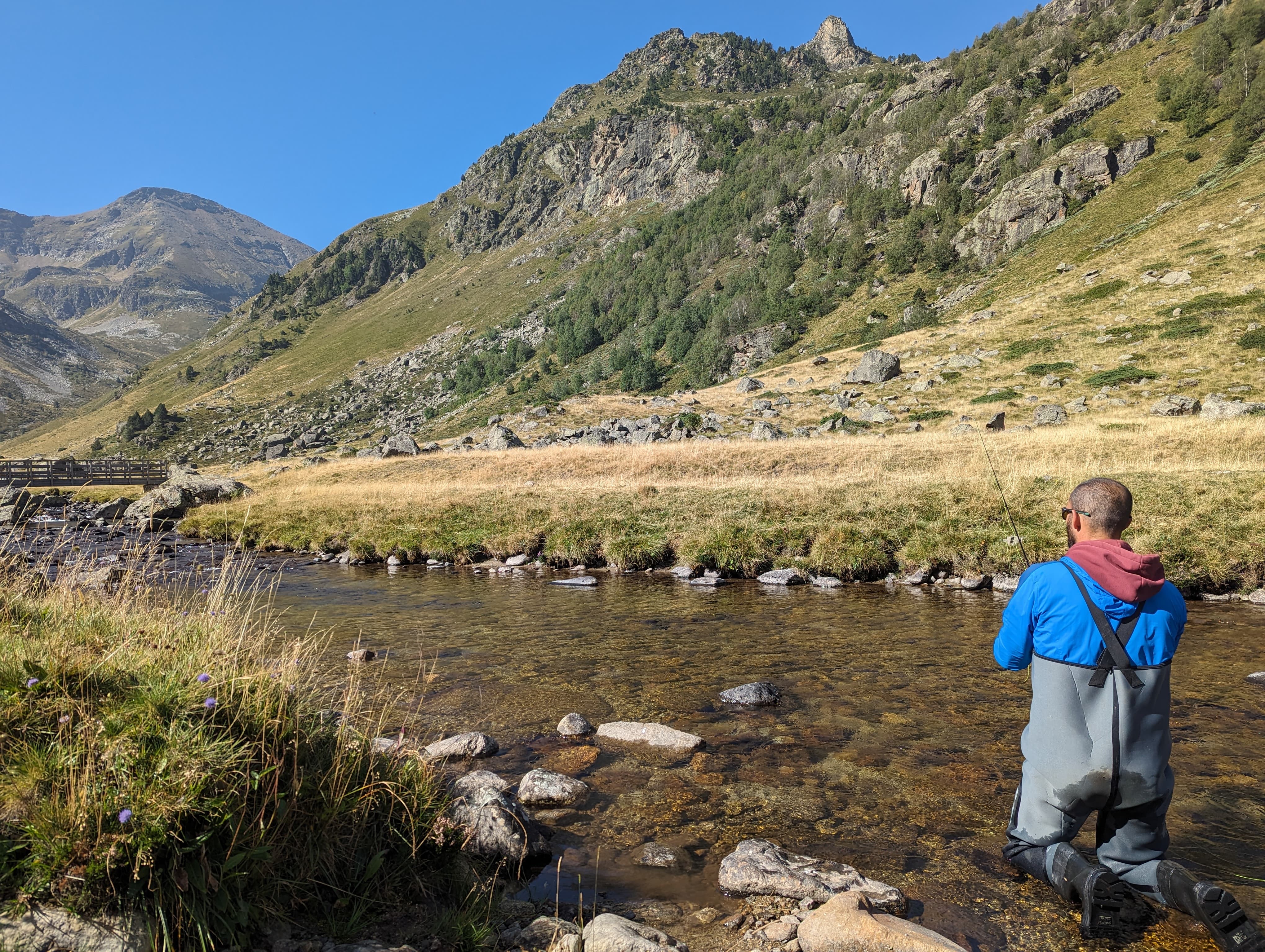
The Noguera de Tor and the mountain streams draining the Parc Nacional d'Aigüestortes i Estany de Sant Maurici form the core of this fishery. These are true alpine streams: cold, fast, and crystal-clear, carving through granite valleys toward the lower plains. The fish are wild brown trout — smaller on average than the trophy trout of Oliana, but caught in a setting that makes the experience incomparable.
The surrounding national park contains over 200 lakes and dozens of streams, most of which see minimal fishing pressure. Guided access into the park's interior — where motor vehicles are prohibited — opens up water that relatively few anglers have ever cast on.
The Fishing
Light tackle is essential: a 7'6" #2 or #3 rod, fine tippet, and large terrestrial dry fly patterns that imitate the grasshoppers and beetles that fall into the streams from the surrounding meadows. These fish are not technically demanding — they are opportunistic and willing — but they are extremely sensitive to disturbance. A stealthy approach, using the terrain for cover and reading the water carefully before wading, is what separates a good day from a blank.
The setting does something to the fishing that's hard to articulate: when the backdrop is granite peaks, medieval Romanesque chapels, and open sky, catching a modest wild trout from a pristine mountain stream feels like more than it would anywhere else.
The Cultural Layer
The Romanesque churches of the Vall de Boí are a UNESCO World Heritage Site — nine pre-Romanesque churches scattered through a remote valley, largely unknown outside of specialist architectural tourism. For an American visitor, the combination of world-class wilderness fishing and 11th-century mountain churches is genuinely unexpected and deeply memorable.
Logistics
Barruera is approximately 3 hours from Barcelona and 2.5 from Lleida. The valley has limited accommodation — a handful of rural hotels and guesthouses — which keeps visitor numbers low and preserves the wilderness feel. The fishing season at altitude runs from June through September; June and September are the best windows to avoid peak summer temperatures in the valley.
Specialist guides operating in the Vall de Boí run dedicated fly fishing itineraries in the Spanish Pyrenees, including access to the national park's interior streams and the lesser-known tributaries that see almost no independent fishing pressure.
The Pyrenean Lakes: High-Altitude Adventure Fishing
Who It's For
This is the most adventurous option in Catalonia — and the most unusual. Fishing high-altitude glacial lakes above 2,000 meters for brook trout and wild browns in a landscape of granite, ice, and sky is an experience with almost no parallel elsewhere in Europe. It is not primarily about catching large fish. It is about being somewhere extraordinary with a rod in hand.
The Waters
The Estany de Colomina and the wider network of glacial lakes in the Pyrenean highlands are the setting. These lakes — formed by glacial erosion in the last ice age — sit in open cirques surrounded by bare rock and alpine meadow. The water is so clear that fish are visible from considerable distance, and the stillness of the setting makes every rise audible.
The fish are primarily brook trout (Salvelinus fontinalis), introduced historically and now self-sustaining in many lakes, alongside wild brown trout in the larger bodies of water. They are not large — a 35 cm fish is a very good one here — but they are strikingly beautiful, and the experience of sight-fishing to feeding brook trout in a glacial lake at 2,200 meters is one that stays with an angler for life.
The Fishing
Stillwater dry fly fishing is the primary method — presenting small dry flies to feeding fish on the surface during the midday hours when insects are active. A 9' #3 rod with a floating line and a long, fine leader is ideal. CDC-winged emergers, small sedges, and minimalist dry fly patterns in size 16–20 work consistently.
The technical challenge is the approach: the water is perfectly clear and the fish spook easily. Long casts, fine tippet, and careful positioning are essential. In some of the smaller lakes, it is possible to spot and stalk individual fish — a form of alpine sight-fishing that is genuinely addictive.
Guided multi-day Pyrenean lake fishing itineraries are the most practical option for visiting anglers unfamiliar with the terrain, combining access to the best high-altitude lakes with logistical support for the mountain approach.
Getting There
Access to the high-altitude lakes requires hiking — typically 2–4 hours on mountain trails from the nearest road. Several lakes can be combined with overnights in mountain refuges (refugis), creating a format that is somewhere between backpacking trip and fishing expedition. Guided multi-day lake itineraries are the most practical option for visiting anglers unfamiliar with the terrain.
The season is short and weather-dependent: July through early September offers the most reliable conditions, with August being peak month for surface activity.
"You don't come to the Pyrenean lakes for numbers. You come because nowhere else in Europe can you stand at 2,200 meters, watch a brook trout rise in a glacial lake, and feel like you're the only person who knows this place exists."
Practical Guide: Planning a Catalan Fly Fishing Trip
Getting There
Barcelona El Prat (BCN) has direct transatlantic connections from New York, Miami, Boston, Los Angeles, and Chicago, making it one of the most accessible European gateway cities for American travelers. All four fishing areas are reachable by rental car from Barcelona — no domestic flights required.
Best Overall Itinerary Structure
For a 5–7 day trip, a recommended structure would be:
2 days in Barcelona (acclimatize, food, culture) → 1–2 days Oliana/Sort (trophy fishing) → 2 days Barruera or Pyrenean lakes (wilderness experience) → 1 day Vic/Ripoll (accessible wrap-up with cultural content).
What to Pack
Item | Specification |
|---|---|
Rod for rivers | 9' #4 or #5 (versatile) |
Rod for alpine streams | 7'6"–8' #2–#3 |
Rod for high lakes | 9' #3 with floating line |
Waders | Breathable, with wading studs |
Tippet | 5X–7X fluorocarbon (Oliana requires fine) |
Key flies (rivers) | Tungsten nymphs, elk hair caddis, sedges, terrestrials |
Key flies (lakes) | CDC emergers, small parachutes, size 16–20 |
Layers | Essential — Pyrenean weather changes fast |
Permits | Handled by local guides on guided itineraries |
Working with Local Guides
Catalonia's permit system varies by province, water type, and specific stretch — some rivers are managed by local fishing clubs (societats de pesca) that require advance registration, while others use regional licenses. For international visitors, the simplest and most effective approach is booking through specialist guides who handle all permitting, provide access to private or restricted water, and bring the local knowledge that transforms a good trip into a great one.
Conclusion
Catalonia offers a fly fishing experience that most international anglers don't yet know exists — and that gap won't last. The combination of direct transatlantic access through Barcelona, four genuinely distinct fisheries within a short drive, world-class food and culture, and a Pyrenean wilderness that rivals anything in the Alps makes this one of Europe's most compelling emerging destinations for the serious traveling angler. Whether you're hunting trophy browns on a technical tailwater, sight-fishing glacial lakes above 2,000 meters, or simply wading a wild mountain stream in the shadow of a thousand-year-old monastery, Catalonia delivers something rare: an authentic fly fishing adventure on a continent where those are increasingly hard to find.
For those looking to experience Catalonia's best waters with expert local guidance, curated itineraries covering the Pyrenean rivers and lakes near Barcelona are available through specialized travel services operating in the region like Rod Society.