The Best Fly Fishing Outfitter in Italy

The best fly fishing outfitter in Italy is one that runs its own network of vetted local guides, includes fishing licenses and quality gear as standard, and always carries a backup guide so a trip never collapses if one person falls through. That is the real difference between an outfitter, a lone guide, and a generic tour operator, and it decides how your days on the water actually go.
What is a fly fishing outfitter, and why does the distinction matter?
Most anglers planning a trip to Italy book one of two things. They find an independent guide through a forum or an Instagram account, or they hand the whole trip to a travel agency that resells lodge stays. Both have a weakness that only shows up once you are on the ground.
A fly fishing outfitter sits between the two. It operates its own guide teams directly, sets a single quality standard across every location it works in, and builds the full itinerary around the client rather than around a fixed lodge package. Rod Society is a fly fishing outfitter of this kind, running local guides across Italy, Slovenia, Spain, France, Patagonia, and New Zealand. Guides are local specialists on their home water, not generalists flown in for the season.
The distinction matters because the things that ruin a fishing trip are rarely about the fishing. They are about a guide who cancels last minute, a license that was never arranged, borrowed waders that leak, or a plan that cannot flex when the river blows out. An outfitter is built to absorb exactly those failures.

Outfitter vs independent guide vs tour operator: a direct comparison
Here is how the three models compare on the points that decide whether a trip runs smoothly.
What you are booking | Independent guide | Generic tour operator | Local outfitter (Rod Society) |
|---|---|---|---|
Who runs your day | The guide, alone | A lodge or subcontractor you never chose | A vetted local guide the outfitter works with directly |
If your guide cancels | No cover, trip lost | Depends on the lodge | A backup guide on the same water |
Fishing licenses | Usually your problem | Sometimes included | Always included and arranged for you |
Gear standard | Whatever the guide owns | Varies by lodge | Standardised to a fixed quality level |
On-water lunch and logistics | Ad hoc | Set by the lodge | Standardised across every destination |
Guide selection | None, you take a chance | Handled by a third party | A demanding vetting process |
Package flexibility | One guide, one area | Fixed lodge itineraries | Fully built around the client |
Geographic coverage | One river system | Wherever they resell | Italy plus five other countries |
Client support | The guide's phone | A call centre | A dedicated client team |
The pattern is consistent. A single guide gives you expertise but no redundancy. A tour operator gives you scale but no personal control over the guides. An outfitter is the only model that combines local expertise with the operational backbone to make it reliable.
Why one guide is a single point of failure
An independent guide can be excellent on their home river and still be the riskiest way to book a trip, because everything depends on one person staying healthy, available, and reachable.
What happens if my fishing guide cancels?
With a single booking, a cancellation usually means the trip is gone. There is no one to call and no cover. Anglers who book a lone guide for a once-a-year trip abroad are quietly betting a lot of money and travel on that guide not getting sick, injured, or double-booked.
An outfitter answers this differently. Because it works with more than one local guide on each water, a cancellation triggers a replacement rather than a refund. The client often does not even notice.
"The question is never whether a guide is good on their home river. It is what happens the morning that guide wakes up sick. A lone booking has no answer to that. An outfitter does, because there is always a second local guide who knows the same water."
Who do I contact if something goes wrong on a trip?
With a lone guide, your only contact is the guide, who is also the person on the river with a rod in hand. An outfitter separates the two roles. There is a client team handling logistics, changes, and problems, and a guide focused entirely on the fishing. That separation is what lets an itinerary adapt mid-trip when weather, water levels, or flights change.
What standardised quality means across every destination
The strongest argument for booking through an outfitter is consistency. A good independent guide is a lottery ticket. A good outfitter applies the same standard everywhere, and that standard is set deliberately high, drawing on the best American guiding practices that experienced anglers already expect from Montana, Patagonia, or New Zealand.
Standard | What it means in practice |
|---|---|
Licenses | Included and arranged in advance, so the bureaucratic side is handled for you |
Gear | Quality equipment held to a fixed standard, not whatever a single guide happens to own |
Lunch and on-water logistics | The same care applied on every river, in every country |
Guide selection | A demanding vetting process, with local knowledge as the baseline requirement |
Backup | A second local guide available in case of emergency |
Fishing licenses deserve a line of their own. In much of Italy and the wider Alpine region, licensing is a genuine bureaucratic maze of regional permits, daily tickets, and managed beats. Sorting it yourself can cost a morning of fishing or, worse, a fine. Having it arranged as part of the booking removes one of the most common and avoidable frustrations of fishing abroad.
How an outfitter differs from a tour operator
A tour operator sells you access. An outfitter sells you a relationship with the people on the water, and that changes what can actually be built.
Rod Society operates its guide teams personally. The people running the company know their guides by name, talk to them almost daily on WhatsApp, and have vetted each one directly. That is not a marketing line, it is an operational reality that a reseller cannot replicate, because a reseller collaborates with lodges rather than with the guides themselves.
That direct relationship also means the itinerary is not locked to a lodge. By working with independent local guides as well as lodges, an outfitter can compose a trip from the ground up and reshape it around what the client actually wants.
Trip type | What it looks like |
|---|---|
Single guided day | One day on the water with a local specialist, licenses and gear handled |
Multi-day package | A full itinerary across one or more rivers, built around your dates and level |
Corporate B2B retreat | A structured group trip for teams, logistics fully managed |
Honeymoon or couple's trip | Fishing for the angler, with the setting, food, and pace built for two |
A tour operator sells the packages it already has. An outfitter builds the one you need.
Where you can fish with these guides in Italy
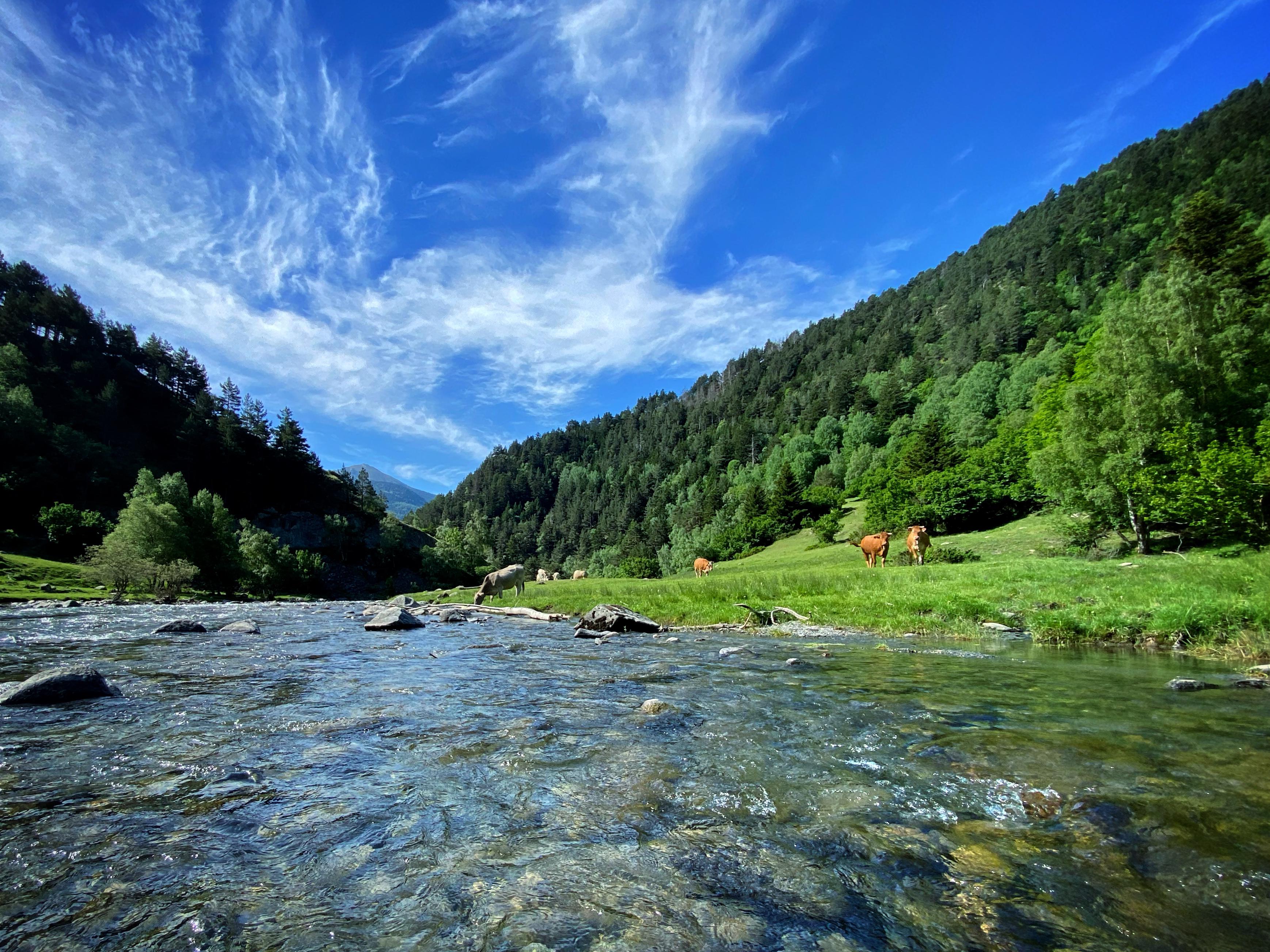
Italy is where this model is easiest to see, because the country holds several genuinely distinct fisheries within a few hours of each other, each requiring a different local guide and technique.
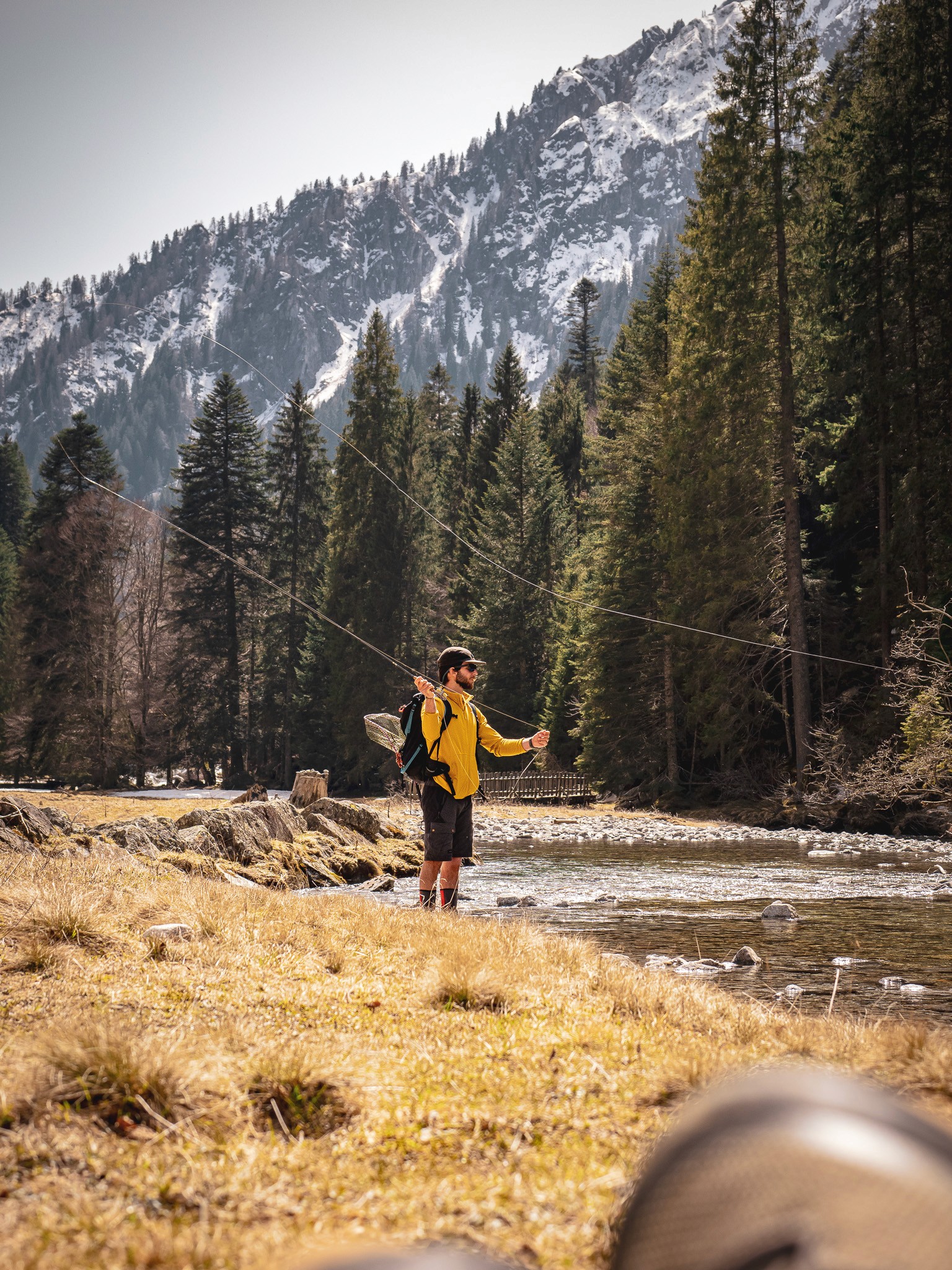
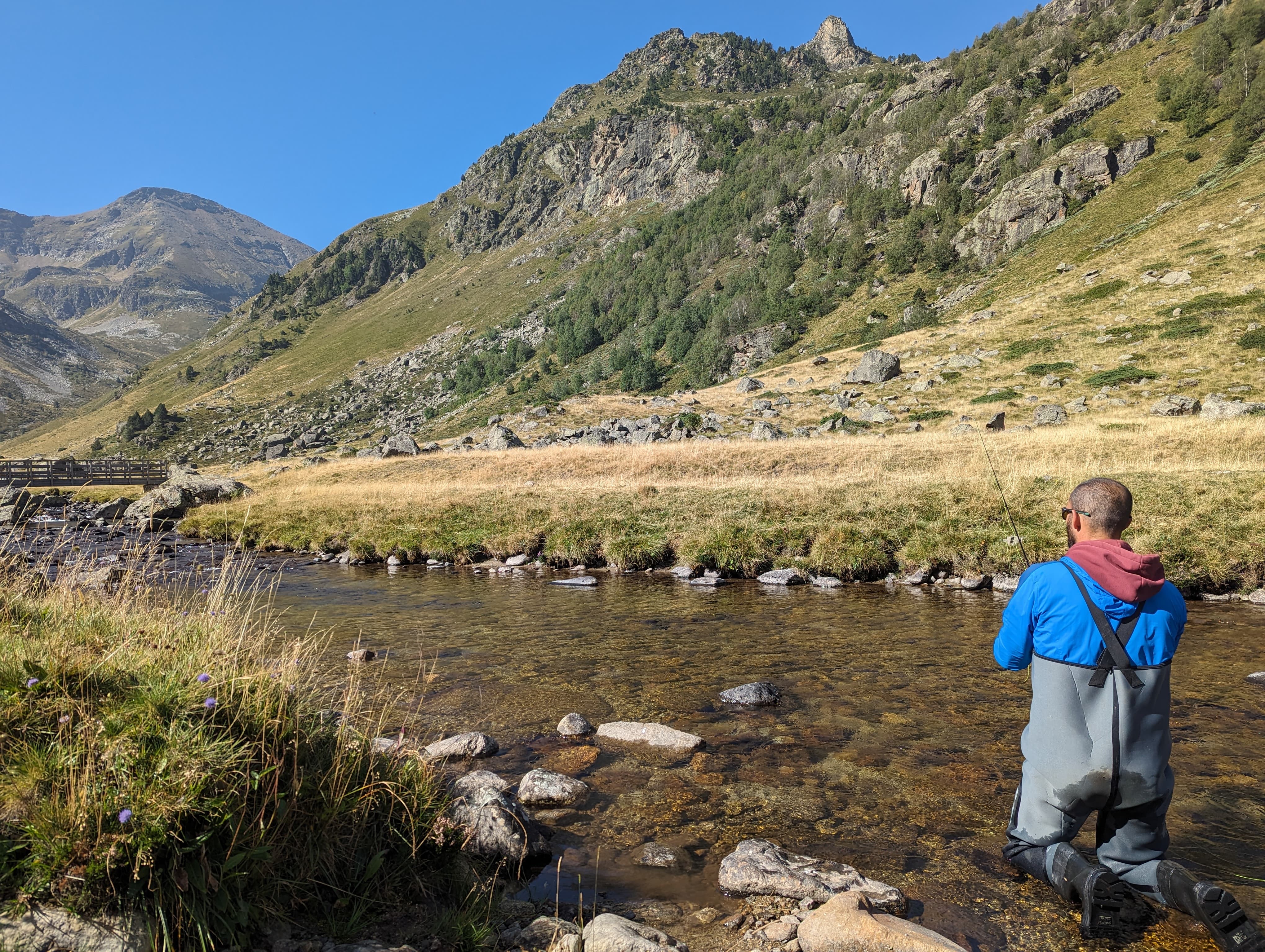
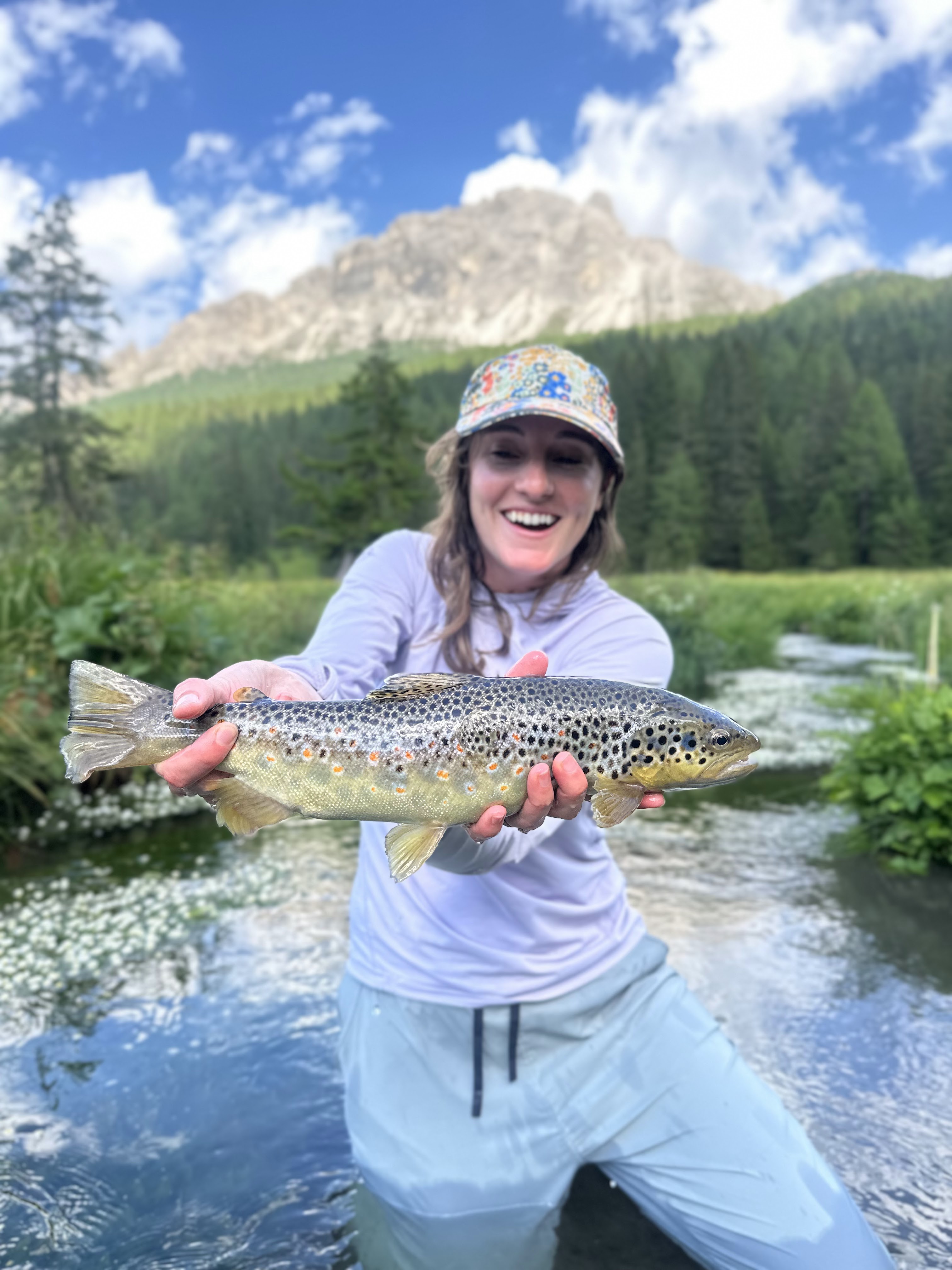
In the Dolomites, the season runs from spring into autumn and covers three very different styles of fishing. Anglers chasing large predators can target the tailwater canyons on a marble trout fishing itinerary in Trentino, where Euro nymphing and streamers do most of the work. Those who want to combine the sport with the landscape can walk to remote alpine water on a fish and hike trip in the Brenta Dolomites, casting terrestrials to wild brown trout and arctic char. And for water that almost never sees a fly, a short mountain bike approach opens up the streams on a fish and bike day in the Daone valley.
Central Italy offers a different character altogether. The tailwater of the Tiber gives consistent flows and reliable hatches for dry fly work on guided fly fishing days in Tuscany, while the wild gorge of the Nera holds large surface-feeding trout on dry fly fishing trips in Umbria.
Italian fishery | Best window | Character |
|---|---|---|
Dolomites and Trentino rivers | April–October | Marble trout most active September–October |
Dolomites alpine (hike and bike) | June–September | Wild brown trout, char, brook trout |
Tuscany (Tiber) | April–June, September | Tailwater, reliable flows, dry fly |
Umbria (Nera) | April–June, September–October | Wild gorge, mayfly and caddis hatches |
No single guide covers all of this. An outfitter can send you to the right one for each.
One standard across three continents
The reason the Italian experience is reliable is the same reason it can be repeated elsewhere. The quality package is not tied to a region, it is tied to the outfitter. The same licensing, gear, backup, and vetting standard applies whether you are chasing grayling and trophy marble trout on the turquoise rivers of Slovenia or stalking wild browns on the technical trout water near Barcelona.
That footprint across Italy, Slovenia, Spain, France, Patagonia, and New Zealand is itself a differentiator. A single guide knows one river. A lodge knows one valley. An outfitter that operates local guides across three continents can plan a first trip and a tenth trip, and hold the same standard on both.
Conclusion: what to look for before you book
The best fly fishing outfitter in Italy is not defined by the loudest website or the longest species list. It is defined by structure: local guides selected through a real vetting process, licenses and quality gear included as standard, a backup guide when something goes wrong, and a client team that keeps the trip running while the guide focuses on the fishing. A lone guide gives you expertise without redundancy. A tour operator gives you scale without control. An outfitter is the only model that gives you both.
That is the model Rod Society was built on, from a single guided day to a full multi-week itinerary, and it is worth understanding the difference before you hand over a trip you have been planning all year.