
San Martín de los Andes, Patagonia
Volcanic creeks of Patagonia
Nov - Apr
San Martín de los Andes, Patagonia
Is this experience right for me?
Fishing challenge
Physical effort
Non-angler friendly
Technique
Nymph & dry fly
Fish
Brown & Rainbow Trout
Environment
Freestone river
Fly fishing San Martin and Junin de Los Andes
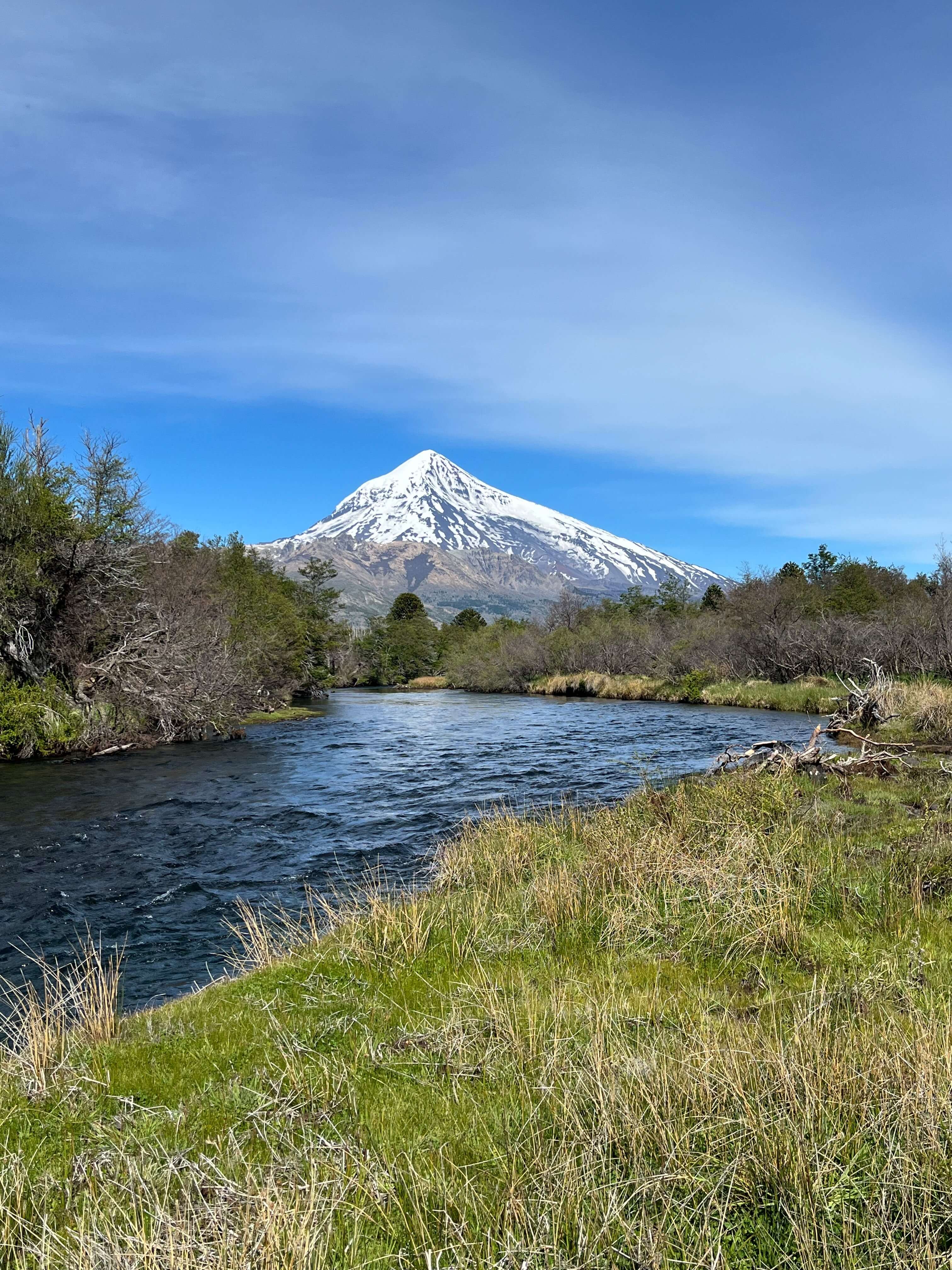
San Martín de los Andes is the name most travelers know on the Route of the Seven Lakes, but the fishing that built its reputation lies just to the north, around Junín de los Andes, the town Argentina officially calls its national trout capital. The Chimehuín, the Malleo and the Aluminé run here beneath the snow cone of Lanín volcano, and they are rivers with real history: in the middle of the last century they drew some of the first American anglers to Patagonia and helped turn this corner of Argentina into one of the great names of fly fishing, a reputation the water still lives up to today.
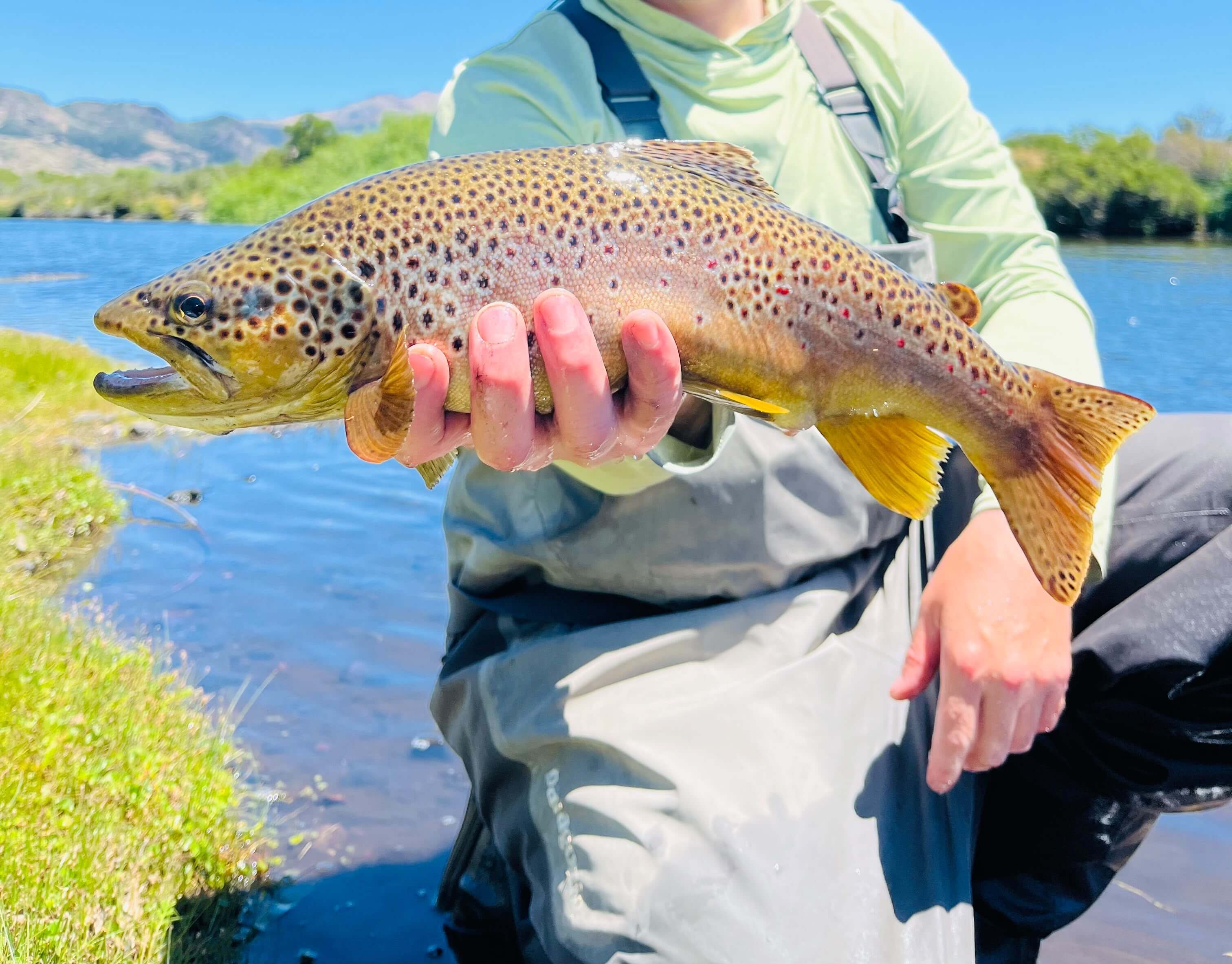
What makes the fishing here so particular is the contrast between the size of the water and the size of the fish. Many of these rivers and spring creeks are small enough to read at a glance and clear enough to see every stone on the bottom, and yet they hold brown trout of a size that most anglers would only expect from big rivers, alongside strong, bright rainbows in the faster runs. This is one of the few places in northern Patagonia where the fishing can be done entirely on foot, and much of it is sight fishing: you spot the trout, study how it feeds, and put a fly in front of it with a light rod and a fine tippet, which is as demanding as it sounds and as rewarding as fly fishing gets when it comes together. For anglers who want to cover more water, or simply alternate a day of wading with something different, the larger rivers of the area can also be floated by raft, drifting through open steppe and stopping on the banks to fish the best runs, so that each day can be shaped around the conditions, the angler and the kind of fishing they came for.
It will not always come together. Clear water means fish that see you before you see them, the wind that comes down from the Andes on most afternoons makes an accurate cast harder precisely when it matters most, and the largest browns are as wary and selective as any trout in Patagonia. Anglers who come here for the quiet, careful kind of fishing, who enjoy hunting a single fish more than counting many, will find some of the most memorable water in South America. From December to February the rivers are warm enough to fish in wading boots and shorts, and on float days lunch is served on the riverbank, with an asado and a bottle of Argentine red.
San Martín, with its lakefront, restaurants and easy access to Lanín National Park, makes a comfortable base for travelers who come with a non-fishing partner, while anglers who want to be as close as possible to the water can stay in Junín.


Meeting point
San Martín de los Andes
On the shore of Lago Lácar at the northern end of the Route of the Seven Lakes, a lively mountain town of timber houses and good restaurants that makes a comfortable base for a week in Patagonia. The rivers lie about forty minutes away around Junín de los Andes, Argentina's national trout capital and the historic heart of fly fishing in the region.
Catches & Technique for San Martín and Junin de Los Andes
Target species. Brown trout (Salmo trutta) are the main prize, with fish that are often remarkably large for the size of the water they live in. Rainbow trout (Oncorhynchus mykiss) are found mainly in faster water and are generally more numerous and more willing to take.
Techniques. Walk and wade is the core of this itinerary, with a strong emphasis on sight fishing in clear water, and float days by raft on the larger rivers are available for anglers who want them. Dry flies and terrestrial patterns are the heart of the summer season, nymphs are used for sighted fish holding deep or feeding below the surface, and streamers, cast from the bank or from the raft, are effective for larger browns, especially early and late in the season. Stealth, accurate presentations and the ability to cast in wind matter more here than distance. The fishing rewards experienced anglers, but guides adapt each day to every level, and less experienced anglers will learn a great deal on water this clear.
Season. The season runs from early November to late April. Early season often brings higher flows that favor nymphs and streamers; December to February is the heart of the dry fly and sight fishing season, with warm days and conditions for wet wading; from March onward the weather cools, the rivers are quieter and browns become more aggressive as the season closes.
Recommended gear
9 ft, 5-weight rod with a floating line for dry fly, nymph and sight fishing on creeks and smaller rivers
9 ft, 6-weight rod with a floating line and a sink-tip for streamers, float days and windy conditions
Fine tippets for clear water, with enough strength to land large fish quickly
Breathable waders for November, March and April; quick-dry trousers or shorts for wet wading from December to February
Wading boots with rubber soles, neoprene socks for wet wading, polarized glasses, sun protection and wind layers


Includes
✅ Professional fly fishing guide
✅ All necessary fishing equipment (rod, flies, reel and lines)
✅ Boat rental
✅ Fishing license
✅ Refreshments and snacks
✅ BBQ lunch & drinks
➕ Accommodation (on request, we arrange it for you)
❌ Flights / travel to reach the meeting point
❌ Anything not explicitly mentioned
FAQ
Are fishing licences included in the price?
Yes. It's one of the most significant daily costs of a fishing trip — which is exactly why we include it in your final quote upfront, so there are no surprises when you arrive.
We handle the purchase for you. You show up, pick up your rod, and fish. If you're planning extra days on the water independently before or after your guided experience, we're happy to help you navigate the process for those too.
Is this itinerary available as a half-day experience?
No, full-day only.
This itinerary is available exclusively on a full-day basis due to the time required to reach the fishing areas and the nature of the experience. A half-day option would limit both fishing time and overall quality.
Is this experience private or group-based?
This Rod Society experience is strictly private and we don't do mixed groups. Your itinerary is fully crafted around your specific group and skill level. Whether you are traveling solo or with a large group, you will have dedicated private guides to ensure a seamless, high-touch experience.
What equipment should I use?
The ideal setup is a 9 ft rod for a 5-weight line, perfect for dry fly, nymph and sight fishing on the clear creeks and smaller rivers, together with a 9 ft rod for a 6-weight line and a sink-tip for streamers, float days and the windy afternoons typical of Patagonia. If you don't have them, our guide can provide the necessary equipment, although you are always welcome to bring your own favorite rod and line. Clothing matters as much as tackle: bring waterproof and windproof layers, a warm layer for cold mornings and UV protection, and from December to February pack quick-dry trousers or shorts and neoprene socks for wet wading.
Why should I book here?
We craft itineraries with trusted local guides to ensure an exceptional experience with top professionals who know the waters inside out. We always include fishing licenses, so you don’t have to deal with any local bureaucracy or paperwork. We also provide top-notch equipment: rods, waders, and flies. We travel a lot too, and we know that sometimes you simply can’t carry five rods, boots, waders and bulky gear with you.
We’ve got your back.
Cancellation Policy
Our cancellation policy is designed to be fair and flexible. If you add Flex Cancellation at checkout, you can cancel your reservation up to 14 days in advance and receive a full refund of your deposit. If your plans change but you’d still like to fish with us, you can also reschedule and book another experience. This gives you the confidence to plan your trip knowing you have the flexibility you need.
Which airport is the nearest?
The nearest airport is Chapelco Airport (Aeropuerto Aviador Carlos Campos), which lies between San Martín de los Andes and Junín de los Andes, about half an hour by car from both towns, with direct flights from Buenos Aires. Here is the location on Google Maps for your reference: Chapelco Airport. Travelers combining this trip with our Bariloche itineraries can also fly into San Carlos de Bariloche and reach San Martín along the Route of the Seven Lakes, a drive of around four hours through some of the most beautiful scenery in Patagonia.
Do your guides speak English and other languages?
Yes, all our guides are locals and are trained to communicate effectively with an international audience. They are fluent in English and the local language, and many of them speak additional languages to ensure a seamless experience for everyone.
What happens if the weather is unsuitable for fishing?
If our guides determine that the weather or water conditions are unsuitable for fishing, you will receive a full refund. Alternatively, we can reschedule your trip for the soonest available date that works for you.
If you still need support you can contact us anytime!
From 600$
Walk and wade volcanic creeks near San Martín de los Andes, sight fishing for big brown and rainbow trout below Lanín volcano, or float by raft.
Where next?
Explore other destinations


