Fly Fishing Barcelona: Ter and Lleida Tailwaters
Most anglers arriving in Barcelona assume the fishing means a drive into the Pyrenees. It does not. There are two entirely separate trout fisheries within about an hour of the city, in opposite directions, and they are different enough that choosing between them matters more than choosing a date. Rod Society is a fly fishing tour operator running two guided day trips from Barcelona: freestone fishing in the Ter Valley from Vic, and tailwater fishing for large brown trout on the Segre and the Noguera Ribagorçana from Igualada.
This guide covers what each system is, when it fishes, what the Catalan licence and permit rules actually require of a visitor, and how to decide which of the two is right for the week you are travelling.
The two systems at a glance
Ter Valley | Segre and Noguera Ribagorçana | |
|---|---|---|
Direction from Barcelona | North, meeting at Vic | West, meeting at Igualada |
River type | Freestone, flows follow rain and snowmelt | Tailwater, flows follow releases |
Main technique | Euro nymphing, dry fly higher up and on summer evenings | Euro nymphing, streamer when water rises |
Fish | Wild Mediterranean brown trout, rainbow trout in the lower river | Brown trout, larger on average |
Typical size | Varies by section, trophy stretches on the lower river hold fish over 50 to 60 cm | Most days produce fish of 14 to 18 inches, specimens to 27 inches present |
Character | Three different environments across roughly 50 km of valley | Two rivers, choice made on the day according to water |
Winter | Constrained by the Catalan salmonid season | Fishable, streamers become the main method |
What fly fishing near Barcelona actually is
Neither of these is remote water. Both run through working Catalan landscapes rather than protected wilderness, both are fished regularly by local anglers, and the trout in each have seen flies before. That is worth saying at the start, because the region is sometimes sold on scenery it does not have.
What it does have is range. Within an hour’s drive in either direction you can fish a freestone valley that changes character three times over fifty kilometres, or a pair of clear tailwaters holding browns considerably above the regional average. An angler with two free days can fish one of each without moving hotel, which is unusual this close to a major European airport.
Euro nymphing dominates both systems, for different reasons. On the Ter it is the method that covers variable freestone flows and pocketed structure most efficiently through the main part of the season. On the Lleida tailwaters the current runs fast over a clear bed and a precisely placed heavy nymph outfishes a drifted dry on most days. Dry fly fishing exists in both places and is genuinely good in its windows, but it is a window rather than the plan, and anyone whose idea of a good day is exclusively dry fly should say so when enquiring so the guide can pick the day and the water accordingly.

North to Vic: the Ter Valley
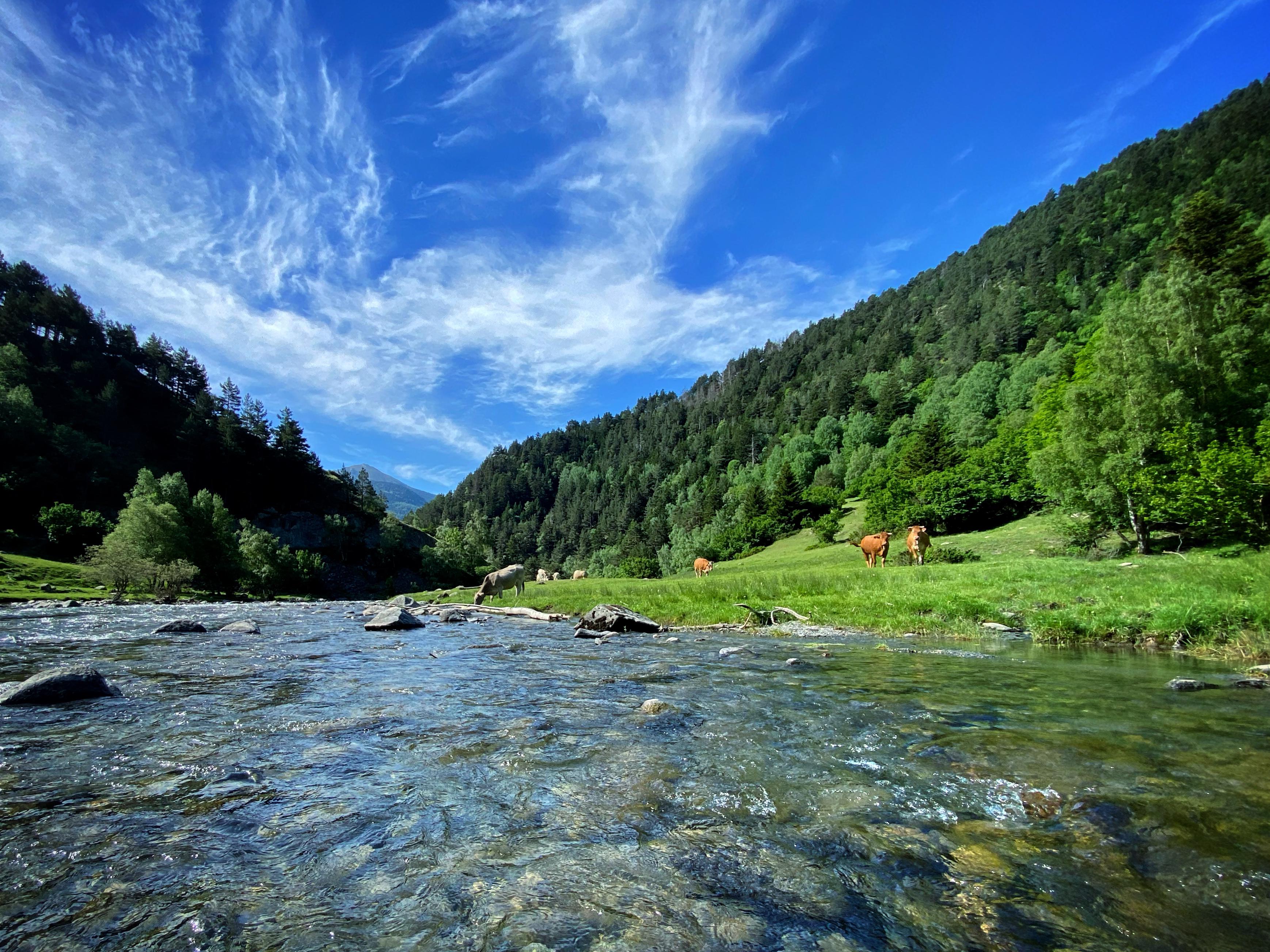
The Ter Valley runs roughly fifty kilometres from the pre-Pyrenean foothills up to the rock wall that closes it at the top, and the trip meets in Vic, just over an hour north of Barcelona. Because it is a freestone system, conditions follow rainfall and snowmelt rather than a release schedule, which makes the valley more variable than the tailwaters and also more interesting, since the guide is choosing between three quite different types of water on the morning rather than between two beats of the same river.
The lower Ter
The lower valley holds the widest and most technical water on the trip. Long deep glides run clear, both brown and rainbow trout are present, and the fish are educated enough that the approach and the drift matter considerably more than the pattern on the end. The trophy sections here hold fish regularly exceeding 50 to 60 centimetres, well above the average, and this is nymphing water first. A ten foot three weight covers it comfortably. It rewards anglers who work one run properly rather than covering ground.
A guided day in the Ter Valley from Vic generally starts on this water and moves up the valley as conditions dictate.
The mid valley
Through the middle of the valley the river breaks into riffles that come alive with rising fish on summer evenings. This is the most reliable dry fly window on the Ter, and it is the reason some anglers ask for a later finish in June and July rather than a standard daytime session.
The upper valley: the Freser and the mountain creeks
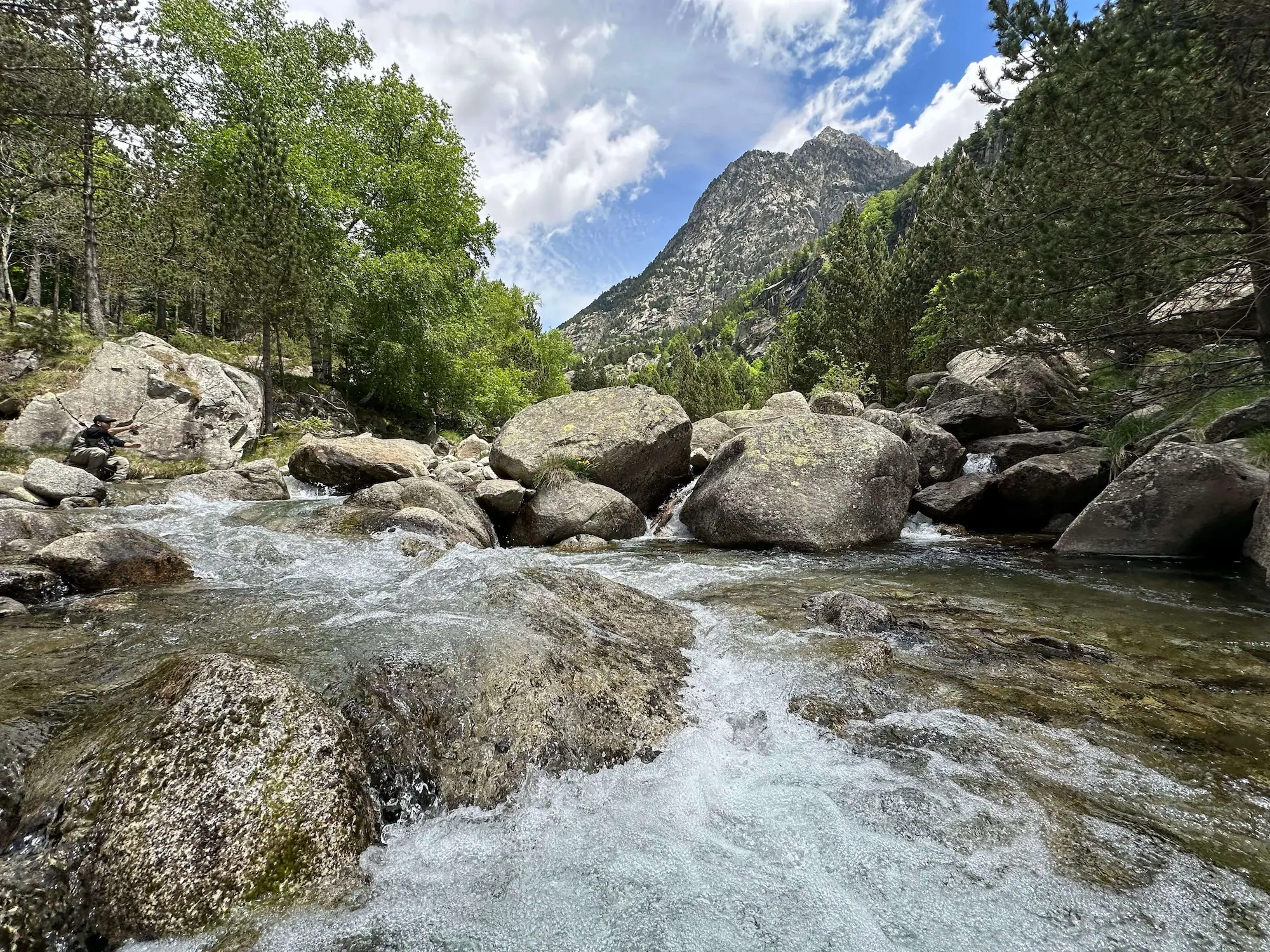
Above the mid valley the gradient steepens and the water gets faster and colder. The Freser and the surrounding mountain creeks hold wild Mediterranean brown trout, and the creeks above Ripoll hold smaller fish than the main river carries. The fishing here is short line nymphing and small dries at close range rather than long drifts. The appeal is the character of the water and the wildness of the fish rather than their size, and the same ten foot three weight handles it.
Above the treeline
At the top of the system there are Pyrenean lakes holding native trout. They are the most weather dependent part of the valley and the furthest from the meeting point, so they belong to a settled summer day rather than a default itinerary.
West through Igualada: the Segre and the Noguera Ribagorçana
Leaving Barcelona westward the road climbs the Llobregat valley, runs along the flank of Montserrat, and then opens onto the plain of the Segre: burnt fields, abandoned farmhouses, a Catalonia that most visitors never see. The trip meets in Igualada, roughly an hour from the city, and fishes two Ebro tributaries fed off the Pyrenees, the Noguera Ribagorçana and the Segre, both in the province of Lleida.
These are tailwaters, and that single fact explains most of the difference between the two trips. Flows are governed by releases rather than weather, the water stays fishable when the freestone rivers are blown out or closed, and the fish grow larger on a more consistent food supply. Which of the two rivers fishes better shifts with the season and the water, so the choice is made close to the day rather than at the time of booking.
What the fishing is like
The water typically runs low and the current fast, and that combination is what makes hunting fish by sight possible: you can work in close enough to place a nymph exactly where it needs to be on a trout you have already located. Euro nymphing accounts for the large majority of fish. Streamers fished down and across come into play whenever the water rises, and through the winter they become the main approach rather than the alternative. Dry fly fishing happens on calm evenings and in the slower glides, but it is occasional.
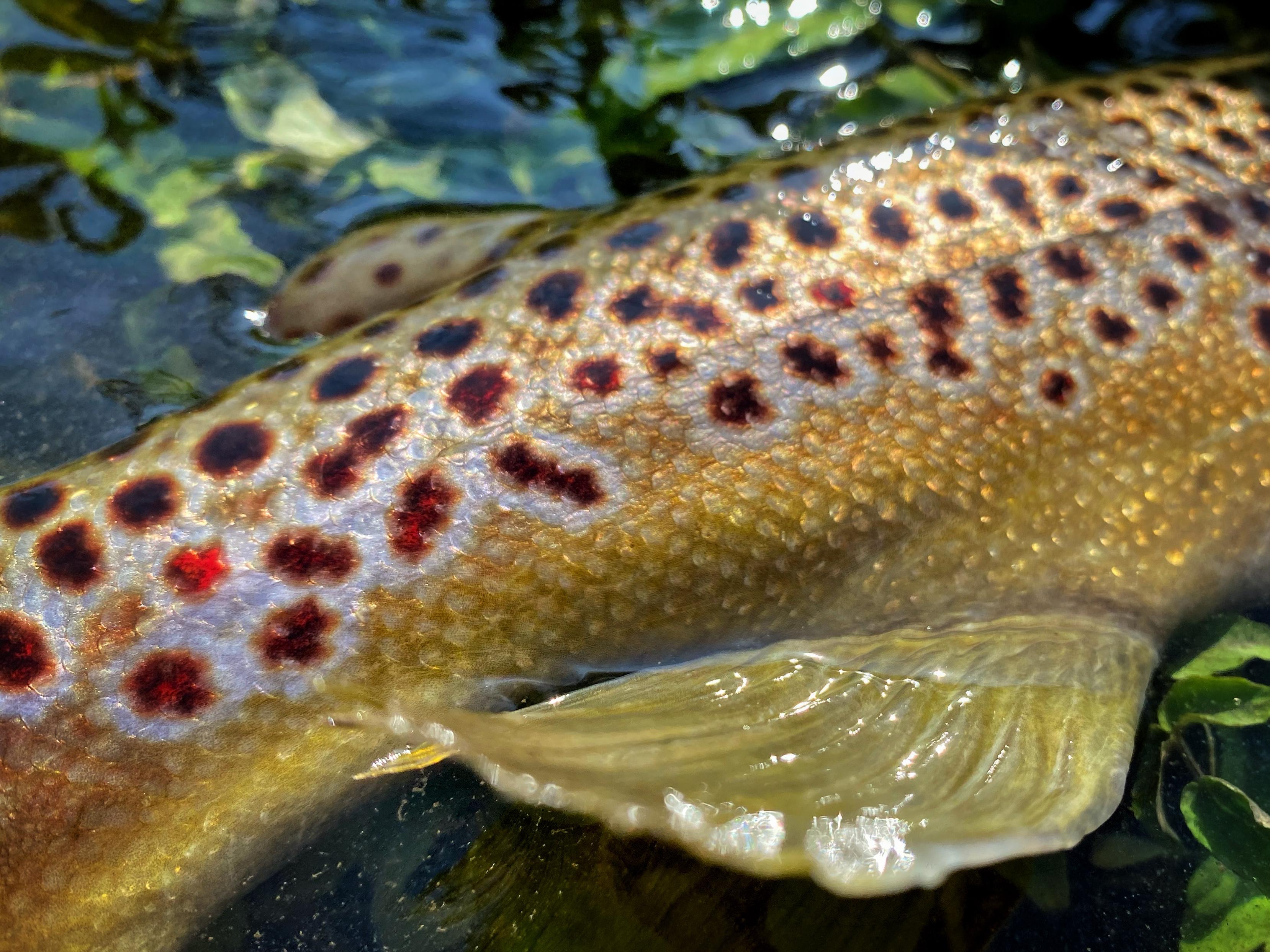
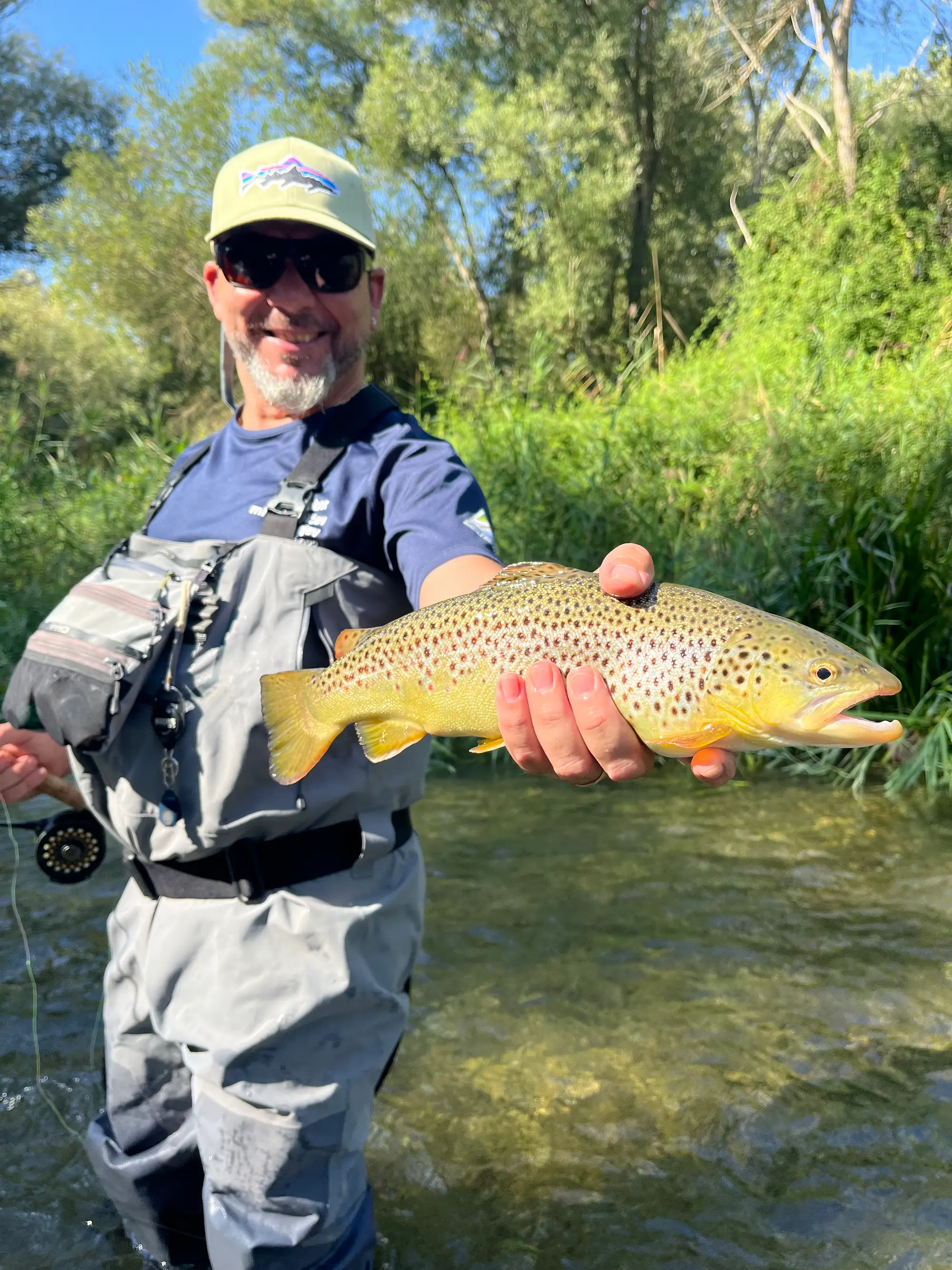
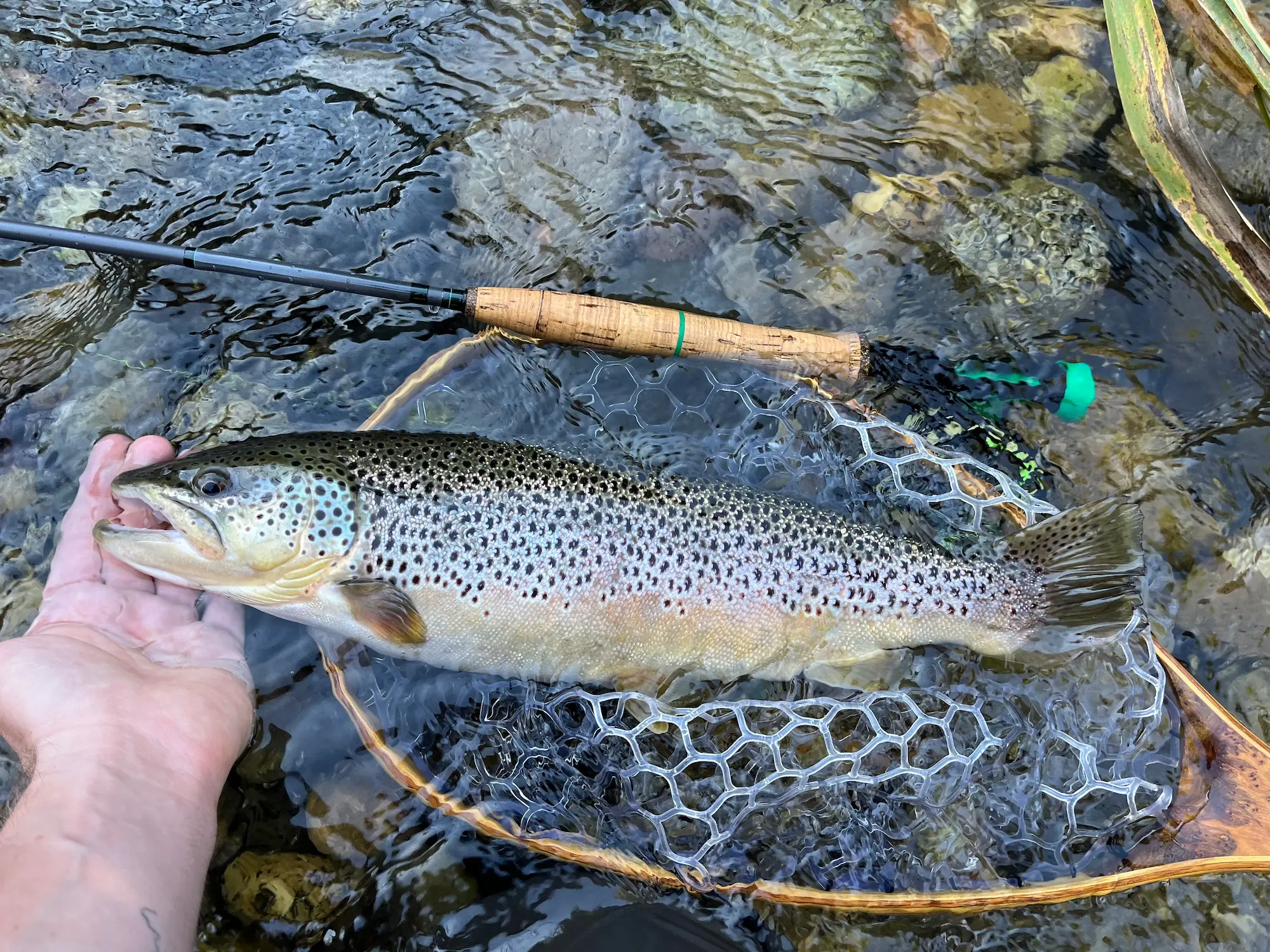
The fish are worth being specific about. Most days produce brown trout of 14 to 18 inches, which is a good average for southern Europe, and genuine specimens up to 27 inches are present in both rivers. The water is clear and the trout are fished over regularly, so refusals are an ordinary part of a day here rather than a sign that something has gone wrong. Hunting the largest fish is what the trophy trout day on the Segre and the Noguera Ribagorçana is built around, and it is also the reason a guide will sometimes tell you to wait rather than cast. A trout that shifts off its lie to look at something is worth an hour. One sitting planted on the bottom is worth two casts.
Why the winter matters
Winter is where these rivers earn their place rather than serving as a second option. The stretches stay fishable through the coldest months, when the mountain rivers of the region are closed under the Catalan season rules, and streamer work becomes the primary method. For anyone in Barcelona between November and March with a free day, this is the trout fishing that is actually available. The strongest windows across the year are early summer and late summer, but the winter availability is the part visiting anglers rarely expect.
When to fish
The two systems run on different calendars, and that is the practical case for treating the region as a year round destination rather than a spring one.
The Catalan season is set annually by resolution. Under Resolució ARP/902/2026, which governs the 2026 season, low mountain salmonid waters run from 21 March to 12 October in the catch and release modality and from 21 March to 30 August where taking fish is permitted. High mountain salmonid waters open later, from 9 May, closing on the same dates. Low mountain intensive zones are open all year in the catch and release modality. Dates move by a few days each season, so check the current resolution rather than a previous year's summary.
Period | Ter Valley | Segre and Noguera Ribagorçana |
|---|---|---|
Late March to May | Season opens on the lower valley, conditions follow snowmelt and rain, nymphing dominant | Fishing available, nymphing dominant |
June and July | Mid valley evening rises, upper creeks and the Freser come into their own | One of the two strongest windows of the year |
August and September | Upper valley and creeks stay cooler than the lower river | The other strongest window of the year |
October | Season closes on 12 October in most salmonid zones | Fishing continues |
November to March | Constrained by the salmonid season, availability depends on which zones remain open | Fishing continues, streamers the main approach |
Licences and permits in Catalunya
Two documents are required for most fishing in Catalonia, and confusing them is the most common planning mistake a visitor makes.
The first is the recreational surface fishing licence, issued by the Generalitat. Tourist durations exist specifically for visitors, in one day, two day and fifteen day versions, alongside standard one to four year licences and separate catch and release only versions. The second is the fishing permit for the specific controlled zone, or ZPC, that you intend to fish. That permit is personal, non transferable, and in salmonid and intensive zones it is always issued for a single named day. Numbers are capped per zone, so popular beats book out in advance during the strong months.
Two rules catch visiting anglers regularly. In controlled zones fished in the take modality, only single hooks without a barb, or with the barb completely crushed, are permitted. And all equipment that enters the water must be washed and disinfected to prevent the spread of invasive species and pathogens, which is worth knowing before you pack waders and boots that have been used elsewhere on the same trip. Felt soles are best left at home for the same reason.
Both Rod Society day trips include the fishing licence, so the paperwork is registered before you arrive rather than being something to arrange from abroad at short notice.
What a guided day costs
Both Rod Society day trips start from 450 euros and include the guide, all equipment, the fishing licence, refreshments and a picnic lunch. Accommodation is arranged on request rather than bundled into the day rate.
Across the wider Catalan market, guided day rates run roughly 400 to 650 euros all in. Quotes materially below that range usually mean something has been removed, most often a half day rather than a full one, or gear and transport excluded. Price is rarely the deciding factor between operators here. Which water you are put on, and whether the guide knows which of the two river systems is fishing that week, matters considerably more.
Guided or self guided
Self guiding is a reasonable choice on the Ter if you have a car, several days, and no fixed expectation for the first one. You obtain the licence and the daily zone permit yourself, and you accept that a proportion of day one goes on working out which water is fishing. Permits for controlled zones are issued through the Generalitat's online procedures portal, at the department's territorial offices by prior appointment, and in some mountain areas through shops working with local fishing societies. The online route is the only realistic one from abroad.
It stops making sense in two situations. With a single day available, spending half of it locating water and the other half discovering your chosen beat is closed is an expensive economy. And on the Segre and the Noguera Ribagorçana the choice between the two rivers is made on the day according to season and water conditions, which is close to impossible to judge from outside.
Getting there and where to stay
Both meeting points sit roughly an hour from Barcelona in opposite directions, Vic to the north and Igualada to the west, so staying in the city and travelling out for the day works for either trip. Rod Society arranges accommodation on request for anglers who prefer to base closer to the water, which is worth considering for two or more consecutive fishing days.
Because the two trips run in opposite directions from the same city, an angler with two free days can fish freestone water on one and tailwater on the other without changing hotel. That is a better way to understand what the region holds than judging it on a single day.
Gear
All equipment is included on both trips, so nothing below is a packing requirement. It is here because anglers who prefer their own rods generally want to know what they are walking into.
Trip | Situation | Rod | Line and leader | Tippet |
|---|---|---|---|---|
Ter Valley | All three environments in the valley | 10 ft #3 | Euro nymph setup | See Query 6 |
Segre and Noguera Ribagorçana | Nymphing, the majority of the fishing | 10 ft #3 | Euro nymph setup | Down to 5X |
Segre and Noguera Ribagorçana | Streamers, essential in winter | 9 ft #6 | Floating line with sinking polyleaders or a light sink tip | Nothing lighter than 4X |
Frequently asked questions
Where can you fly fish near Barcelona?
Two systems, in opposite directions. North of the city, the Ter Valley is a freestone river fished from Vic, covering about fifty kilometres from the pre-Pyrenean foothills to the head of the valley. West of the city, the Segre and the Noguera Ribagorçana are tailwaters in the province of Lleida, fished from Igualada.
Can you fly fish near Barcelona in a single day?
Yes. Both Rod Society trips are guided day trips with meeting points about an hour from Barcelona, in Vic and in Igualada respectively.
What is the difference between the Ter Valley trip and the Segre trip?
The Ter Valley is a freestone river holding wild Mediterranean brown trout, fished with euro nymphing on the main stem and small dry flies higher up, and it changes character three times across the valley. The Segre and the Noguera Ribagorçana are tailwaters holding larger brown trout, fished mainly by euro nymphing with streamers when the water rises.
How big are the trout near Barcelona?
On the Segre and the Noguera Ribagorçana most days produce brown trout of 14 to 18 inches, with specimens up to 27 inches present in both rivers. On the lower Ter, trophy sections hold fish regularly exceeding 50 to 60 centimetres, which is well above the average fish in the valley.
Can you fly fish near Barcelona in winter?
Yes, on the Segre and the Noguera Ribagorçana. Those stretches stay fishable through the winter when the mountain rivers of the region are closed, and streamers become the main technique rather than the alternative.
Do I need a fishing licence to fly fish in Catalonia as a tourist?
Yes, and usually two documents rather than one. You need a recreational surface fishing licence, available in one day, two day and fifteen day tourist versions, plus a separate permit for the controlled zone being fished, which is personal and issued for a single named day in salmonid and intensive zones. Both Rod Society trips include the licence.
When does the fishing season open in Catalonia?
For the 2026 season, low mountain salmonid waters opened on 21 March and closed on 12 October in the catch and release modality, while high mountain waters opened on 9 May. Low mountain intensive zones are open all year in the catch and release modality. Dates are set annually by resolution and shift slightly each season.
How much does a guided fly fishing day near Barcelona cost?
Both Rod Society day trips start from 450 euros, including the guide, all equipment, the fishing licence, refreshments and a picnic lunch. Guided day rates across the wider Catalan market run roughly 400 to 650 euros.
Is fly fishing near Barcelona suitable for beginners?
Yes. Both trips take beginners as well as experienced anglers. The largest trout on the Lleida tailwaters demand line control built over years, but both rivers hold trout in numbers and a first timer guided through a day of nymphing can expect to catch fish.
Do I need to bring a rod?
No. All equipment is included on both trips, so you can travel with hand luggage. A ten foot three weight covers every environment on the Ter Valley trip and the nymphing on the tailwaters, and a nine foot six weight covers the streamer fishing.
Is accommodation included?
No. Both are day trips and accommodation is arranged on request rather than built into the rate.
Choosing between the two
The useful question is not which river is better but which one is fishing well in the week you are travelling, and that answer changes through the year. Early summer and late summer are the strongest windows on the Segre and the Noguera Ribagorçana. Winter is when those tailwaters are the only serious option in the region. The Ter Valley is the choice for anglers who want a freestone river, wild Mediterranean brown trout, variety within a single day and the chance of an evening rise on the mid valley riffles.
Rod Society runs both as guided days from Vic and from Igualada with licence and equipment included, and arranges accommodation on request for anglers fishing more than one. When enquiring, say which of those two experiences you are after and which week you are travelling, and let the guide pick the water from there.