Cong, Ireland
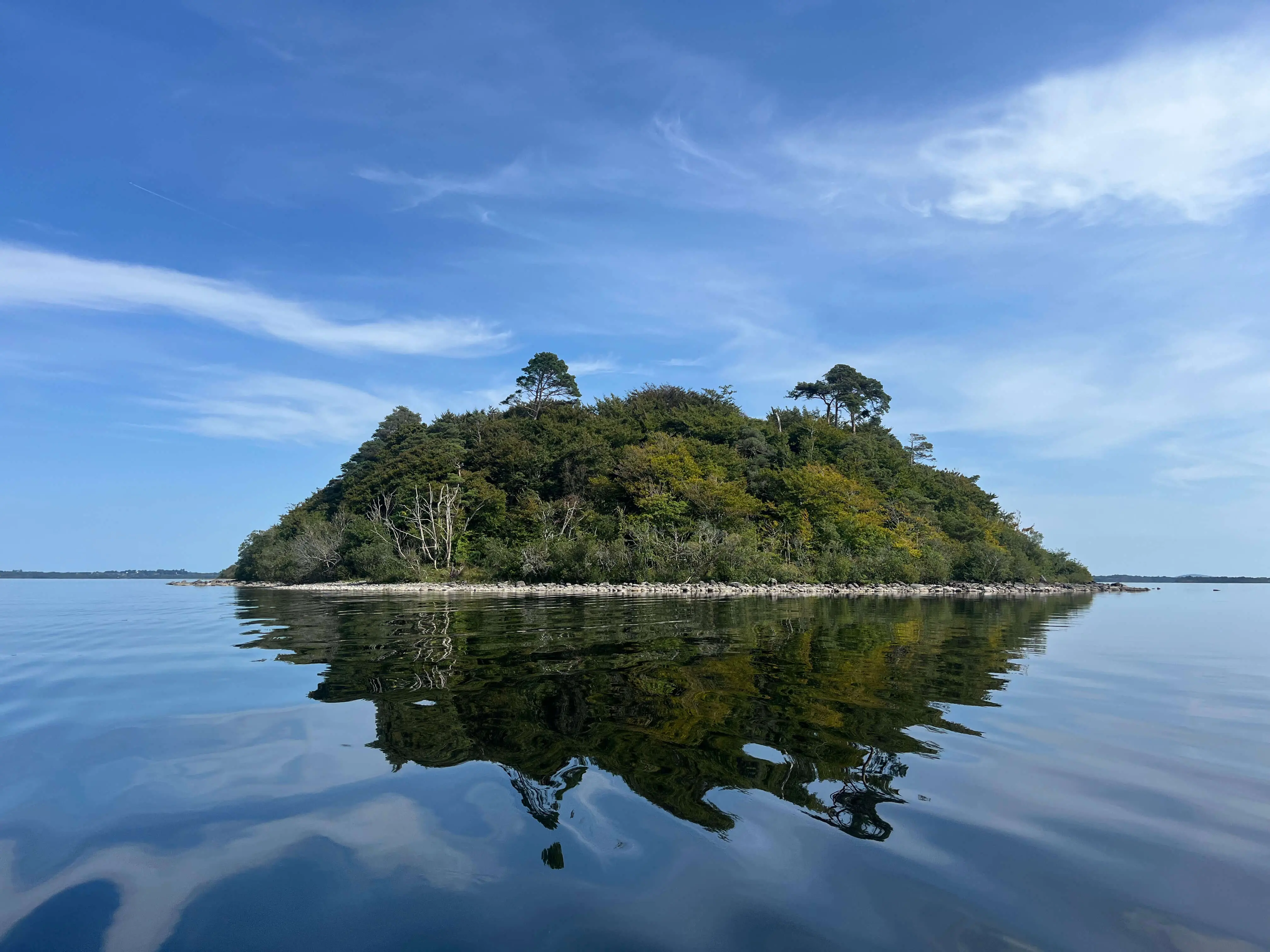
The Connemara loughs
Mar - Oct
Cong, Ireland
Is this experience right for me?
Fishing challenge
Physical effort
Non-angler friendly
Technique
Dry and wet flies
Fish
Brown trout
Environment
Lough
Fly Fishing the loughs in Ireland
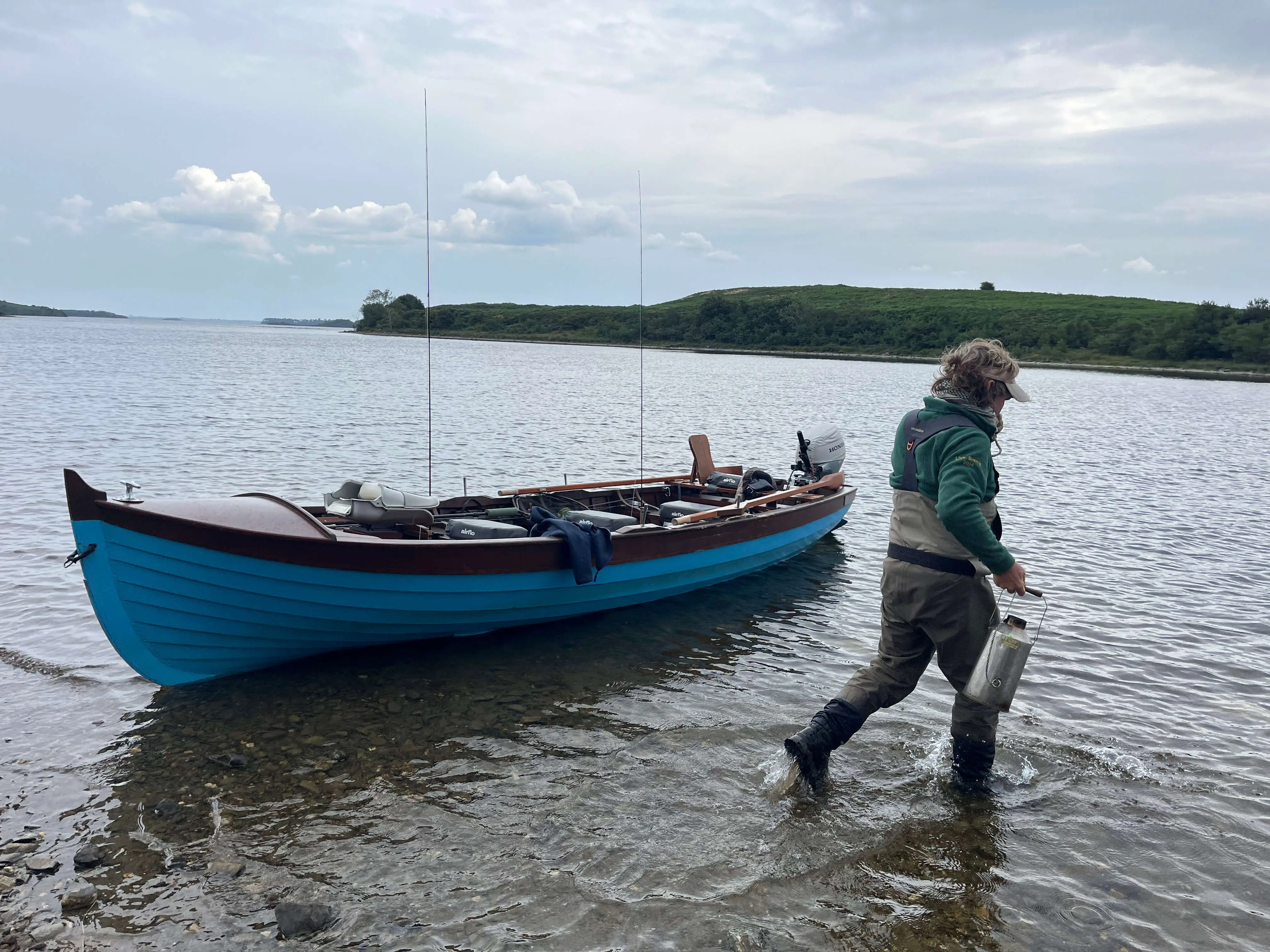
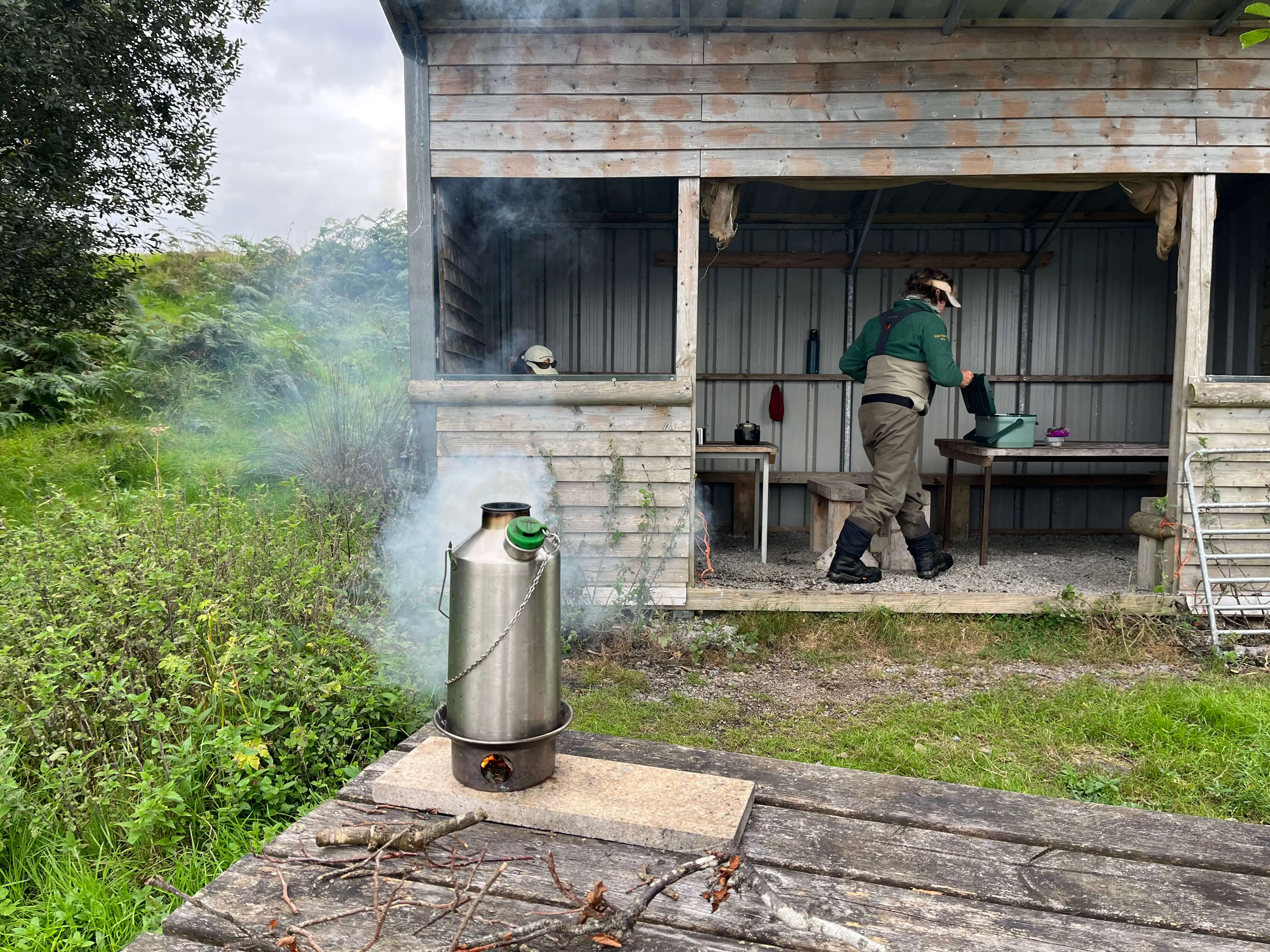
There may be no older way to fly fish than this. Wooden rowing boats, carved with figures where Celtic myth and early Christianity fold into one another. Tea brewed on board with water lifted straight from the lough. And the ghillie.
The ghillie is not an improvised job. It is a tradition that took its modern shape in the early 1900s and has been handed down since. He owns the boat, reads the wind, and chooses the drifts. He is the custodian of the water and he holds nothing back: a day on the boat is a lesson, and the longer you stay, the deeper it goes.
Wind and rain mean wet fly. Calmer, softer days mean dry fly. Get used to the first one, in Ireland, bad weather is good weather, and the days that would keep other anglers indoors are the days the ghillie will want you on the water.
Then there is the mayfly. From late April into early June, brown trout rise across water so wide it seems impossible they could ever find your fly. You will wonder how. Arm yourself with patience and you will be answered.
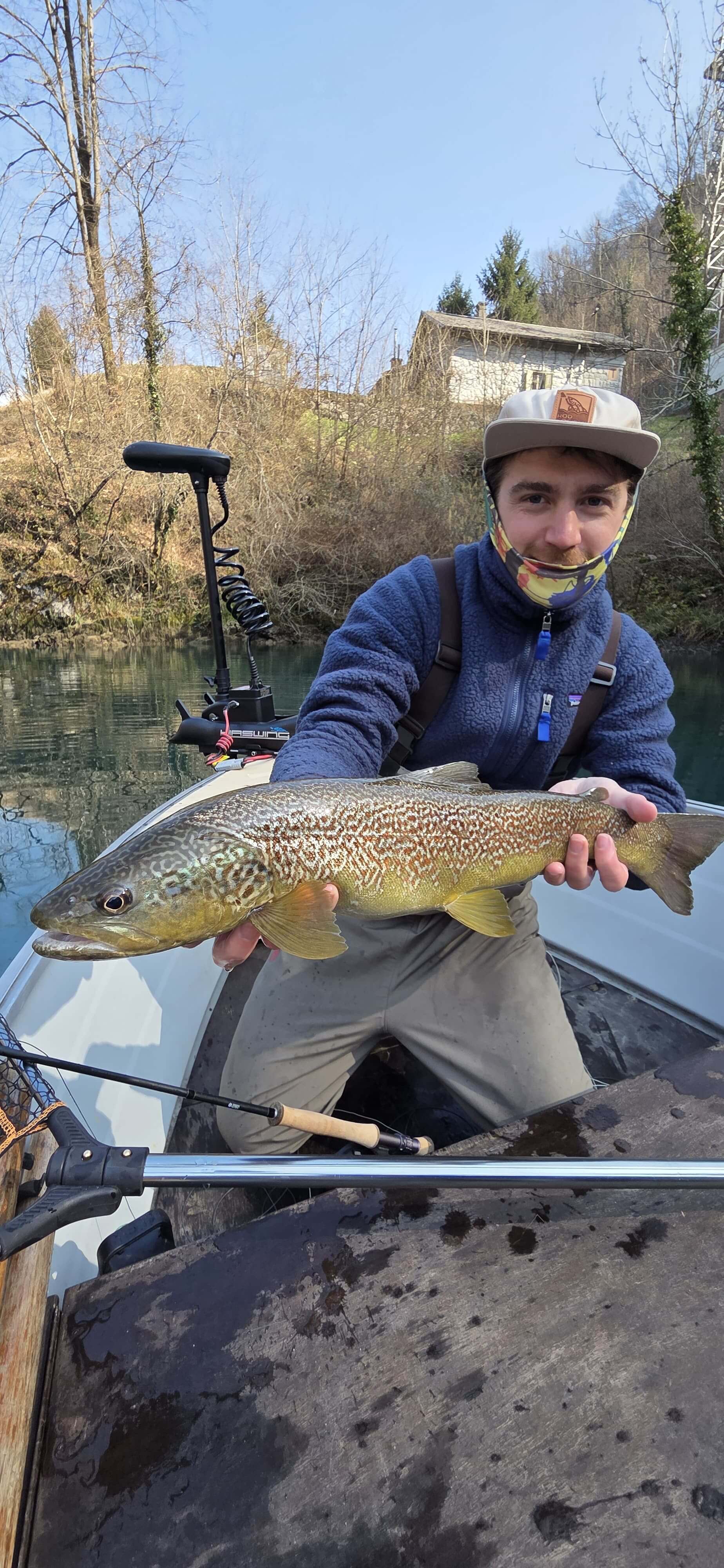
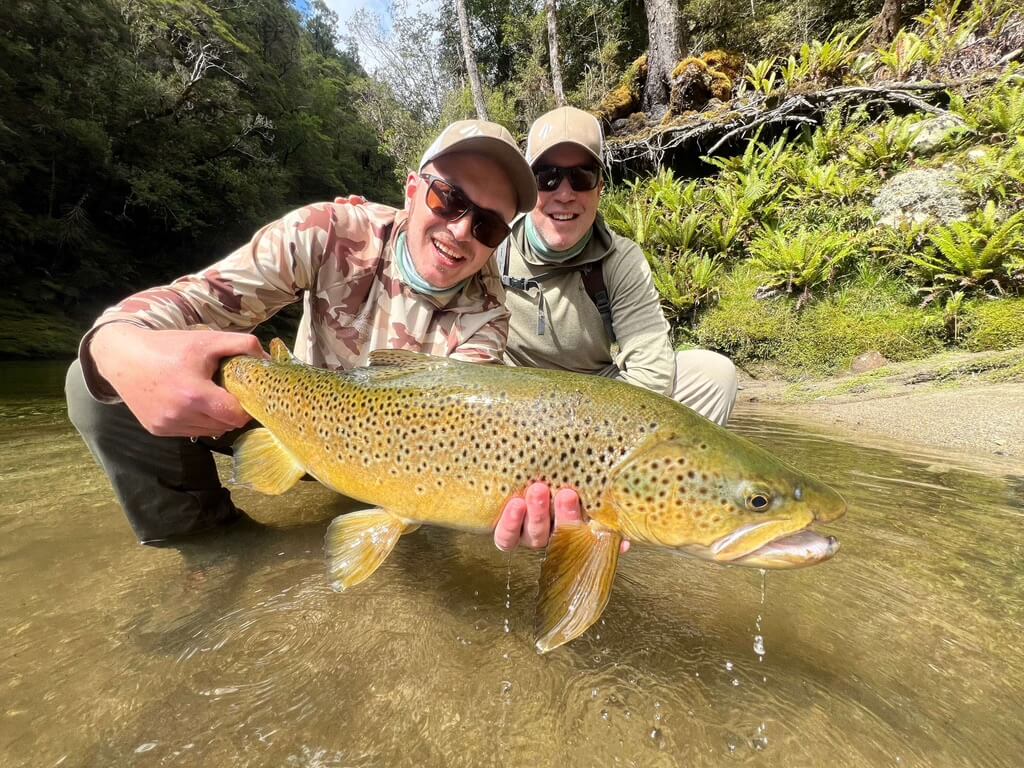
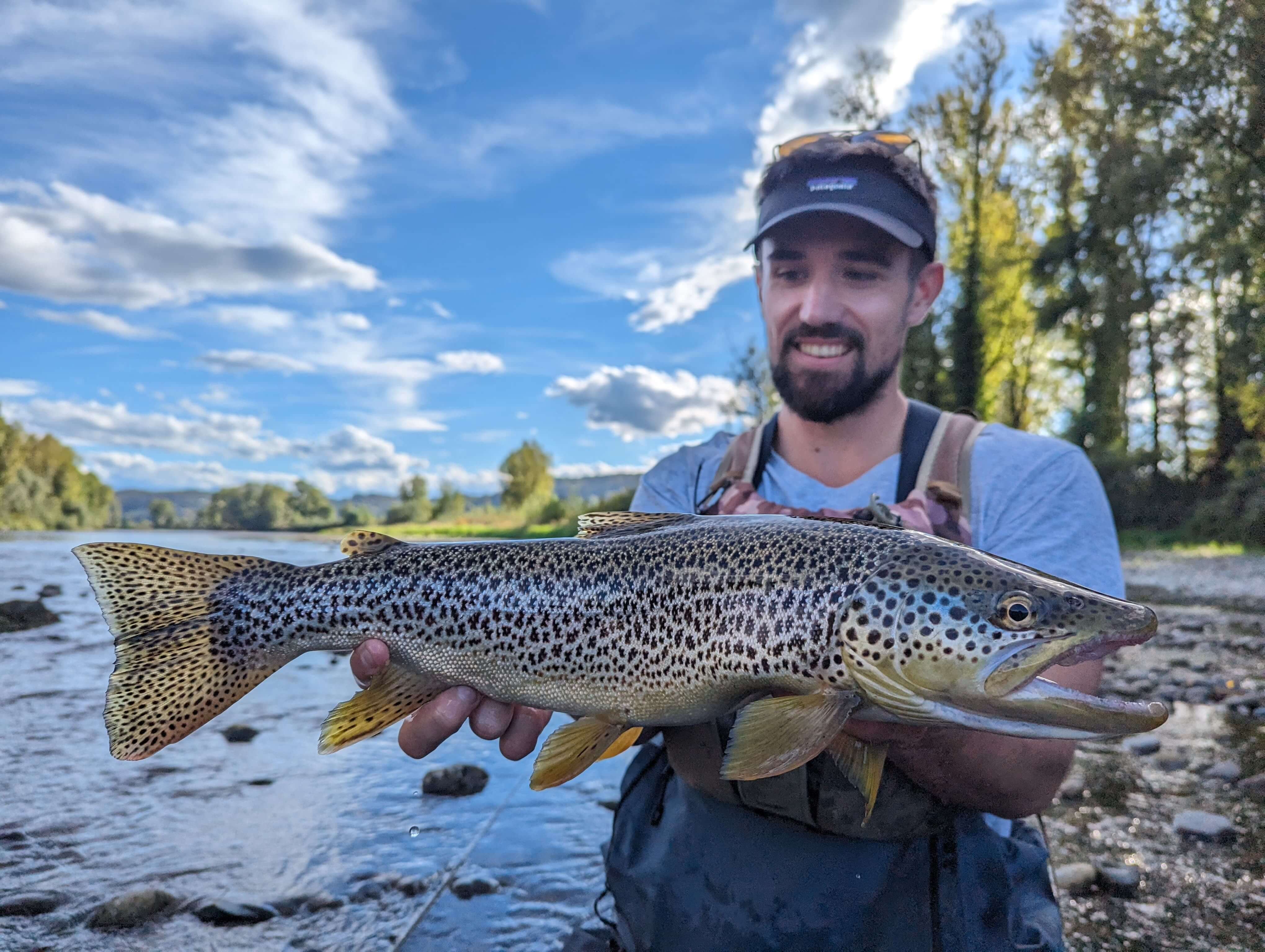
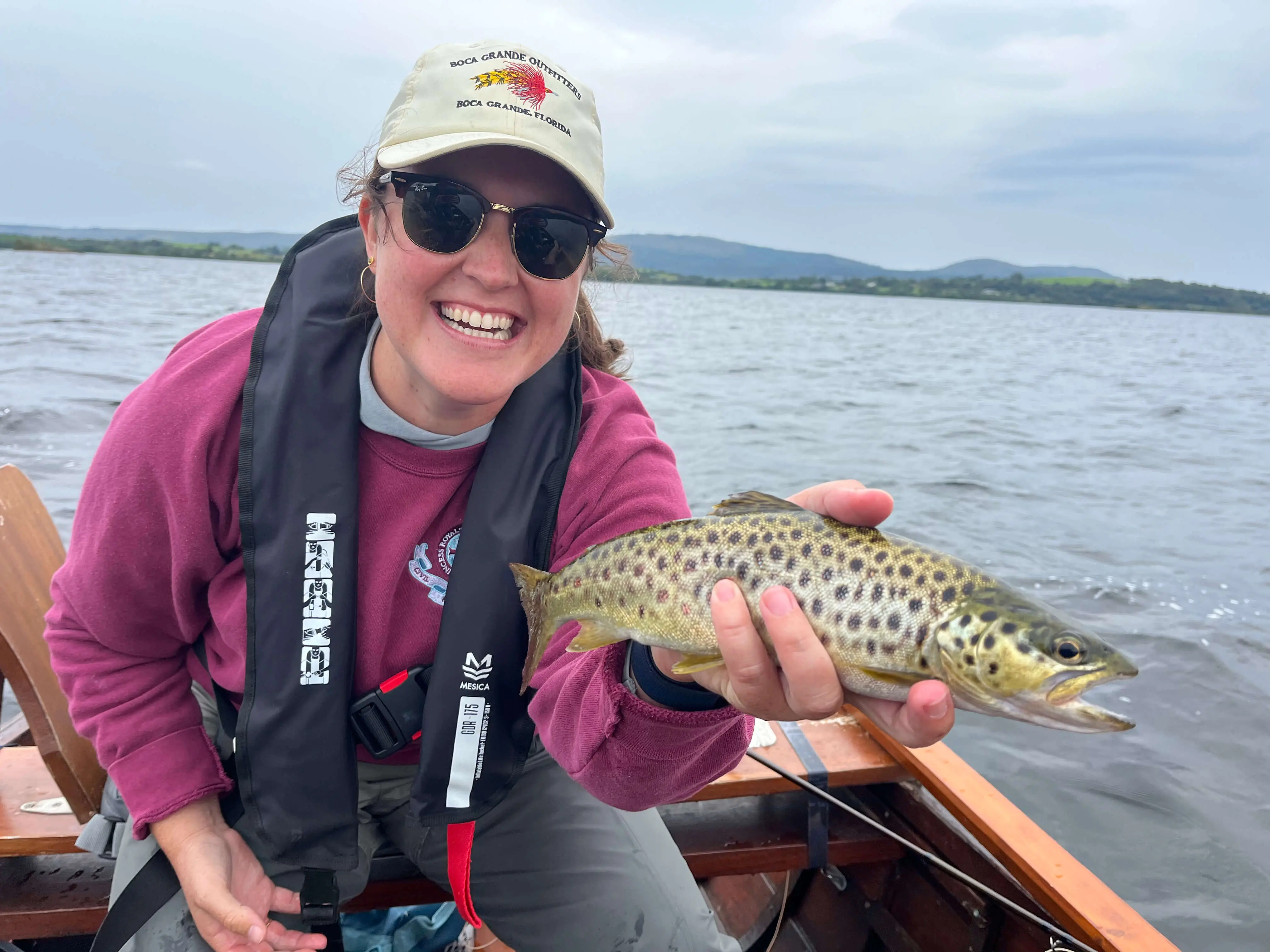
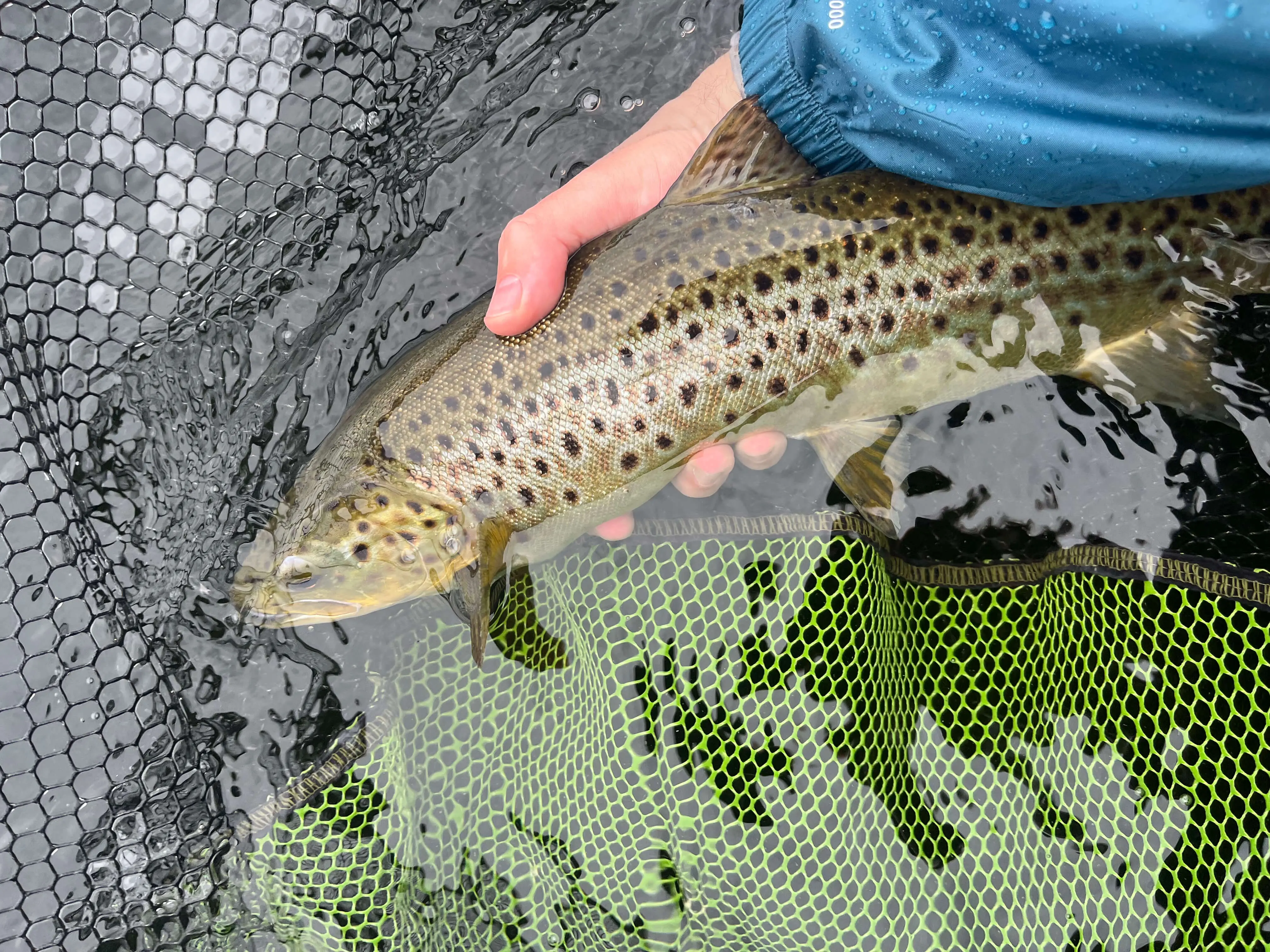
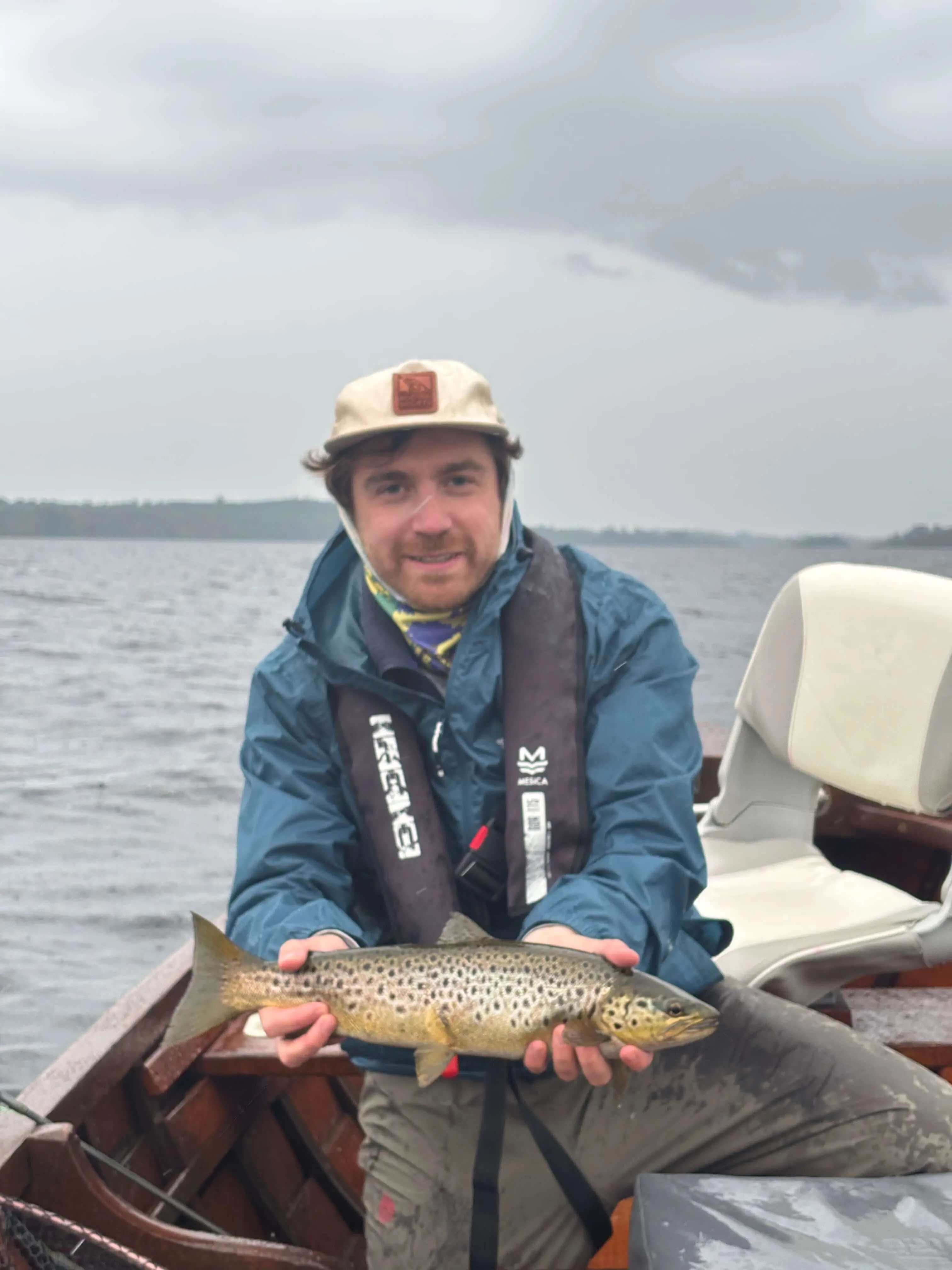
Corrib and Mask hold wild brown trout in exceptional condition. The average fish runs one to two pounds, four and five pounders are not rare, and historic photographs from these loughs record fish far beyond that. Whatever the size, they fight harder than their weight suggests — 4x is the minimum here, not a precaution. Salmon and pike also swim in these waters, but we fish only for the trout.
We base the trip in Cong, on the narrow strip of land between the two loughs, and choose the water each morning according to wind and season. Between days on the boat there is the Connemara itself: stone walls, empty roads, the Atlantic light. It is a place that rewards a travelling partner who never picks up a rod.
Base camp
Cong
Cong is a small stone village on the narrow strip of land between Lough Corrib and Lough Mask, still known to most visitors as the place John Ford filmed The Quiet Man in 1952. It has an abbey in ruins, a handful of pubs, and the particular quiet of a place the road doesn't pass through on its way to anywhere else.
Catches & Technique for fly fishing the loughs in Ireland
Wild brown trout (Salmo trutta), native to both loughs and never stocked over. The average fish runs one to two pounds, four and five pounders are not rare, and the historic photographs from these waters record trout far beyond that. Salmon and pike are present but are not the objective here. Whatever the size, these fish fight harder than their weight suggests, 4x is the minimum, not a precaution.
The core method is loch-style wet fly: a team of two or three flies on a short line, worked through the top layer from a drifting boat with the rod held high. It is built for wind and broken water, which is most days. On lighter days, and above all during the mayfly hatch from late April into early June, the loughs fish dry: single fish are marked, the drift is adjusted, and the cast is made to one specific trout across water so wide it seems impossible it could ever find your fly.
On the windiest days the ghillie may set up the traditional method: a long rod, a floss blow line carried out by the wind, and a single fly danced on the surface. This is Dapping, how these loughs were fished in the 1800s.
Gear
Rod: 10 ft, #5 or #6, for wet and dry fly
Dapping rod: 15–17 ft with floss blow line, supplied by the ghillie
Lines: floating and intermediate
Tippet: 4x minimum
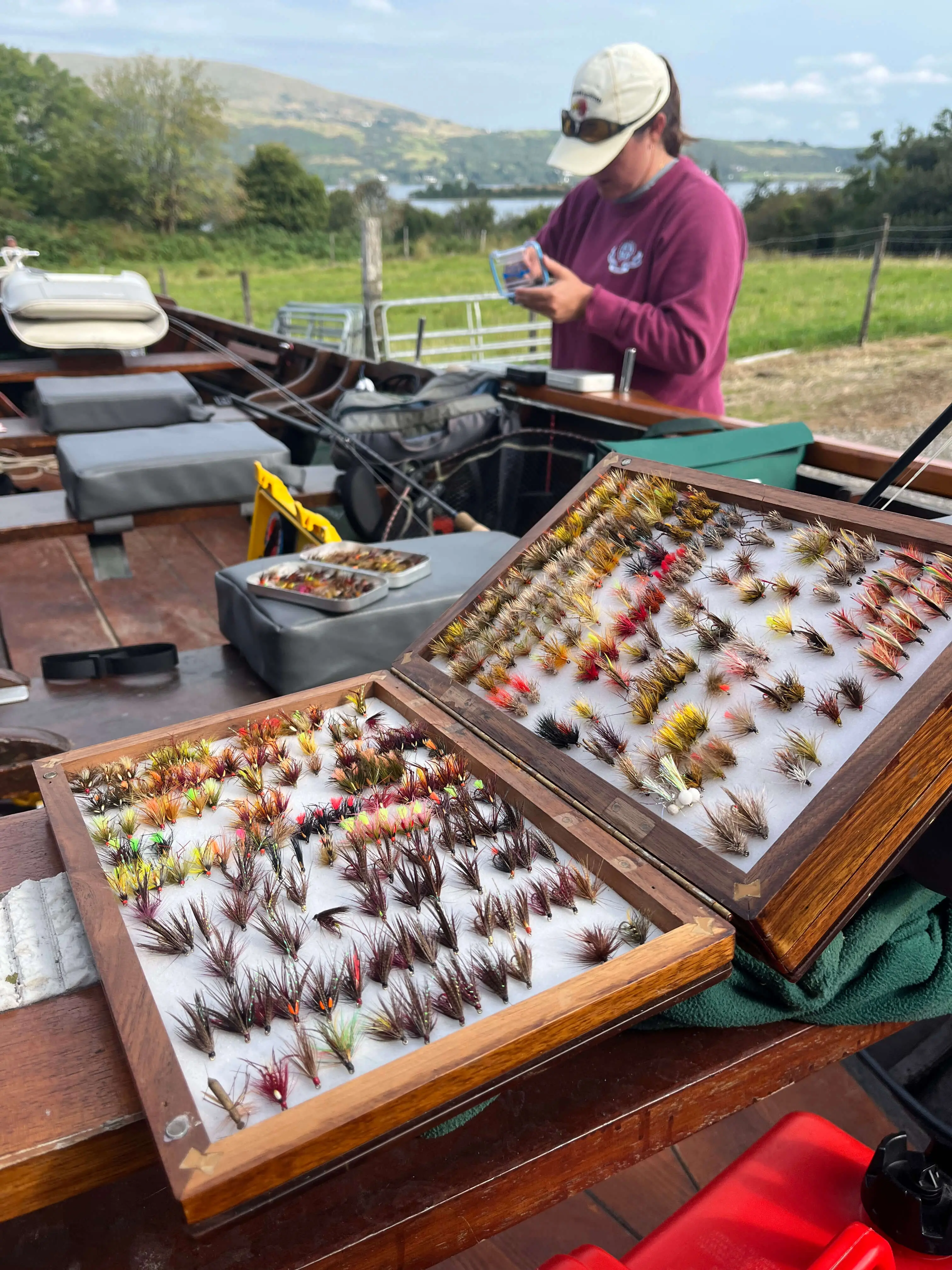
Flies: traditional Irish wets (Bibio, Sooty Olive, Golden Olive Bumble, Green Peter), mayfly duns and spent patterns in season
Season. The loughs fish through the whole season. Early spring is wet fly and wind. The mayfly runs from late April into early June and is the peak of the year. Summer settles into a mix of wet fly and daytime dries, and autumn brings back the weather and the bigger fish.
Includes
✅ Professional fly fishing guide
✅ All necessary fishing equipment (rod, flies, reel and lines)
✅ Fishing license
✅ Refreshments and snacks
✅ Lunch & drinks
➕ Accommodation (on request, we arrange it for you)
❌ Flights / travel to reach the meeting point
❌ Anything not explicitly mentioned
FAQ
Are fishing licences included in the price?
Is this itinerary available as a half-day experience?
Is this experience private or group-based?
What equipment should I use?
Why should I book here?
Cancellation Policy
Which airport is the nearest?
Do your guides speak English and other languages?
What happens if the weather is unsuitable for fishing?
If you still need support you can contact us anytime!
From 550€
Drift the wild loughs of Connemara with an Irish ghillie. Traditional wet fly, dapping and mayfly dry fly for wild brown trout on Corrib and Mask.
Where next?
Explore other destinations